
Rolex is taking a big step in fleshing out their modern formal design language this week with the introduction of a familiar name, the Padellone. When the Perpetual 1908 was introduced back in 2023, this is exactly the kind of trajectory that many of us were hoping for. The move represents something of a sidestep from where the Cillini collection had been, and represents a more refined foundation to build on. With the Padellone, that vision becomes a bit clearer, and frames Rolex in a new light alongside some very different contemporaries. It’s a watch we’ve been waiting for, but that doesn’t mean there aren’t a few surprises in its execution.
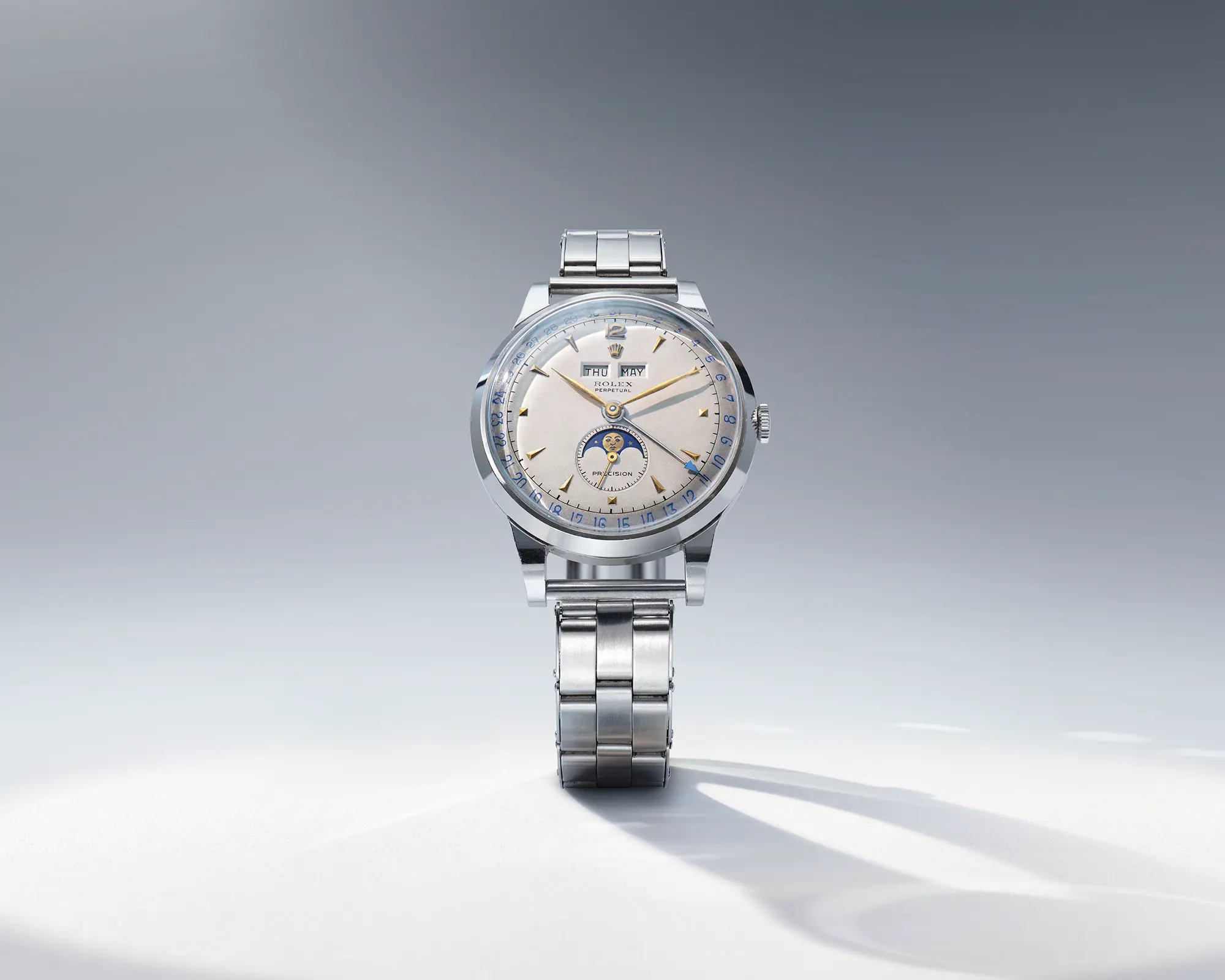
First and foremost, the ‘Padellone’ was never a part of the Rolex lexicon, rather it came from collectors in reference to the 8171 as a nod to its large, flat proportions. The word is Italian for frying pan, which sounds a bit less appealing in context, though there’s no denying the charm of the word Padellone, which Rolex has formalized with this watch, bridging the romantic world of vintage collectors, and official Rolex canon. This represents another step in Rolex formally recognizing their past as they pave their future. This is a trend I’ve documented in my Rolex reviews going back to the Explorer 124270 (and more recently in reviews of the Daytona and GMT-Master II).
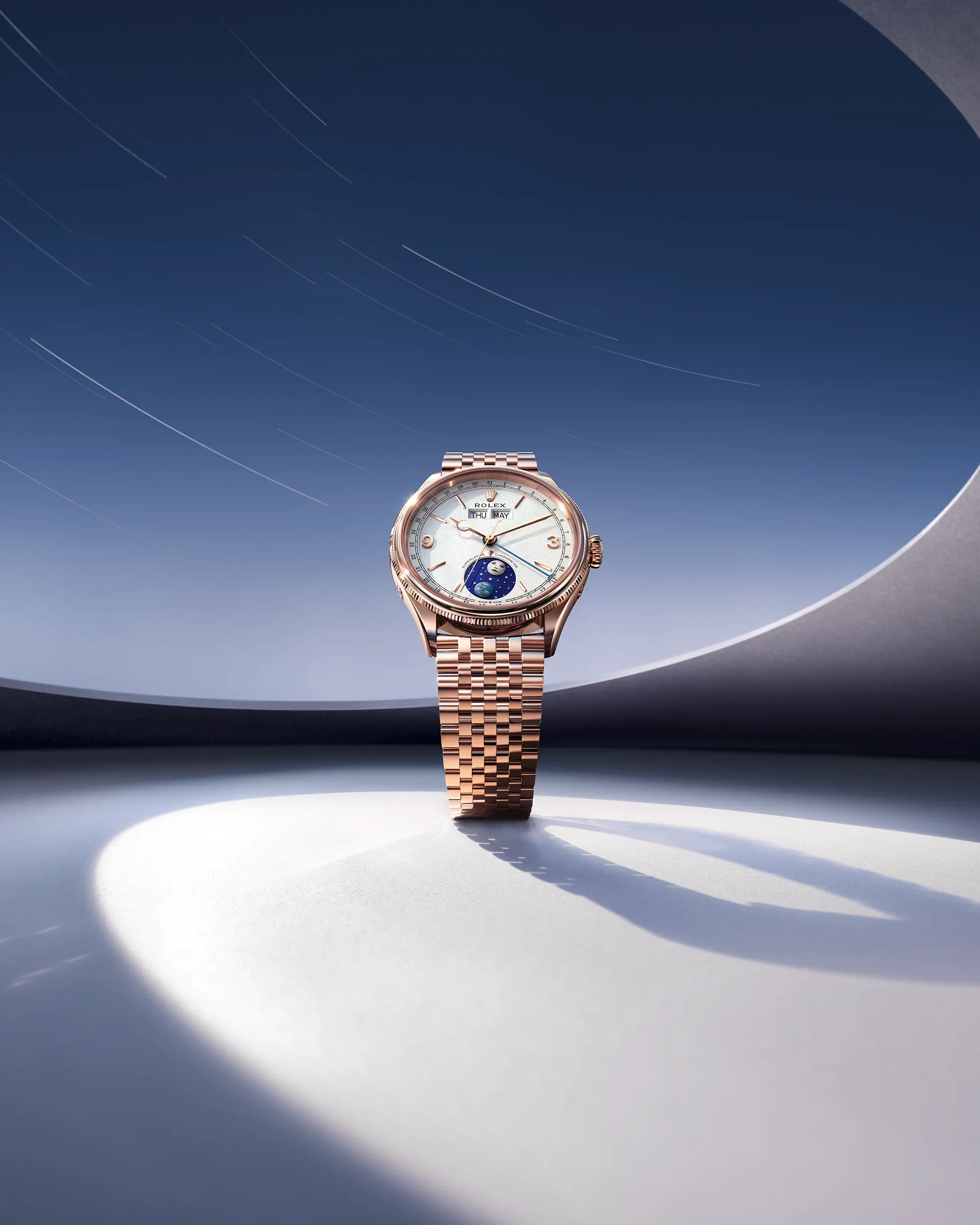
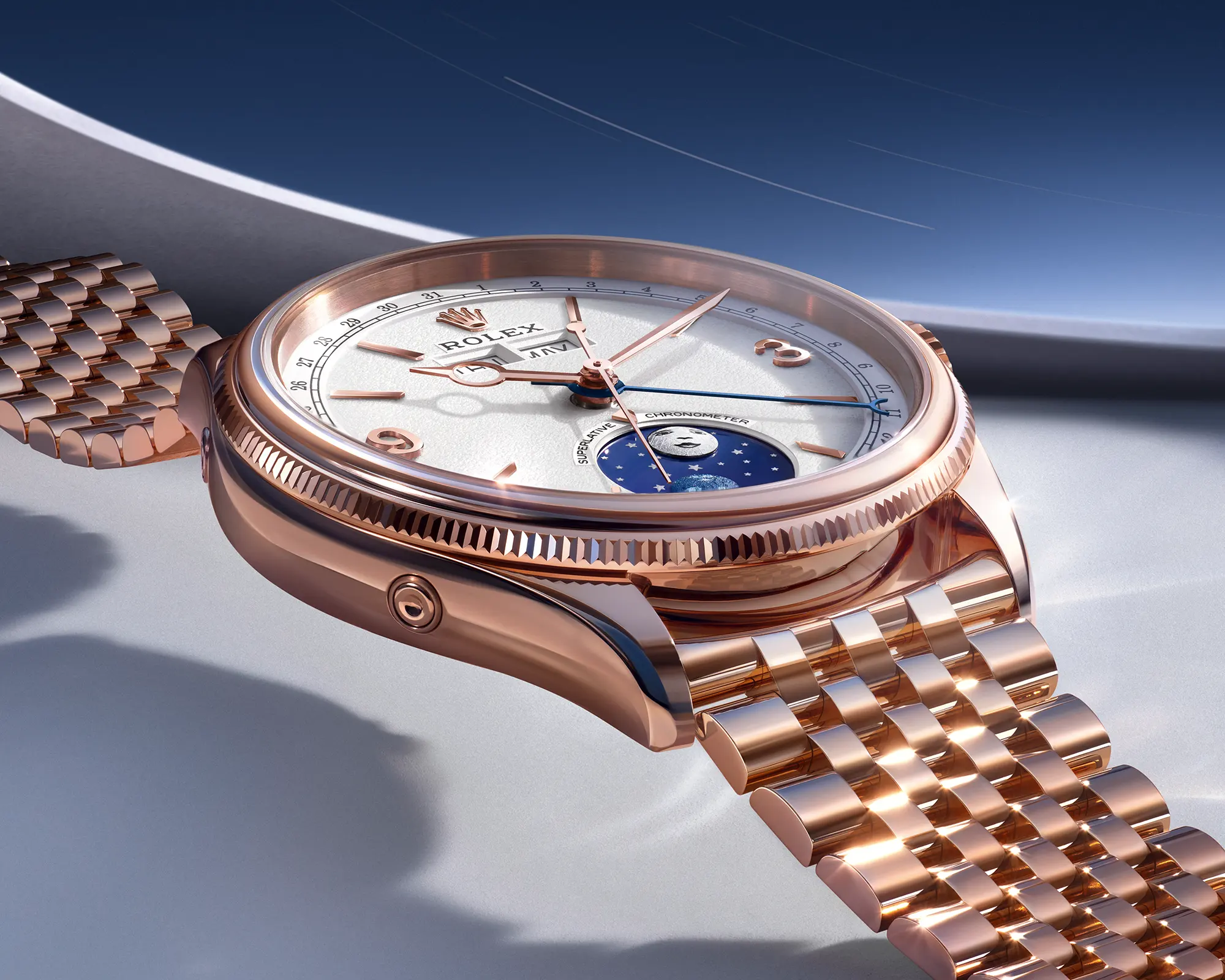
Officially, this watch is the Perpetual Padellone, which means it uses an automatic caliber, not that its calendar complication is, well, perpetual. The 1908 lives within the same stable, and provides the base of the design language used throughout, which includes the style of the Arabic numerals and the open end of the hour hand. This language also informs the case, which boasts a coin-edge bezel and classic proportions throughout. From there, the Padellone layers in complexity in the form of an annual calendar and moonphase, and here they strike a balance between throwback inspiration and modern foundation setting.
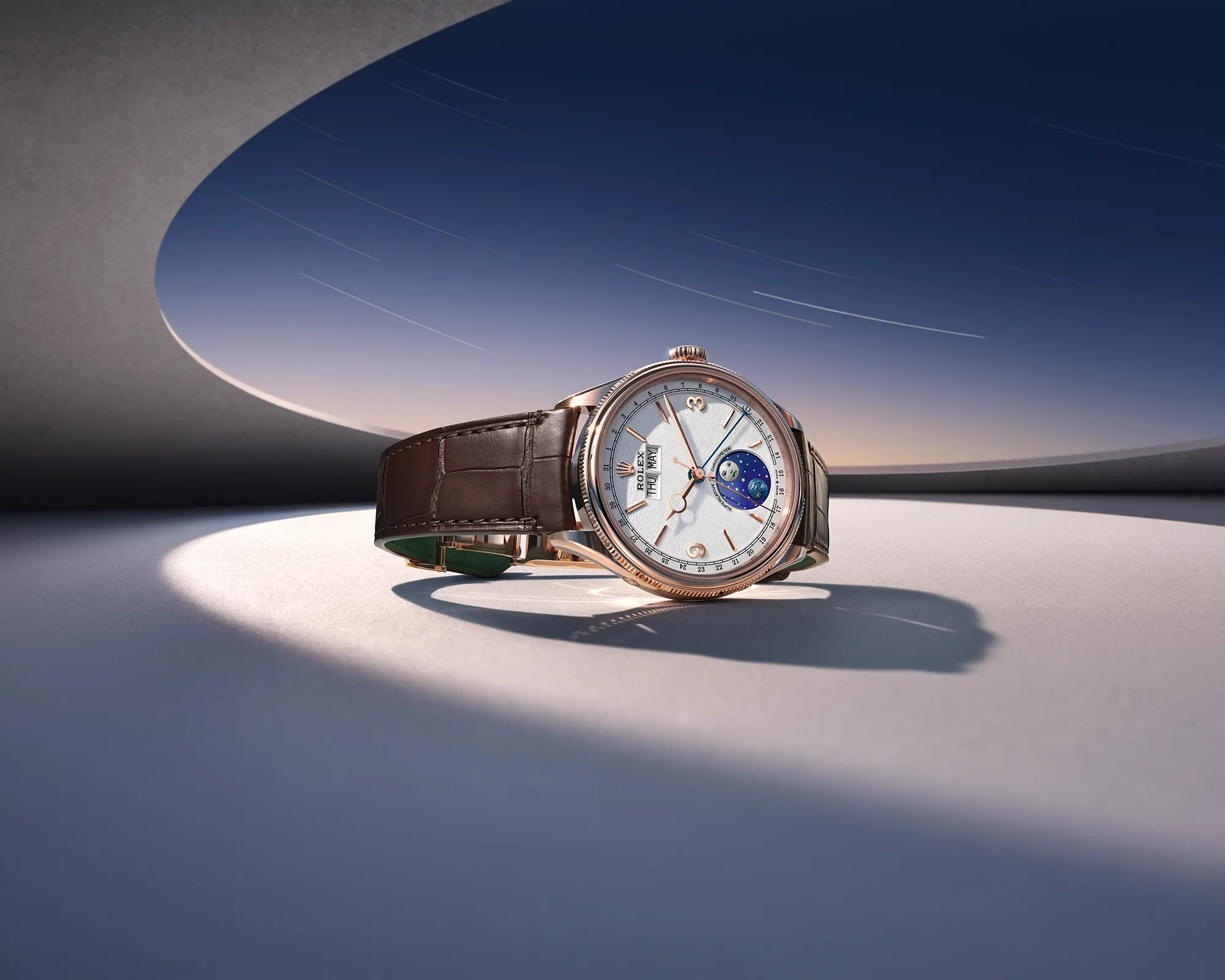
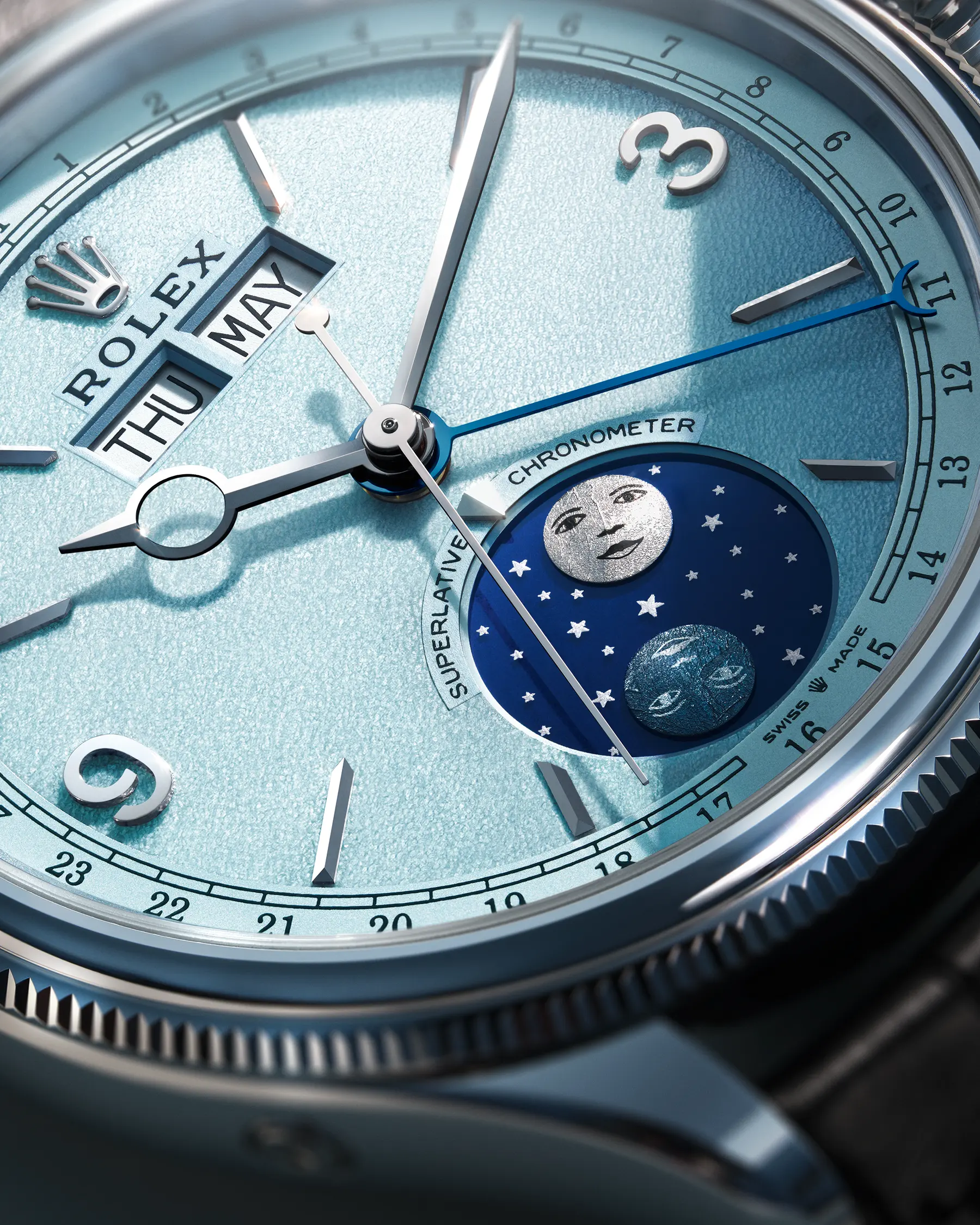
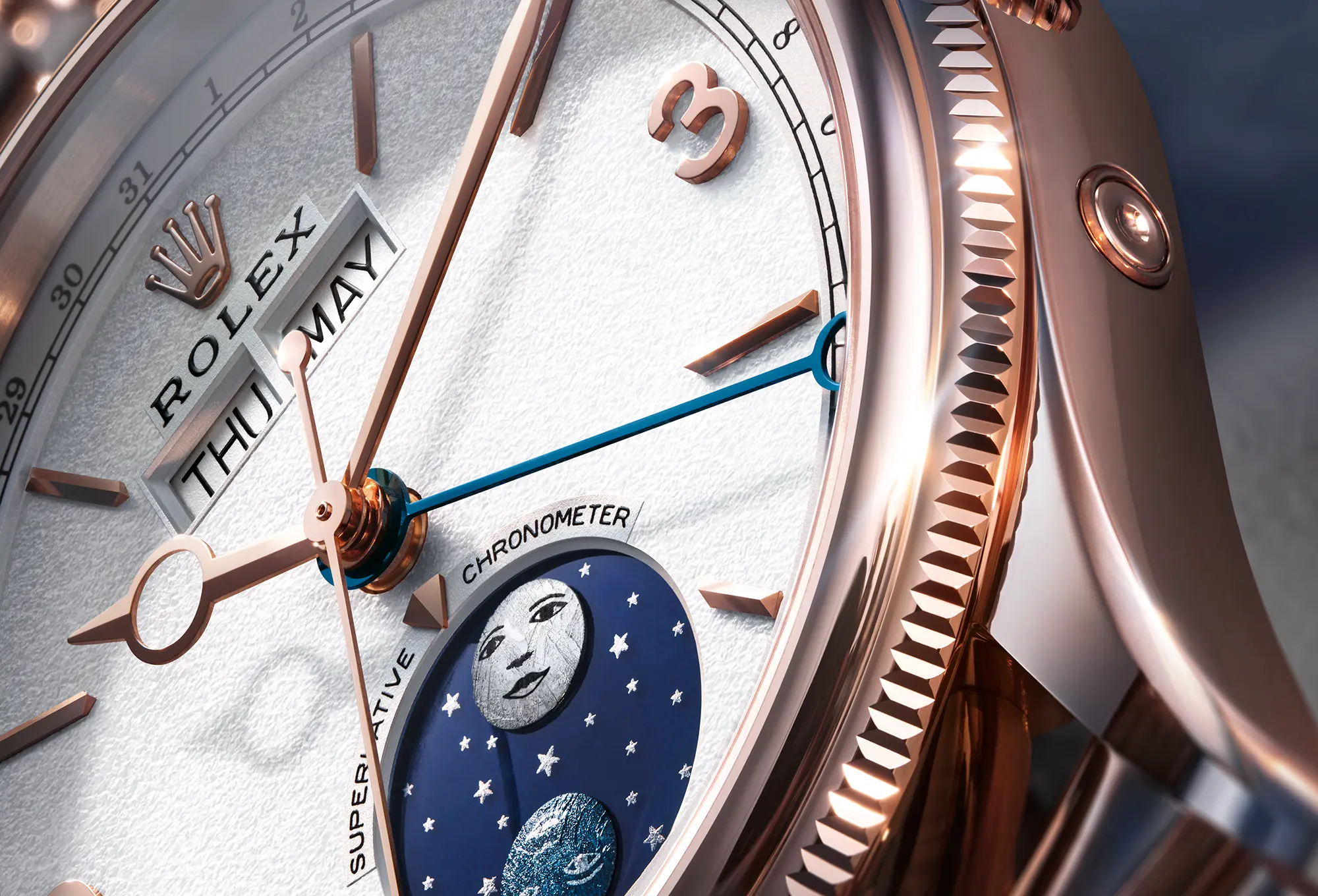
Rolex have removed the 12 o’clock hour marker at the top of the Padellone’s dial in favor of an applied crown sitting atop the Rolex wordmark. Also set within this lockup are the day and month apertures sitting side by side, directly underneath the word ‘Rolex’. It’s a defining moment of the design, and at first blush, these elements all appear almost uncomfortably forced into the top section of the dial. This creates some tension around the placement of the apertures, which is a notable departure from the likes of the 8171, which provided a bit more breathing room for all of the elements north of the handstack. Separating the apertures from the branding and setting some more space between them might have created a more harmonious experience, but it’s clearly not the look Rolex were aiming for.
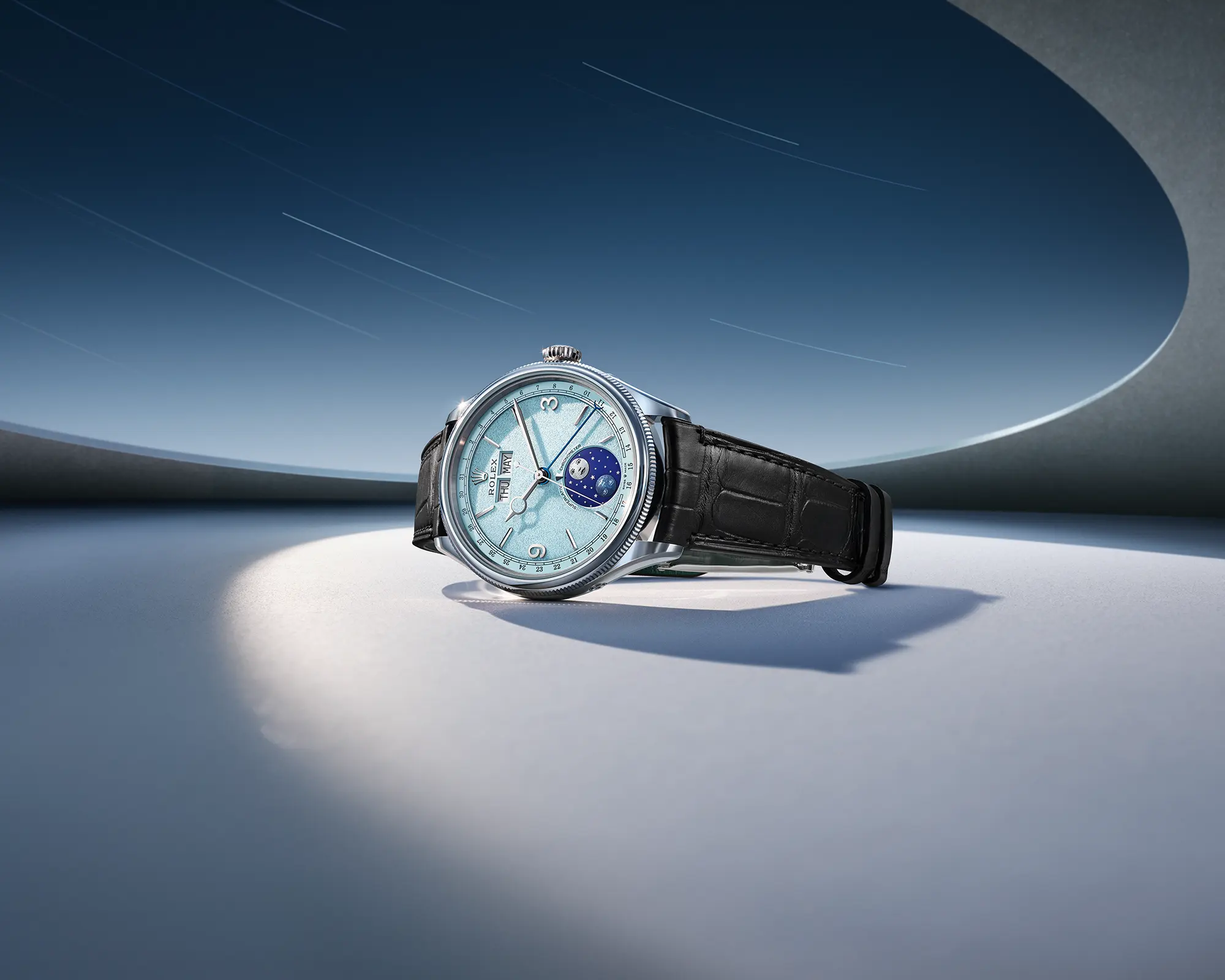
The date is read via a pointer hand around the perimeter of the dial, while a lovely moonphase dominates the lower half of the dial. The depictions of the moon take on a particularly old-school aesthetic, with a painted face that feels decidedly mid-century in nature. All of this is set within a grain dial plate that provides a strong contrast to the applied elements, and the elevated date ring framing the design. In total, it’s a very handsome design with plenty of details that beg a closer look, leaving only the top-heavy lockup as the only potential source of discomfort.
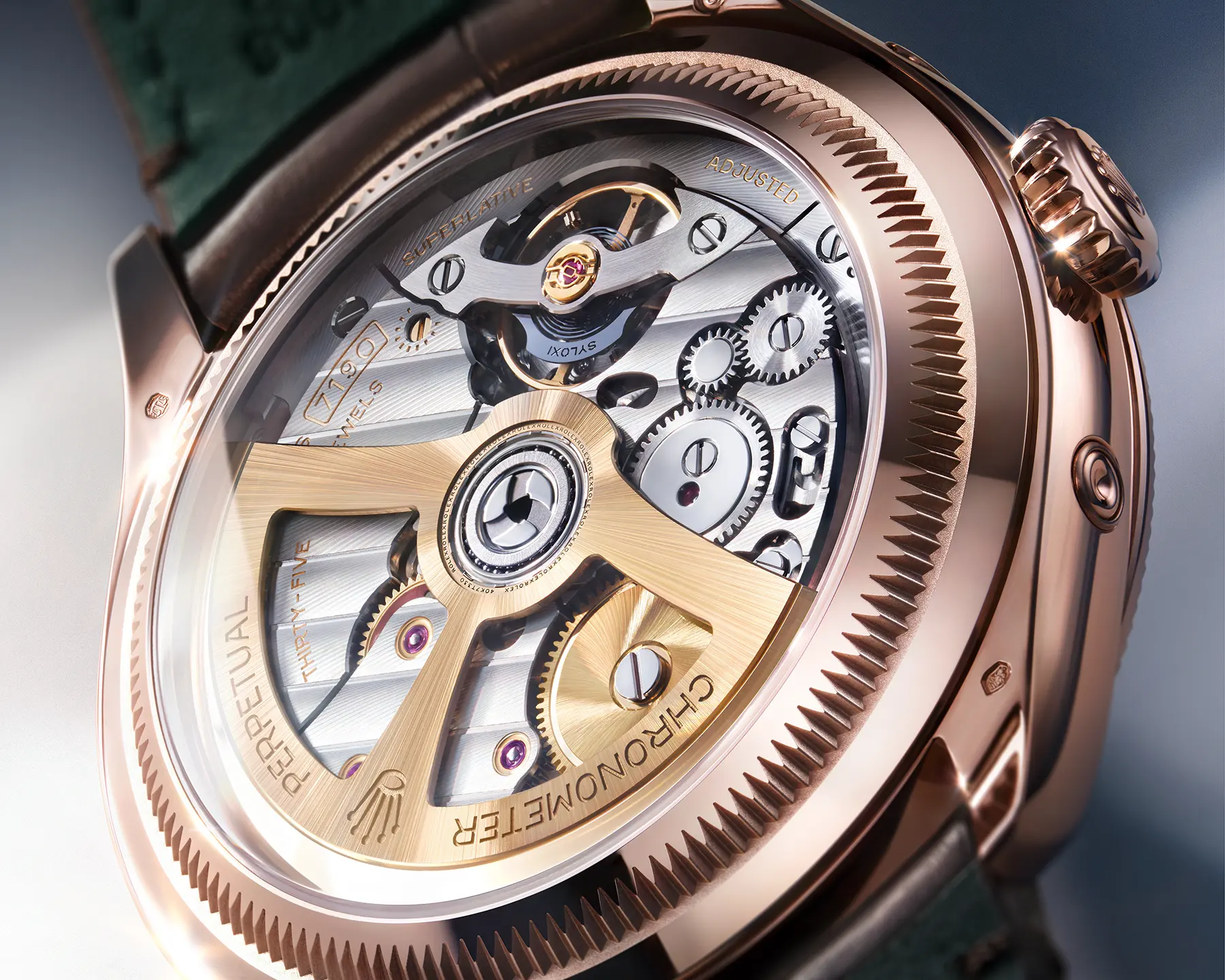
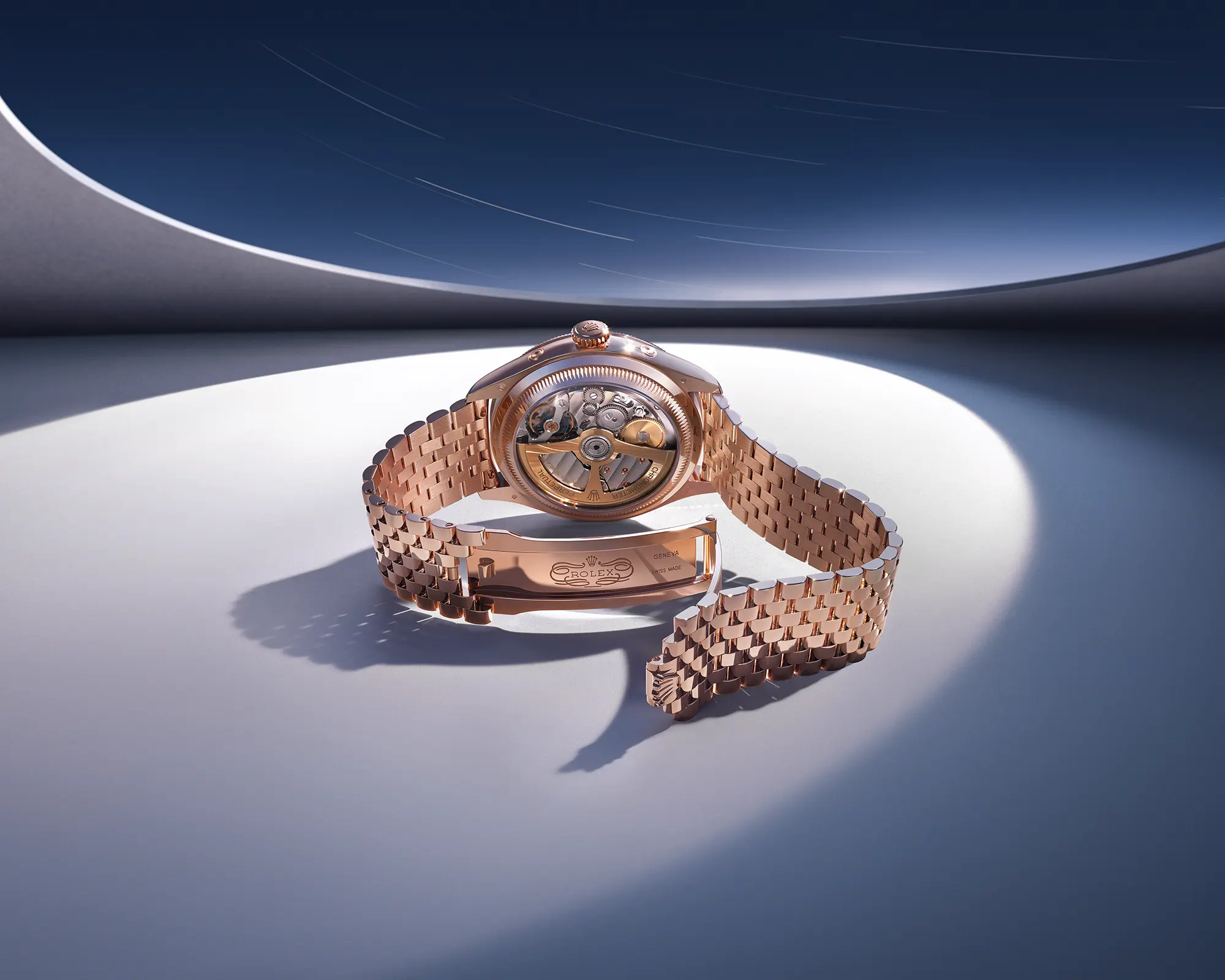
Powering the modern Padellone is the new caliber 7190, an evolution of the 7135 introduced within the Land-Dweller, which means this watch gets the Dynapulse escapement (discussed here and here). The 7135 itself was an evolution of the 7140 released in the original 1908, so there’s something of a full-circle moment happening here. Of course, unlike either of those movements, the 7190 incorporates an annual calendar and moonphase, all of which are adjusted via pushers in the side of the case. The movement is visible through an exhibition back, and still allows for a relatively reasonable 12.2mm total case thickness.
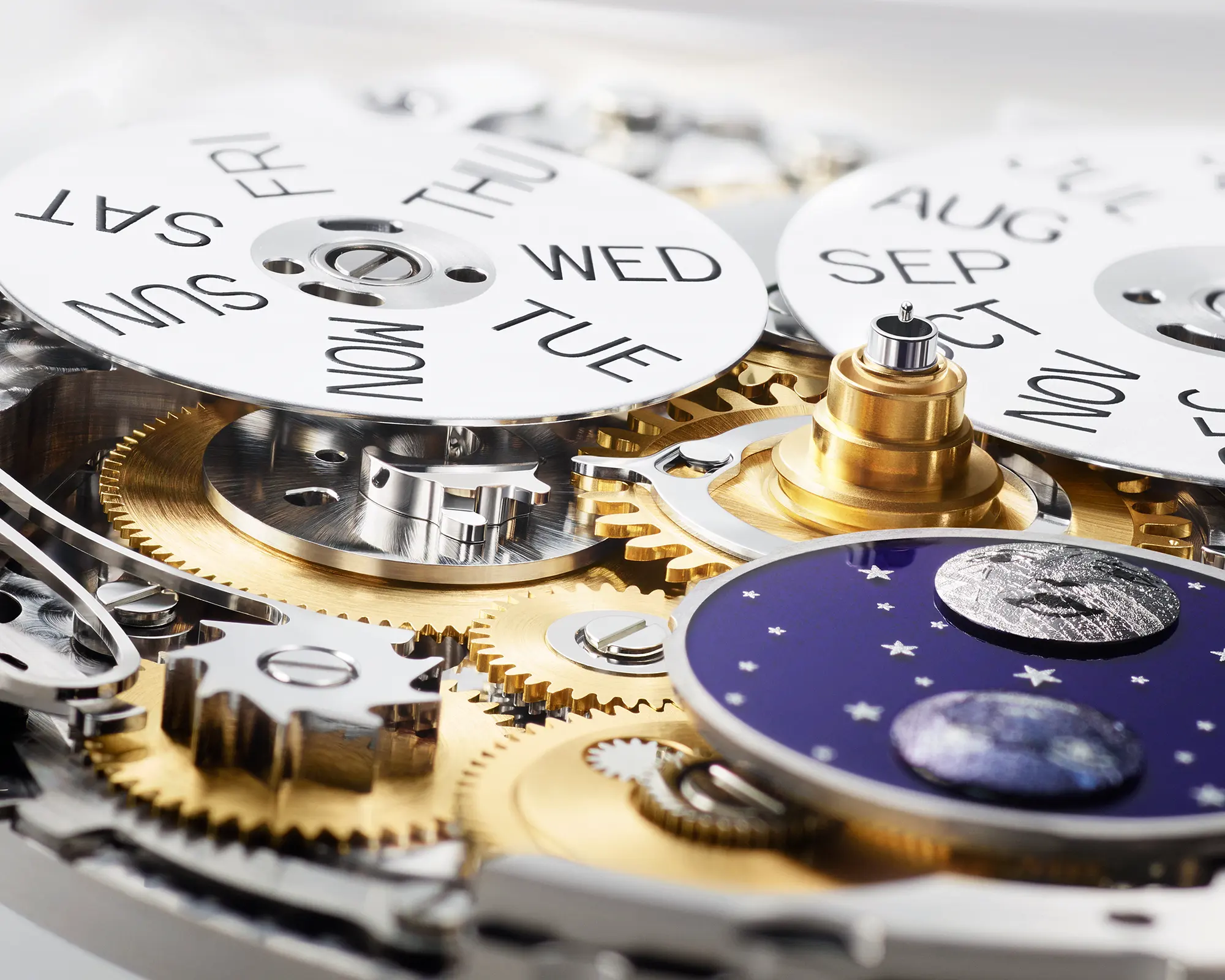
I’d recommend heading over to Hodinkee for a wonderful breakdown of the technical details from James and Mark. Rolex have of course found their own unique solutions to the calendar mechanisms at work here, and the movement presents a clear shot across the bow of more traditional watchmakers operating in this price range.
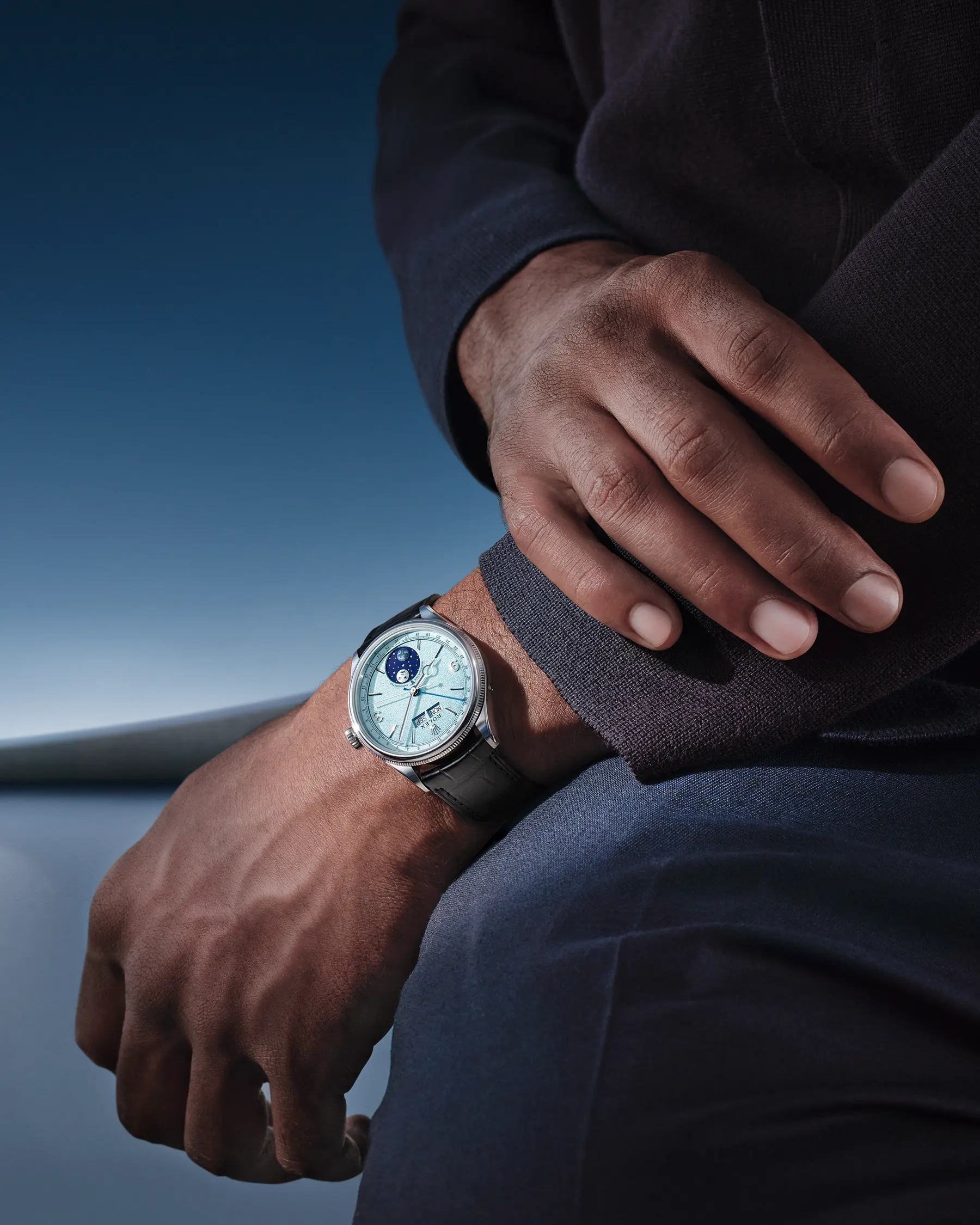
And that brings us to the pricing of this watch, which is being produced in Everose ($59,000 on a strap) and platinum ($72,800). High prices in the Rolex catalog are not uncommon, but they generally revolve around the use of gem set dials and bezels and precious metals. These watches are precious metal as well, but the value proposition is shifted to the watchmaking happening within. A peak under the hood here reveals an impressive sight and some serious engineering solutions, but it sits at odds with would be contemporaries from the likes of A Lange & Sohne and Vacheron Constantin simply because of the volume equation. Those maisons produce very limited quantities through the course of a year, while Rolex has a perception of mass production that may serve as baggage to a watch like this.
I often talk about the appeal of Rolex sport watches as being a bit like a Toyota Hilux in nature, and that’s how I’ve viewed (and enjoyed) the brand for decades. The strength of their watchmaking position was in their ability to build a bulletproof movement, case, and bracelet more than it was their ability to produce something beautiful to look at. With the Padellone, that pendulum takes a big swing, and while it hits many of the notes it needs to hit, the challenge will be convincing a different kind of audience over the long term. Thankfully, history is on their side in that regard. Rolex
Leave a Reply