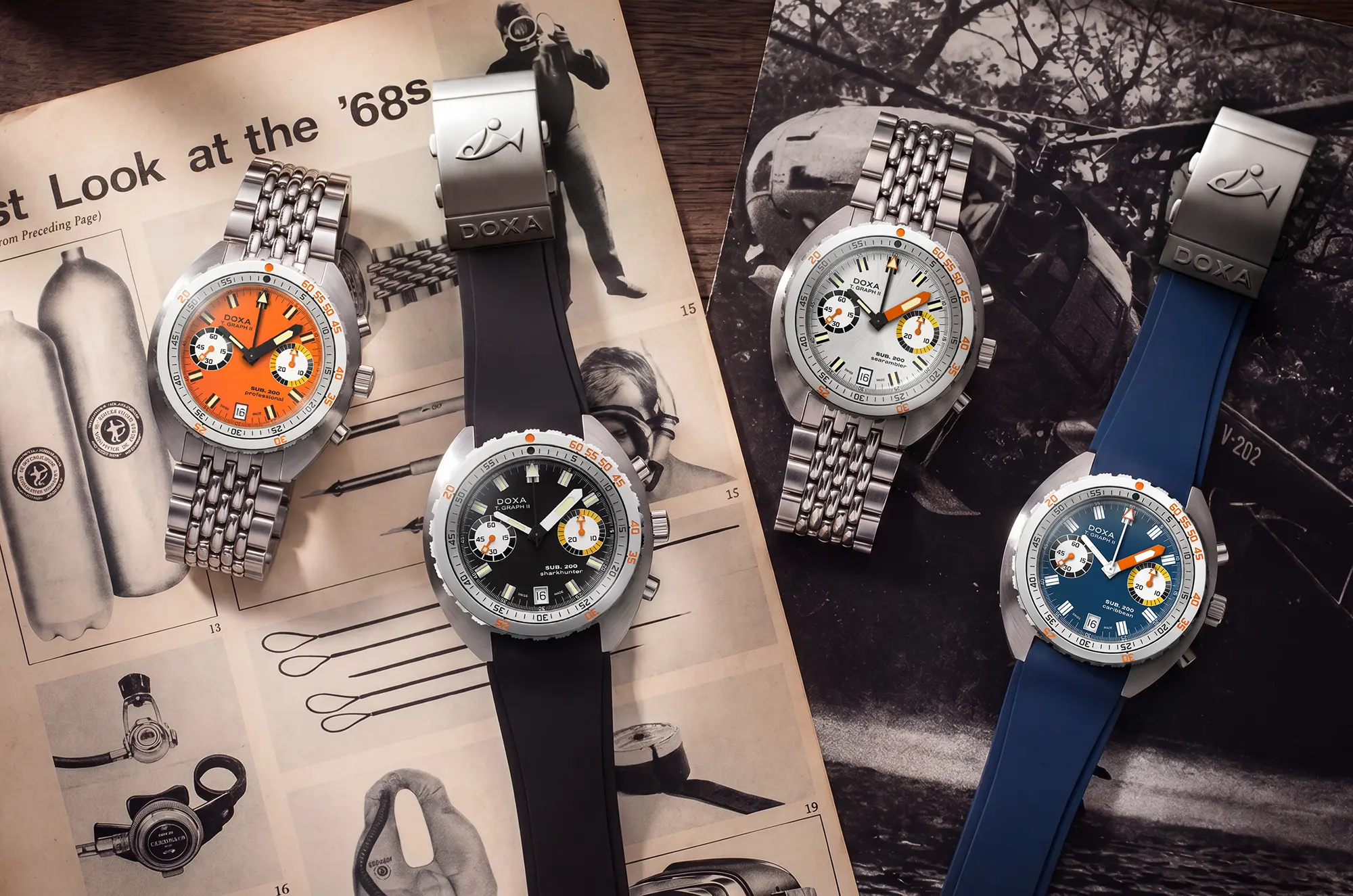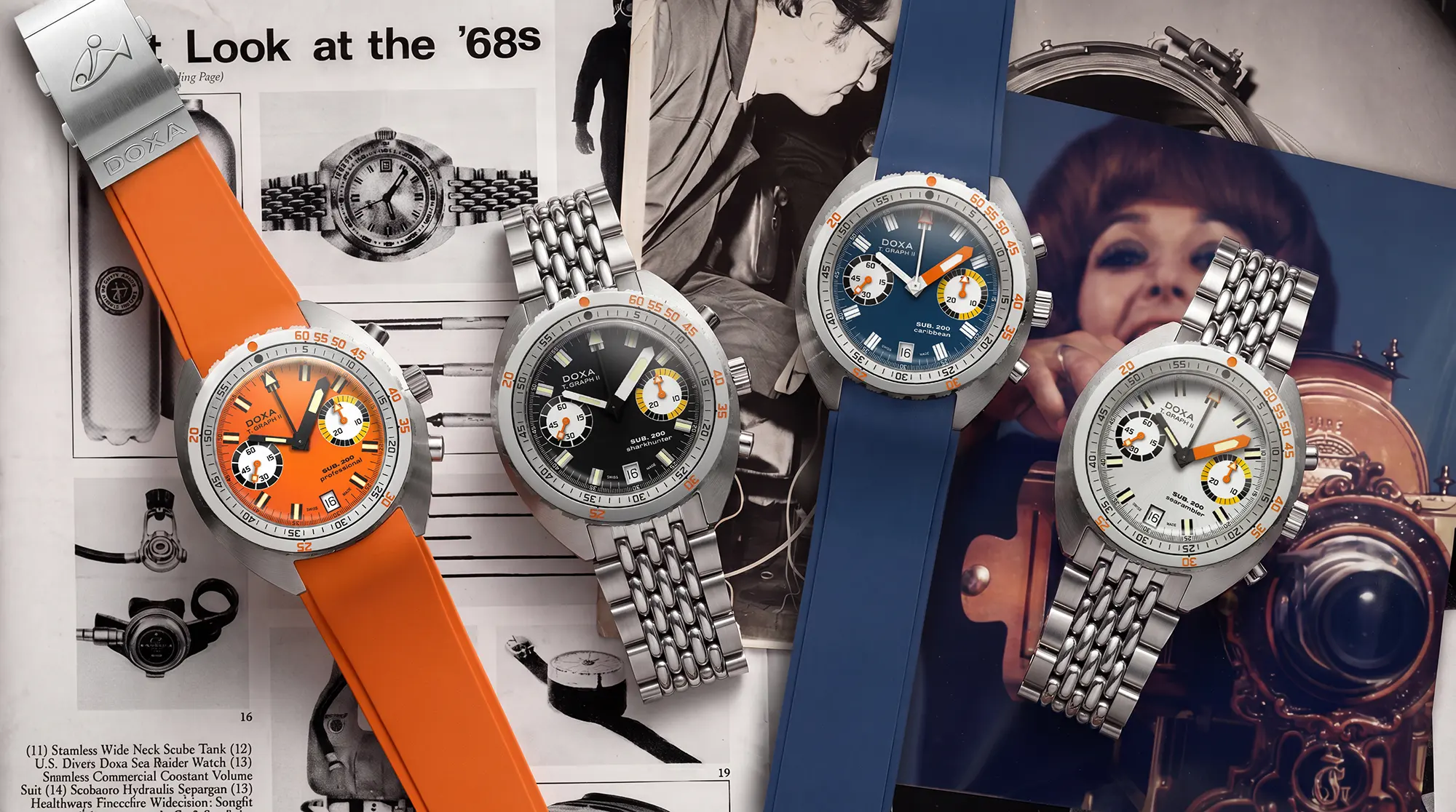
The elusive diving chronograph is a tricky formula to get right. A good dive watch is, by its very nature, simple to use and easy to read at a glance, and throwing any kind of complication into the mix can compromise that balance. Well, in theory, at least. Breitling was an earlier innovator in the space, and even thought to create a central timer in the ‘slow motion’, keeping legibility intact. In 1969, Doxa brought a chronograph to their Sub 200 platform in a design called the T.Graph, and it featured a distinctive two register layout that, somehow, didn’t get in the way of the core functions of the dial. This week, the T.Graph returns to the Sub collection in the Sub 200 T.Graph II.
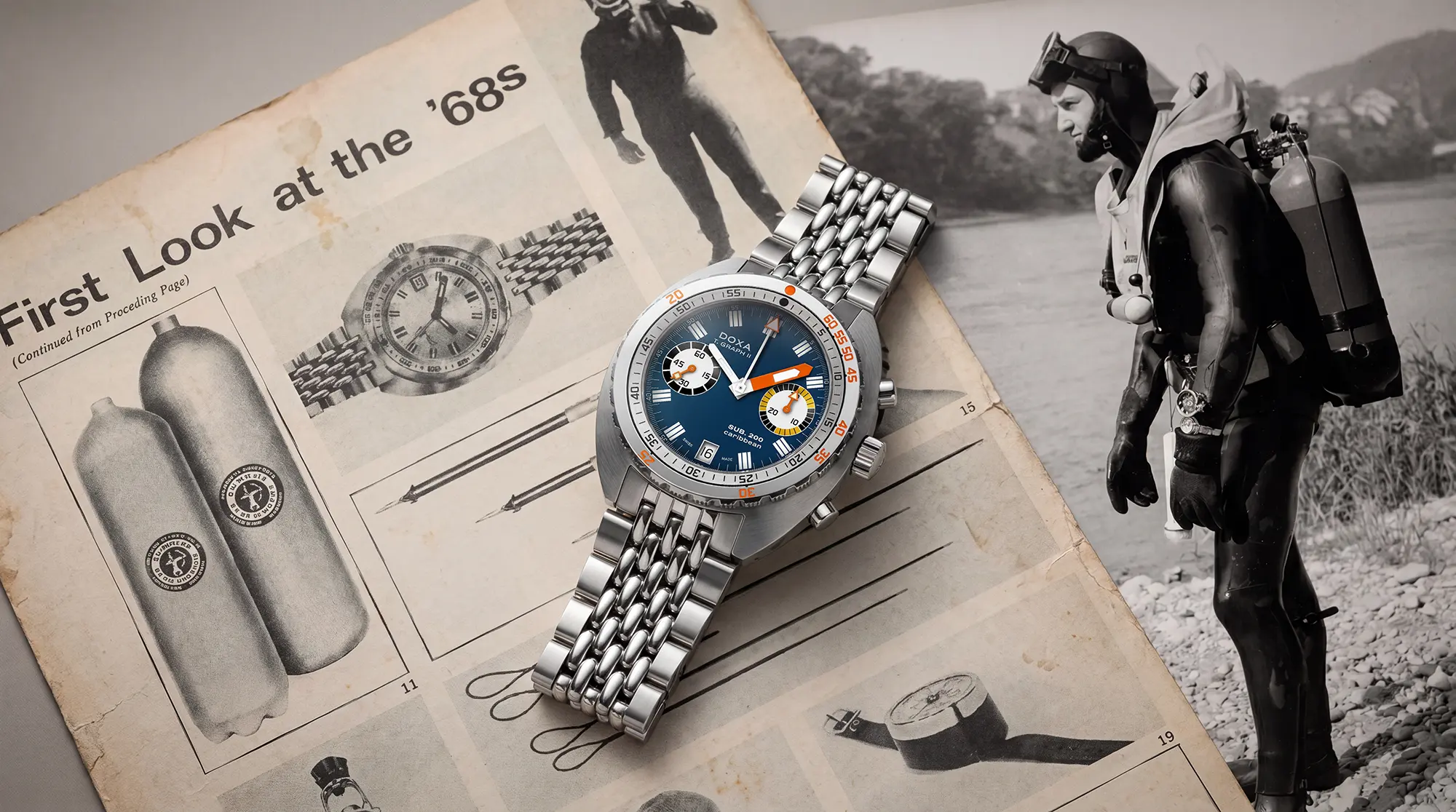
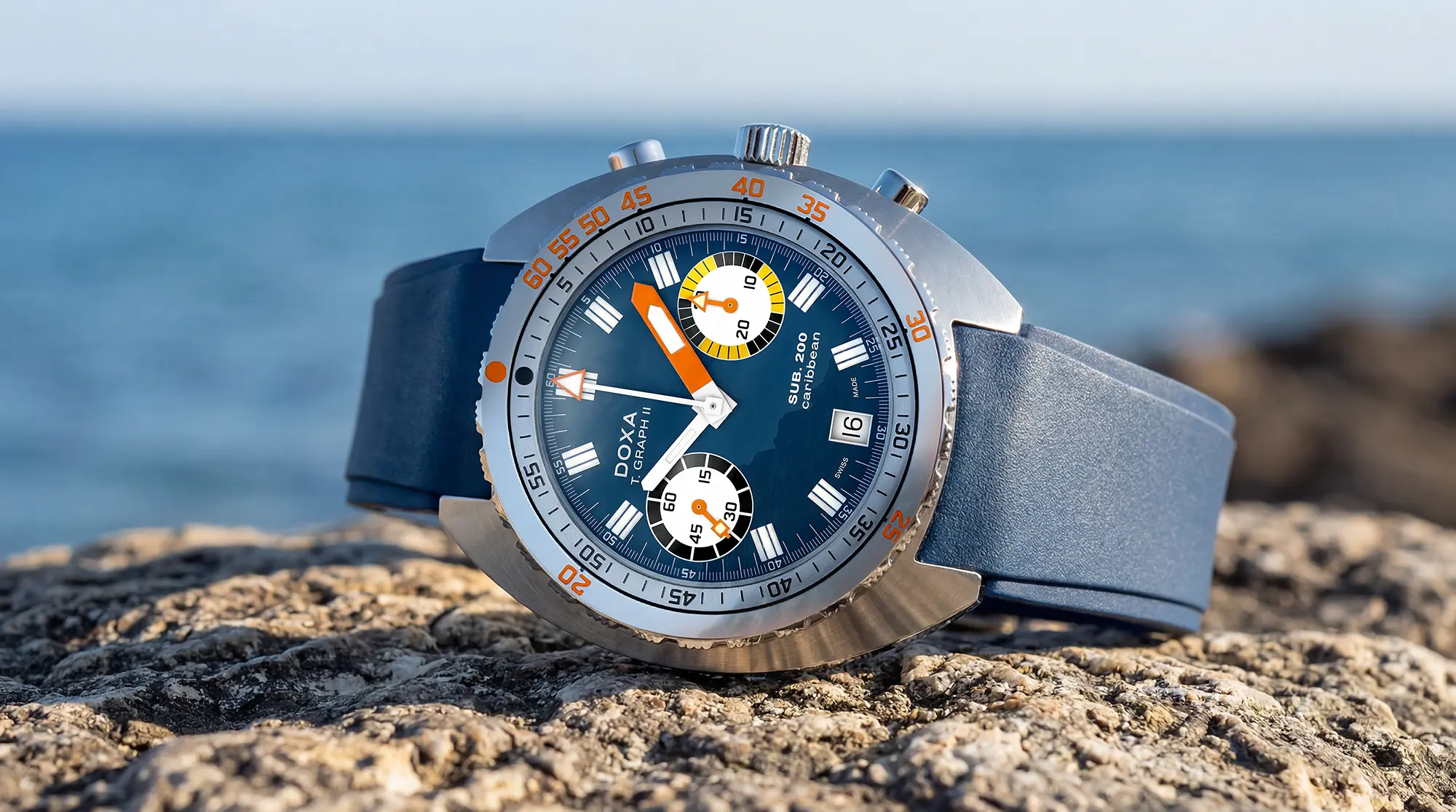
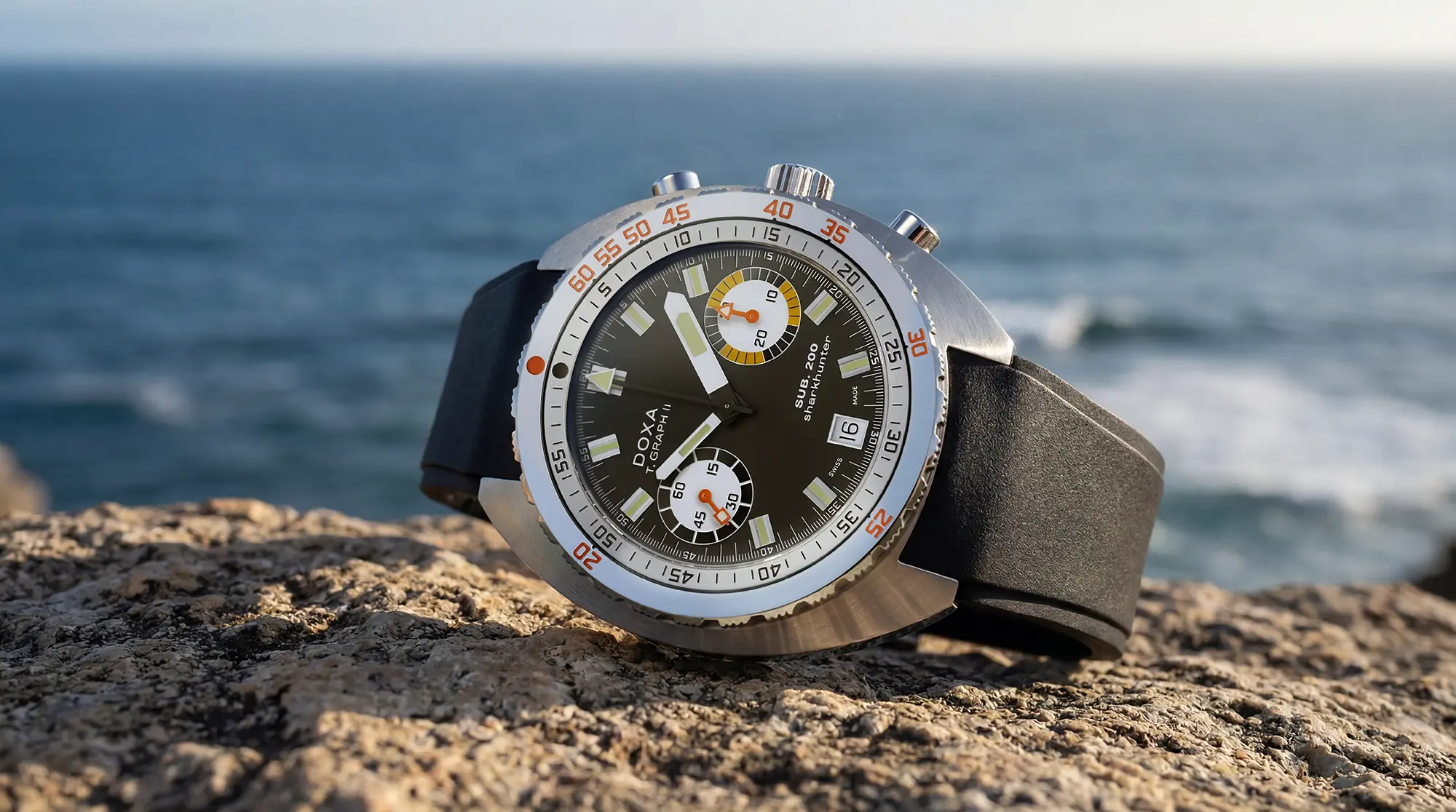
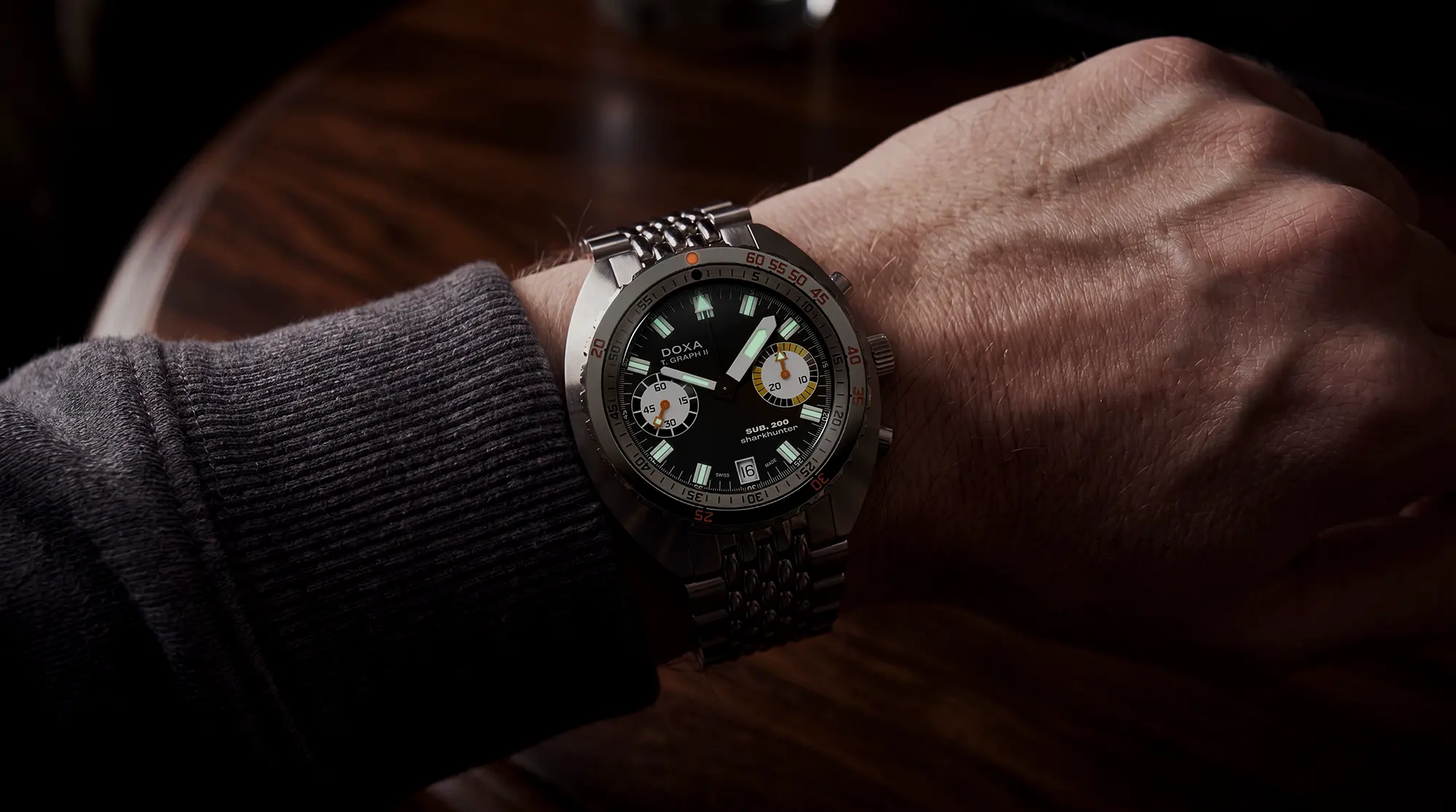
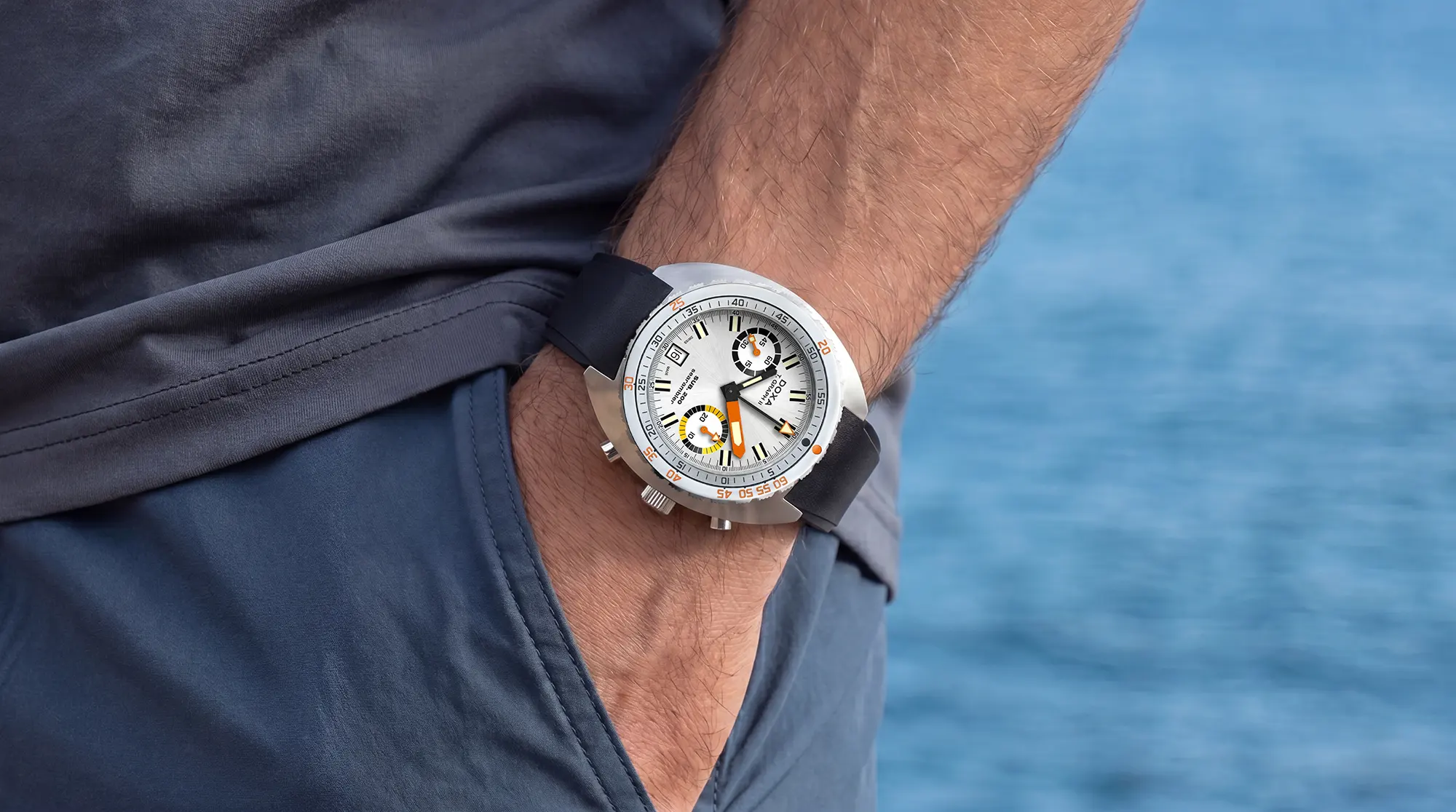
The new T.Graph is not a re-issue, hence the “II” in the nomenclature. Like many of the watches you’ll find in the current Doxa catalog, the historic inspiration remains quite clear at a glance. The newest T.Graph, which has only been available in limited edition up to now, will consist of four familiar colorways: Professional (orange); Sharkhunter (black); Searambler (silver); and Caribbean (navy blue). Each makes use of a steel 42mm case that measures 14.6mm in thickness with a 200 meter depth rating, and a Sellita SW510 beating away inside. If this is the kind of watch that appeals to you, you’re likely not one to get caught up on the measurements.
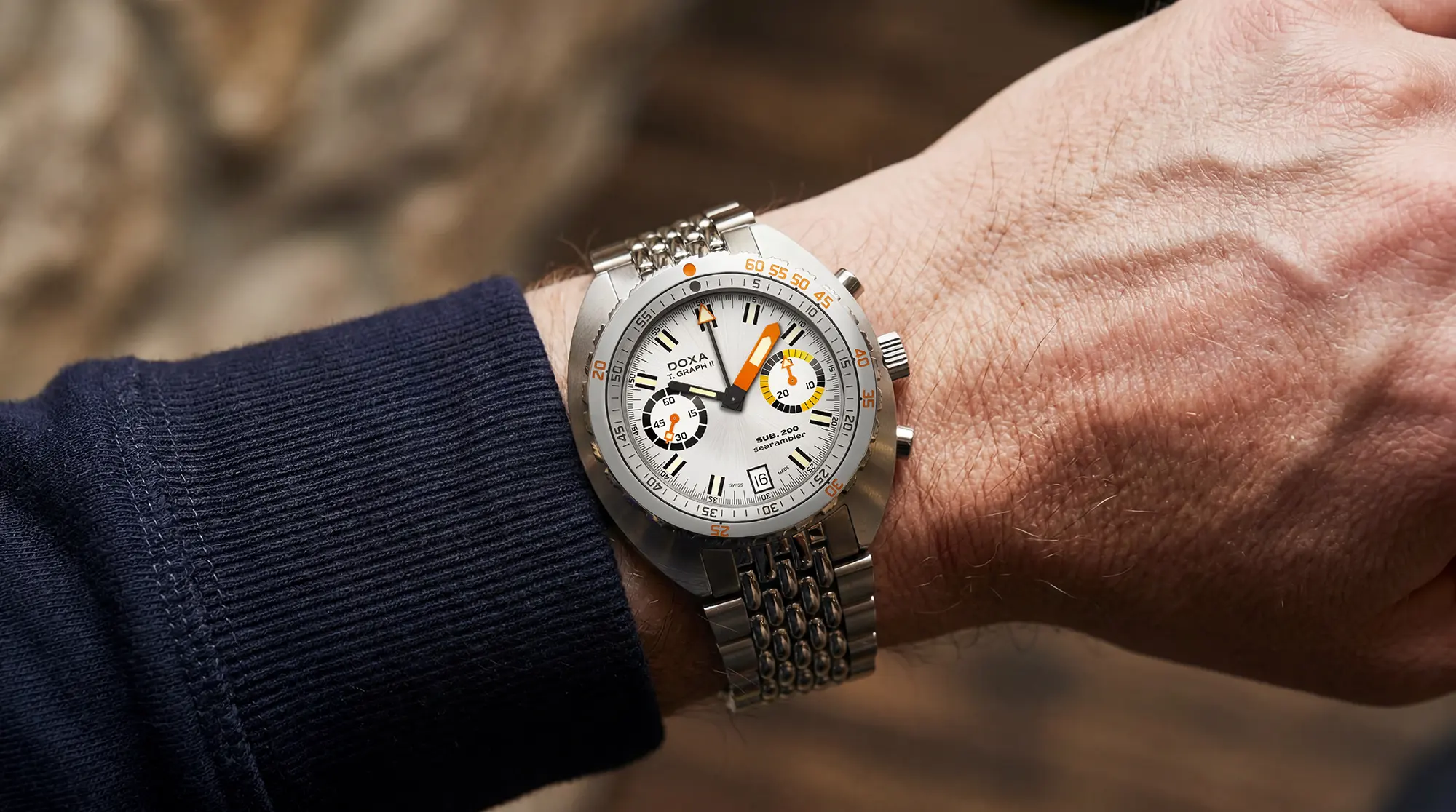
Like the original, the dial remains the main draw with the T.Graph II. It could be described as chaotic, but not in a bad way. Everything is bold and graphic in nature, but it’s all set in harmony, meaning there’s no competing for attention. Rather, it’s a confident design that feels holistic to the Doxa design language. It’s not unusual, but it is high on character. The block-like hands remain, with the disproportionately thick minute hand rendered in bright orange in the Searambler and Caribbean configurations.
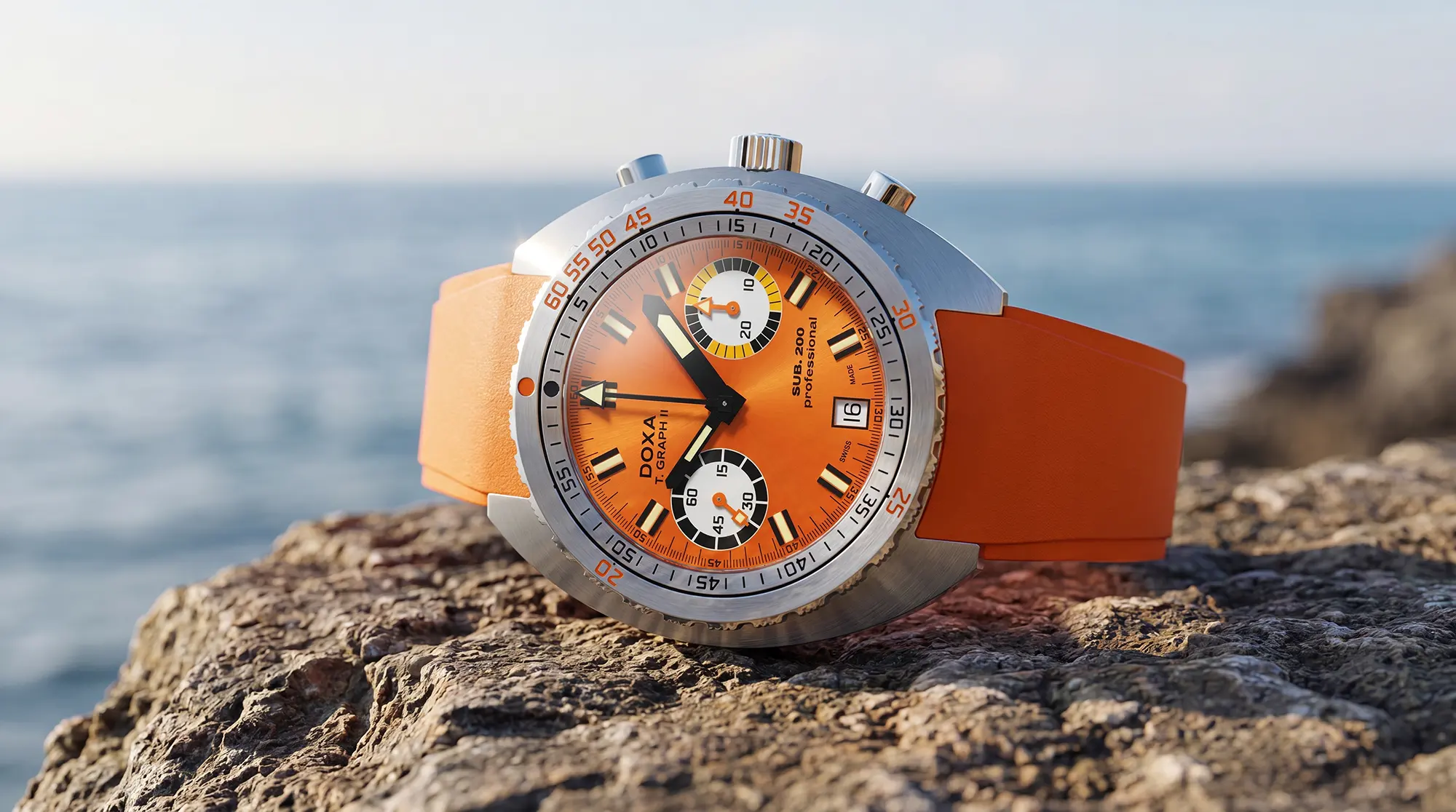
The sub-dials are just as expressive. Each segment is clearly demarcated, with contrasting yellow and black used in the minute totalizer. The tips of the timing seconds and minute hands get triangles to quickly differentiate them, while the running seconds hand gets a block at its end. The dial signage is asymmetric, as you’d expect, set at opposing ends from ten o’clock to four o’clock. Finally, a date aperture is placed at six o’clock. There’s a lot going on, but it’s all clearly represented and easy to digest. There are no superfluous details.
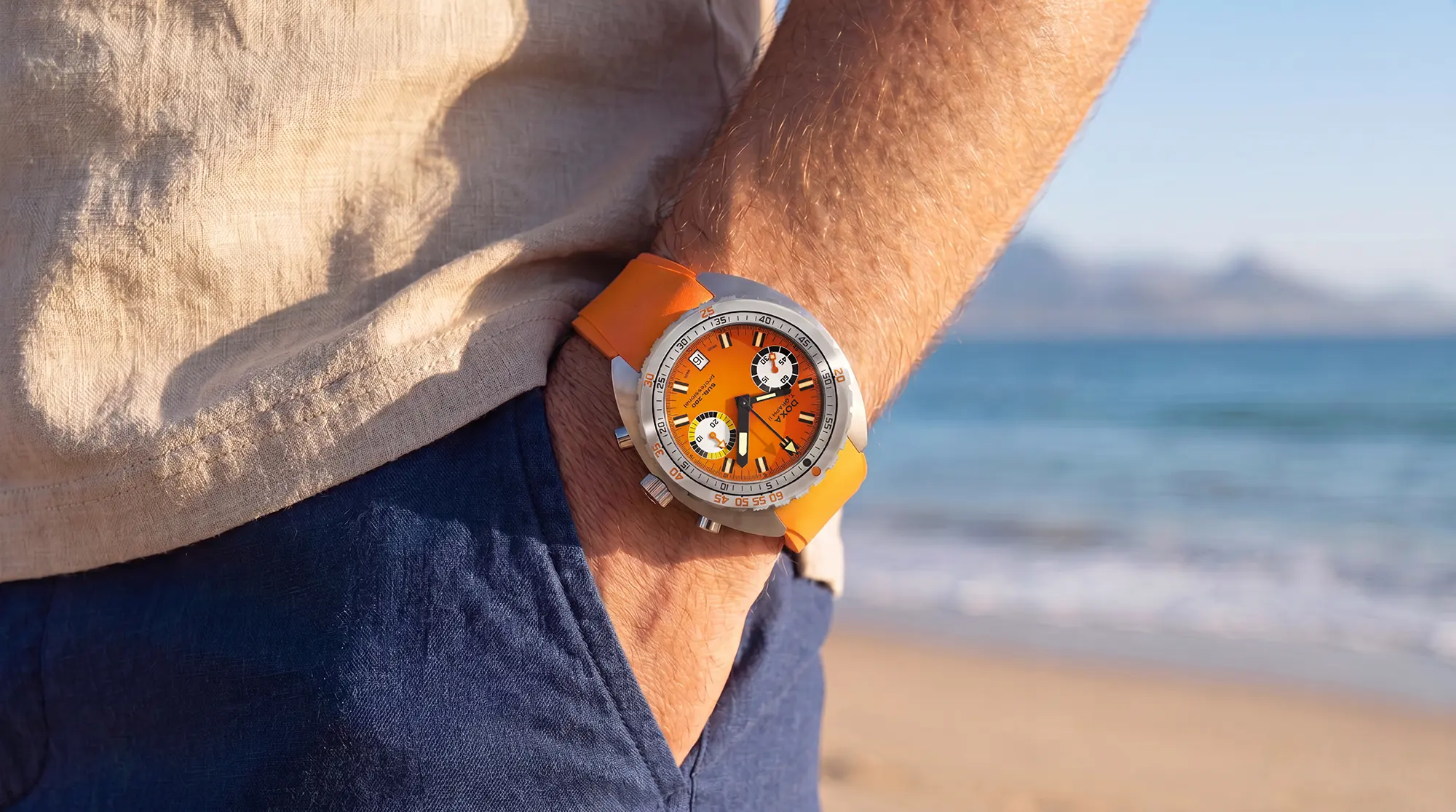
As the idea of the mechanical chronograph diving watch isn’t quite as practical as it may have been in the late ‘60s, there remains something deeply compelling about this design. There’s a lot of Doxa character present here, and while the design isn’t a 1:1 of the original, it captures the spirit adequately, and more importantly does so in a regular production manner. The new Doxa Sub 200 T.Graph II will ship later this summer, and is priced from $4,250 on rubber, and $4,290 on a steel beads of rice style bracelet. Doxa