
Christopher Ward has a problem. It is, admittedly, one of the better problems to have as a watch brand, and one that most of their competitors would happily inherit given the chance. Yet, a problem it remains, and if you have spent any meaningful time on their website recently, you might already know what I am talking about.
The problem is this: nearly everything that Christopher Ward makes is genuinely good, and they have priced all of it within striking distance of everything else. Pull up the catalog with a budget in mind and specific needs to fill, and you will find yourself an hour later with three browser tabs open no closer to a decision and mildly annoyed that you are cross-shopping two CW watches rather than 10 other competitors. You go in looking for one watch, somehow have talked yourself into and out of it, then back into four of them. You close the laptop in frustration without pulling the trigger. Christopher Ward has, through their sheer quality offerings at competitive pricing, paralyzed you into inaction.
This is a genuinely new problem for a brand, one worth acknowledging as the progress it represents.
A Brand That Learned Self-Editing
It was not always this way. For a considerable stretch in Christopher Ward’s history, the catalog told a very different story. It was one of wider stylistic variation, a more divisive logo, and a range that felt less like a considered collection and more like an enthusiastic accumulation. The brand had ambition and some watchmaking chops, but translating those qualities into a coherent identity that the enthusiast market would rally behind proved elusive.
What followed was, to their credit, a disciplined and patient process of refinement and resilience. The logo was addressed, catalog culled, and a family of what I consider staple collections emerged with a more cohesive design language, a commitment to case finishing sneaking into an unassuming price bracket, a movement strategy that keeps quality high without manufacturing friction accompanying the word “in-house”, and the most shocking thing of all, transparency. The higher priced offerings were then freed to break the mold in terms of visual design and complication, while still delivering the kind of perceived value that makes you double check the price tag twice and question what others are doing.

The result is a brand still very much innovating, and one that has earned its place in the enthusiast conversation. The problem is that it has earned it so thoroughly, across so many references, that choosing between them has become its own challenge.
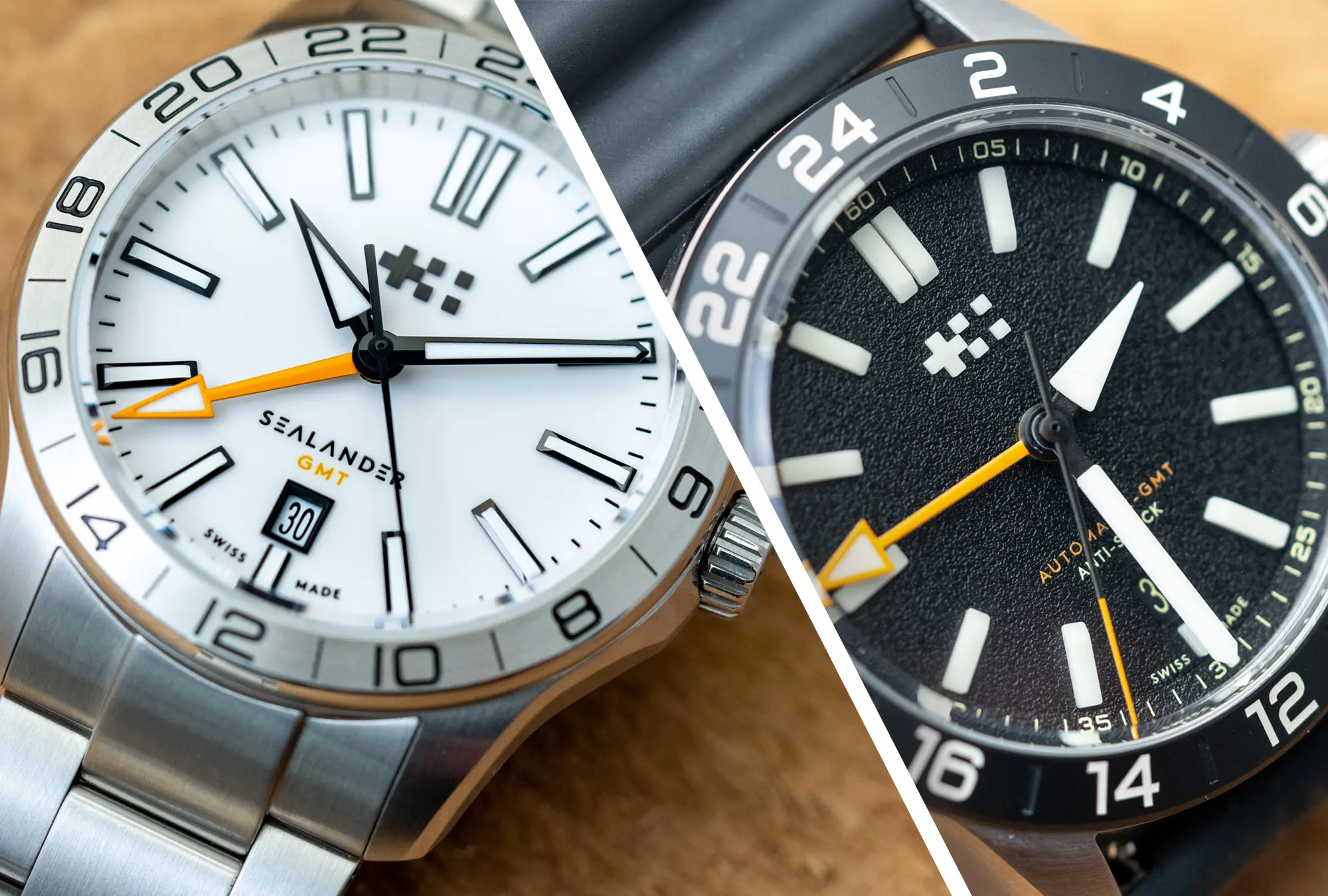
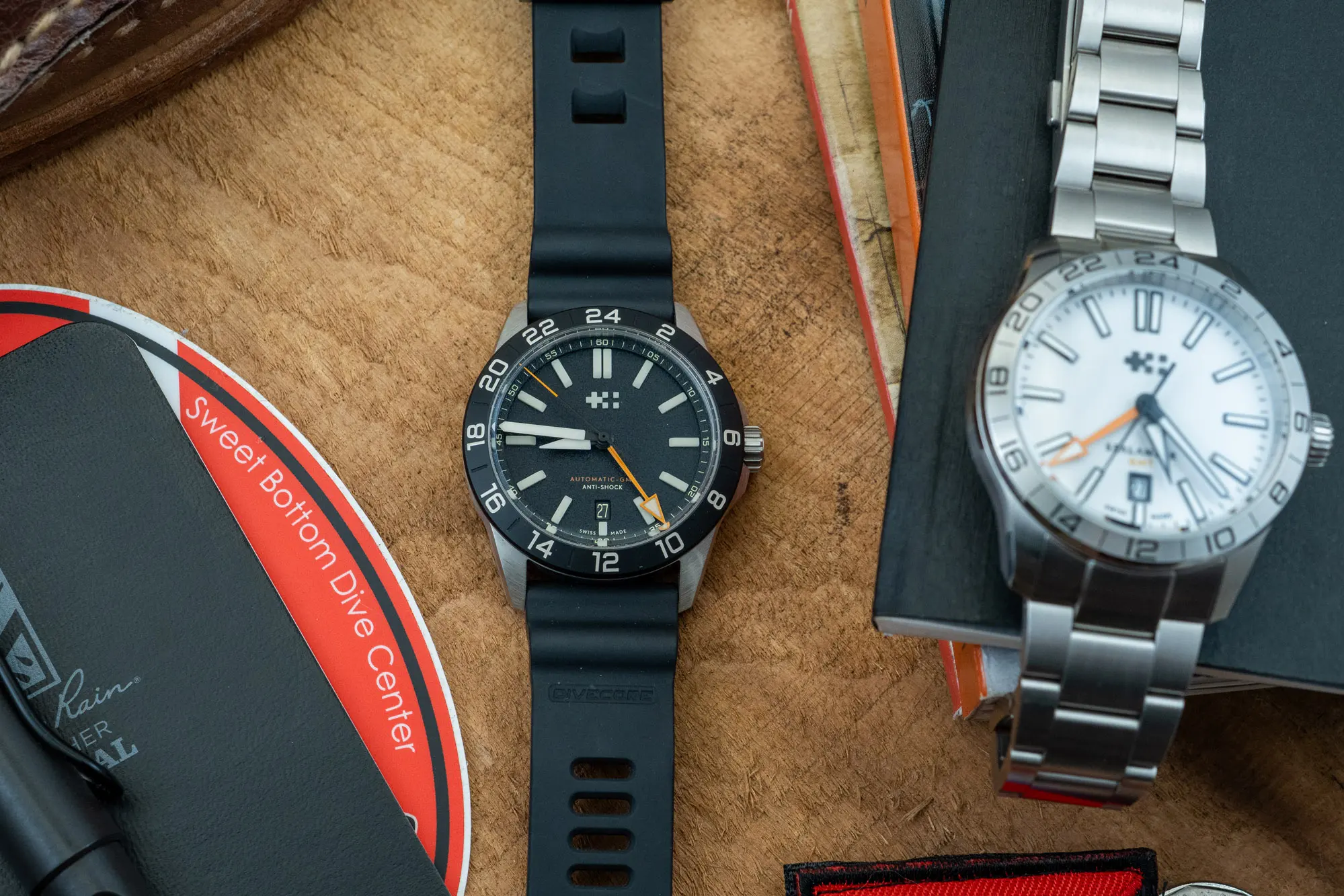
Nowhere is this more apparent than with the two watches that arrived on my desk recently: the C63 Sealander GMT and the C63 Sealander Extreme GMT. Two travel ready GMT watches. Same movement, similar dimensions, yet each with meaningfully different personalities and a price gap of just $230 – yes, $230 is a lot of money yet seems very small in the watch world – that will, I suspect, cause more deliberation than the difference has any right to produce.
C63 Sealander GMT – 42mm, White Dial, Bader Bracelet with iLink
- Price: $1,620
- Diameter: 42mm
- Thickness: 11.3mm
- Lug-to-Lug: 48.5mm
- Water Resistance: 150m
- Movement: Automatic SW330-2
- Crystal: Sapphire
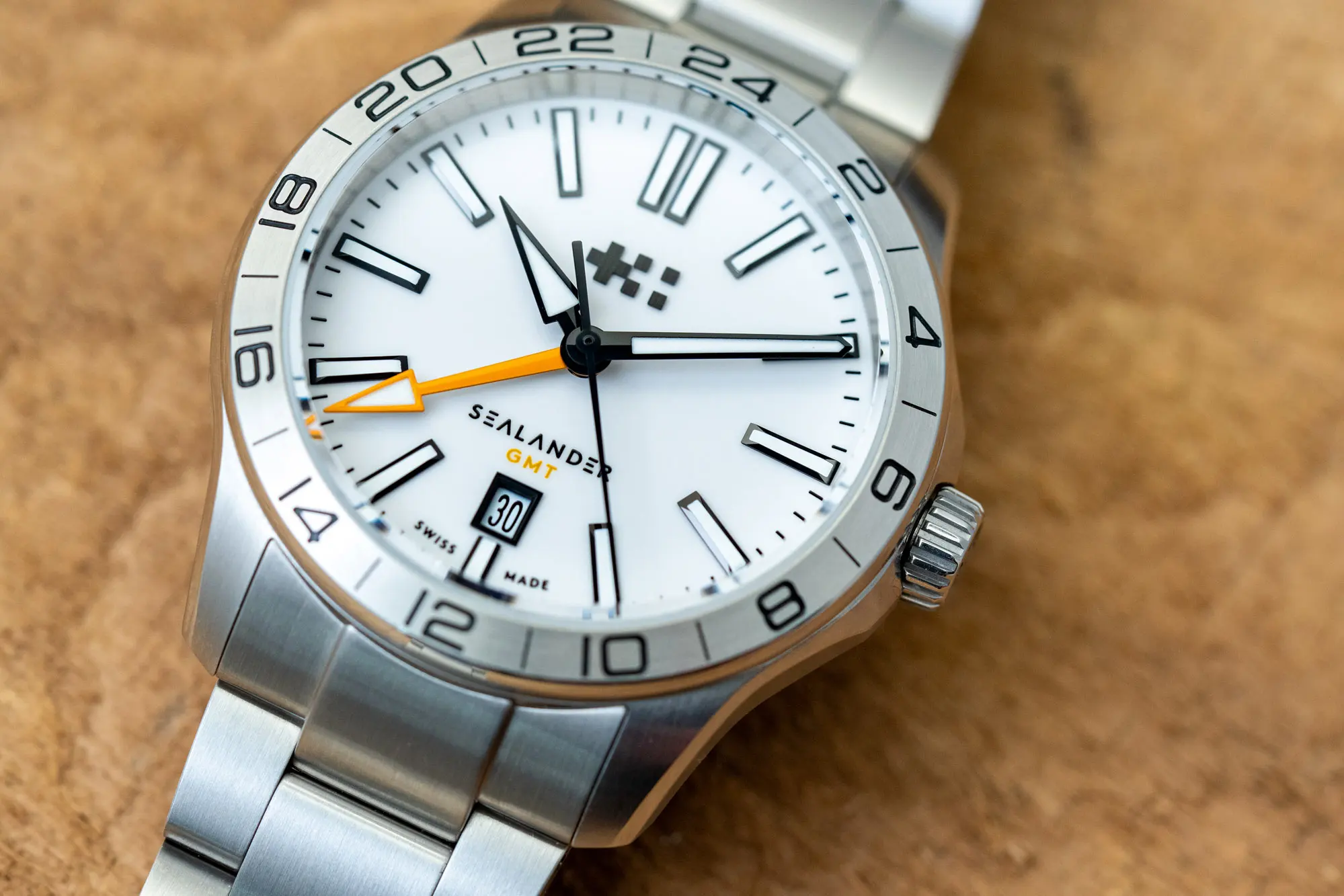
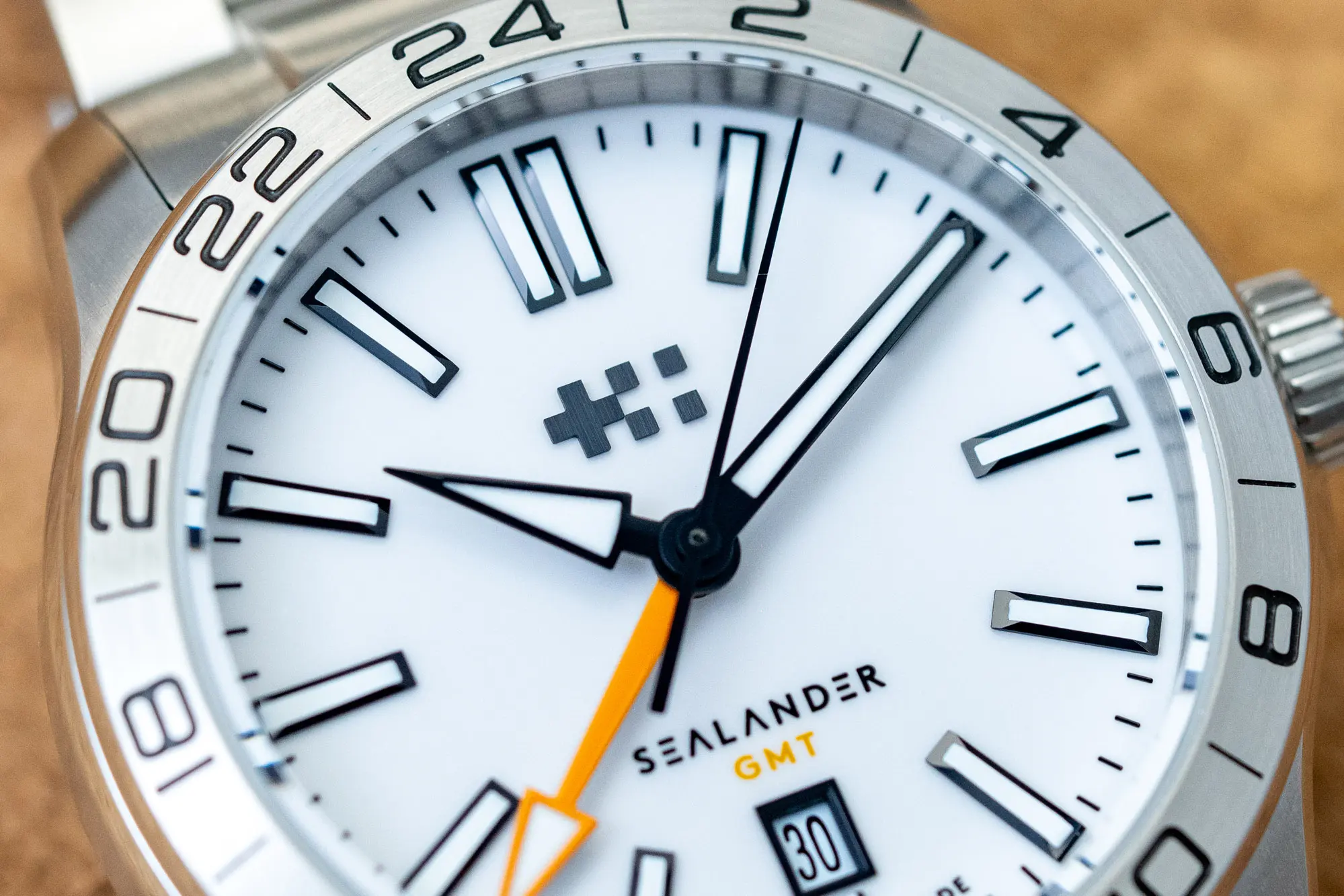
Let’s address the visual reference in the room and then immediately move past it: yes, the white dial C63 GMT draws from a well-established design tradition, and yes, the Explorer II polar dial is the clearest point of comparison. Christopher Ward has not exactly hidden this inspiration, nor do they need to. What matters is what they have done with it, and the answer is more interesting than the comparison suggests.
The white dial here carries a modern sensibility rather than a vintage one with darkened applied markers framing white lume, an applied logo in the same tone, an orange GMT hand bold and immediately legible, and orange GMT text on the dial to match. It is a cohesive package with a contemporary feeling, less a heritage piece brought forward and more a watch that happens to know its reference while doing something of its own.
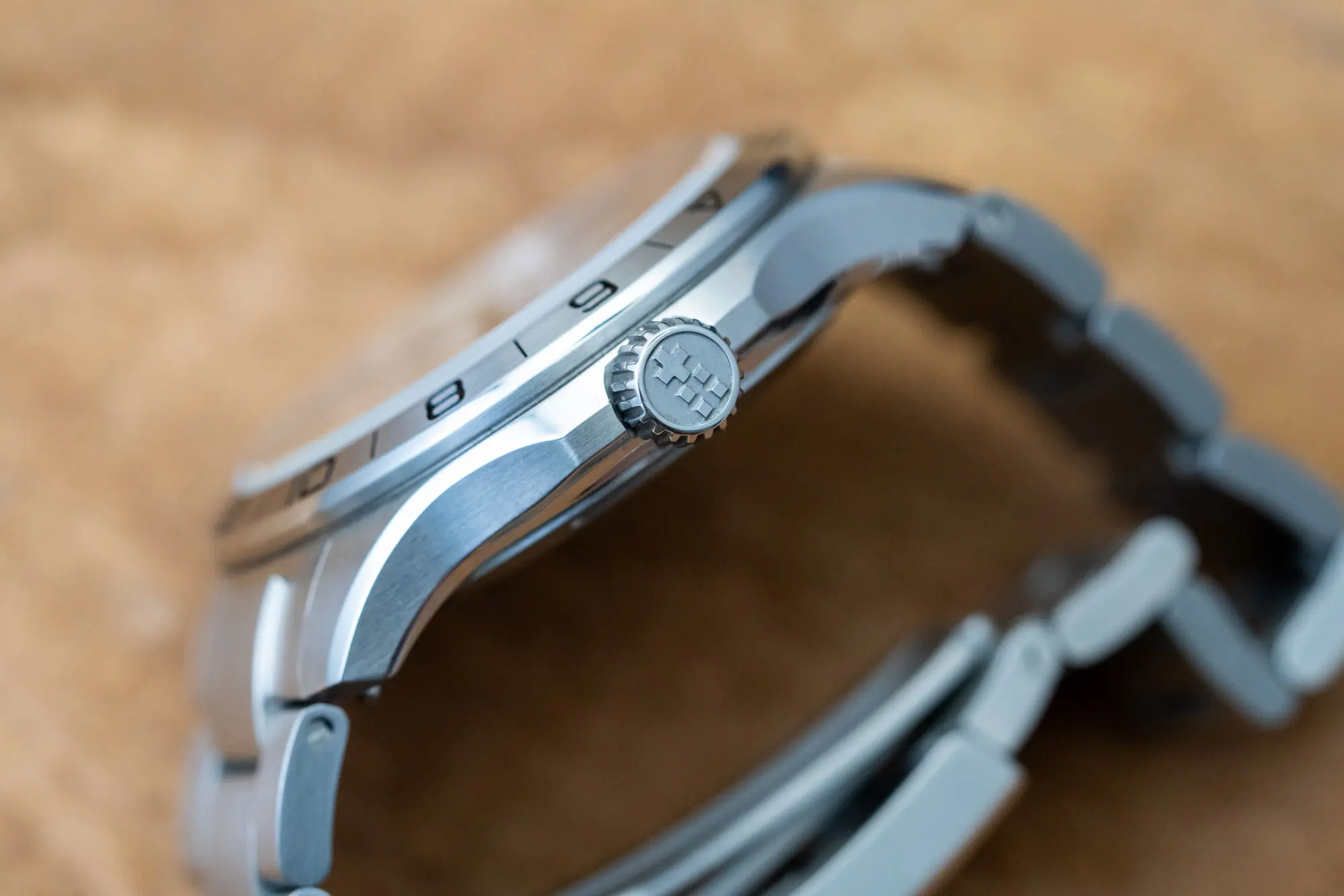
It is also, on the wrist, extremely comfortable. The newly renovated Lightcatcher case at 42mm wears with balance that its dimensions don’t quite predict. Every chamfered edge catches light with the kind of consistency that tells you the case finishing has been a genuine priority here, not merely a talking point. The transitions are clean, angles deliberate, and the overall architecture sits with the quiet authority of a brand that has put real thought into how steel interacts with the wrist and with light.
The Bader bracelet deserves its own moment. It fits the lugs with a snugness and finishing cohesiveness that brands at multiples of the price frequently fumble. The link sides are brushed rather than polished, a cost-adding detail that is often skipped. The milled clasp with hidden on-the-fly micro adjustment is well finished and offers decent range for those of us whose wrist size wanders with the changing seasons.
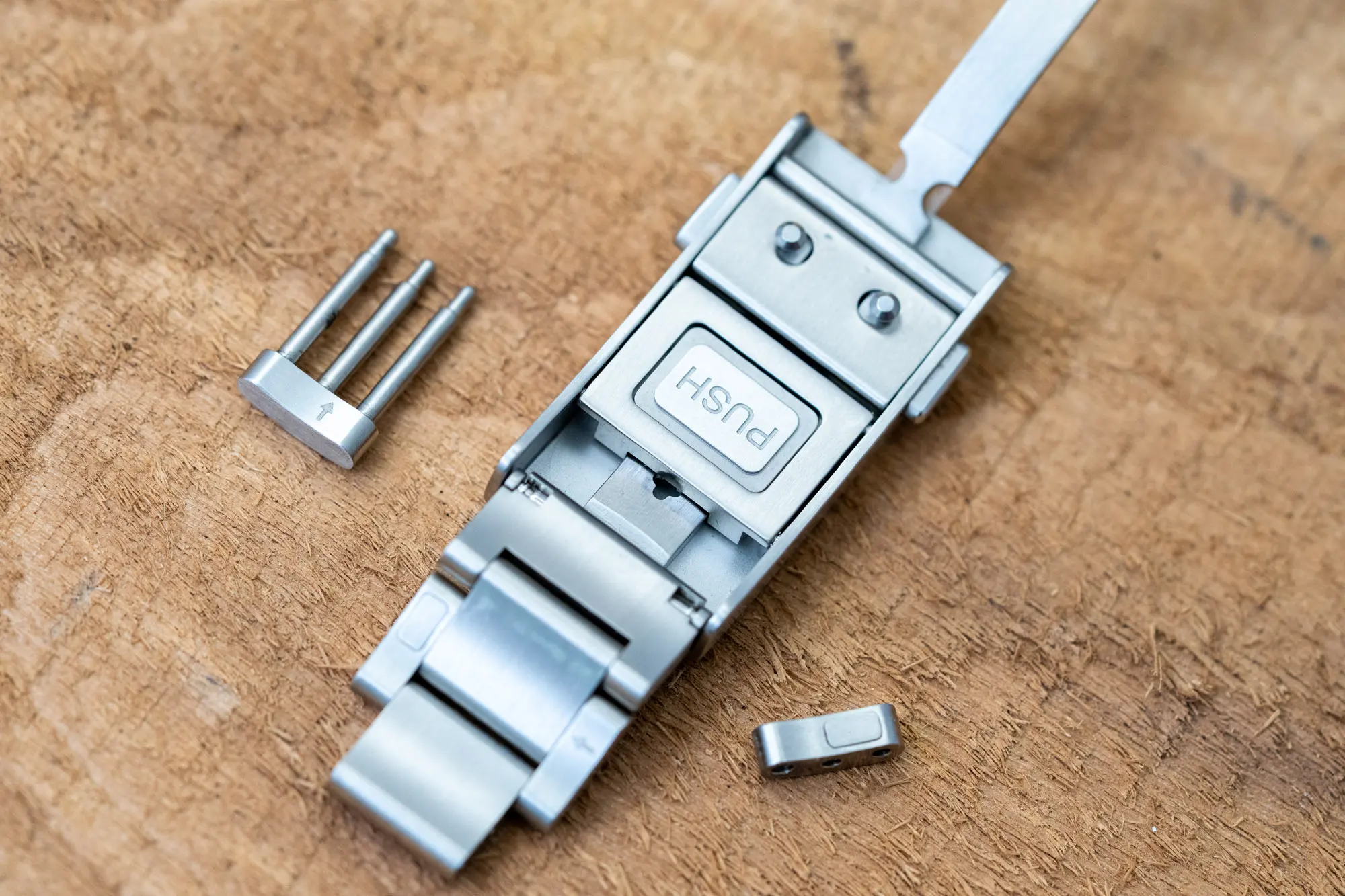
Then, there is the new iLink system, which is the sort of feature that makes you reconsider the entire landscape of what is possible at a given price point. A nontraditional, almost tool-free link adjustment system allows its owner to remove a link without a visit to the watchmaker or many lost hours digging through carpet for a pin. The likes of which are not seen regularly until you start spending significantly more. Here, it works cleanly, intuitively, and without a fuss.
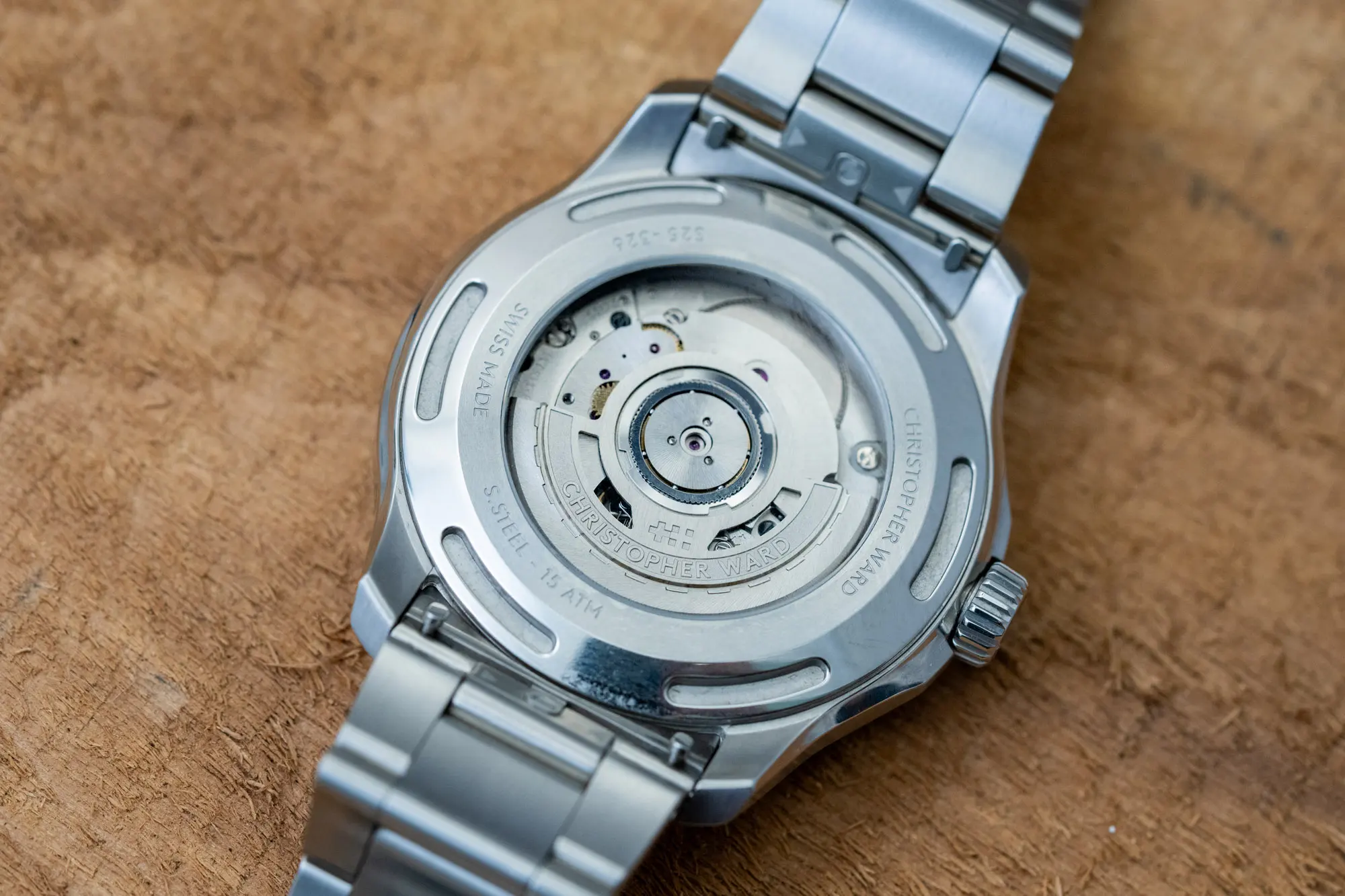
Inside, the reliable Sellita SW330-2 ran between -6 and +7 seconds per day across all positions on my timegrapher, showcasing respectable regulation. It hacks, hand winds, gives you the GMT complication, and does it all without screaming for attention allowing for simpler service should something go wrong.
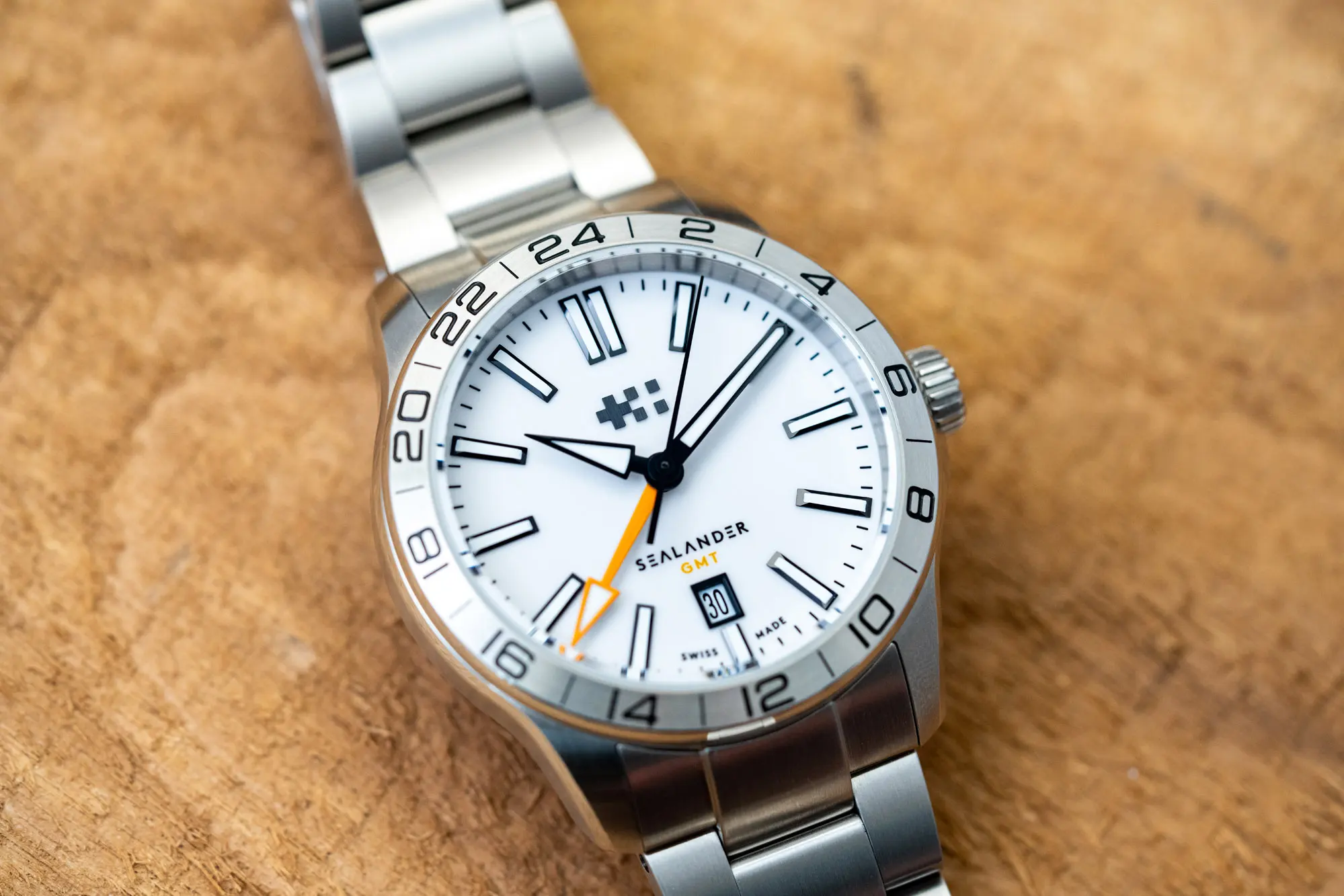
Now, the honest caveats. The white dial has an interesting optical effect in certain lighting. It absorbs surrounding color in a way that gives it a faintly milky, pink-adjacent hue that I found myself noticing more than I expected. It is subtle enough, and will not bother most wearers, though it did bother me slightly. The darkened applied markers surrounding the white lume creates a contrast while also having the effect – which I can only describe as – of the watch wearing eyeliner. The GMT Hand, bold and legible as it is, runs slightly thicker at the base than feels strictly necessary and competes for a lot of the overall intention.
These are genuine observations rather than serious criticisms. The C63 GMT white dial is an excellent watch. For those drawn to its design language, it is difficult to fault at this price. Its finishing, the bracelet system, the movement performance, and the wearing experience all deliver beyond expectations.
C63 Sealander Extreme GMT – 41mm, Black Dial, Orange V-Strap
- Price: $1,850
- Diameter: 41mm
- Thickness: 12.05mm
- Lug-to-Lug: 48mm
- Water Resistance: 150m
- Movement: Automatic SW330-2
- Crystal: Sapphire
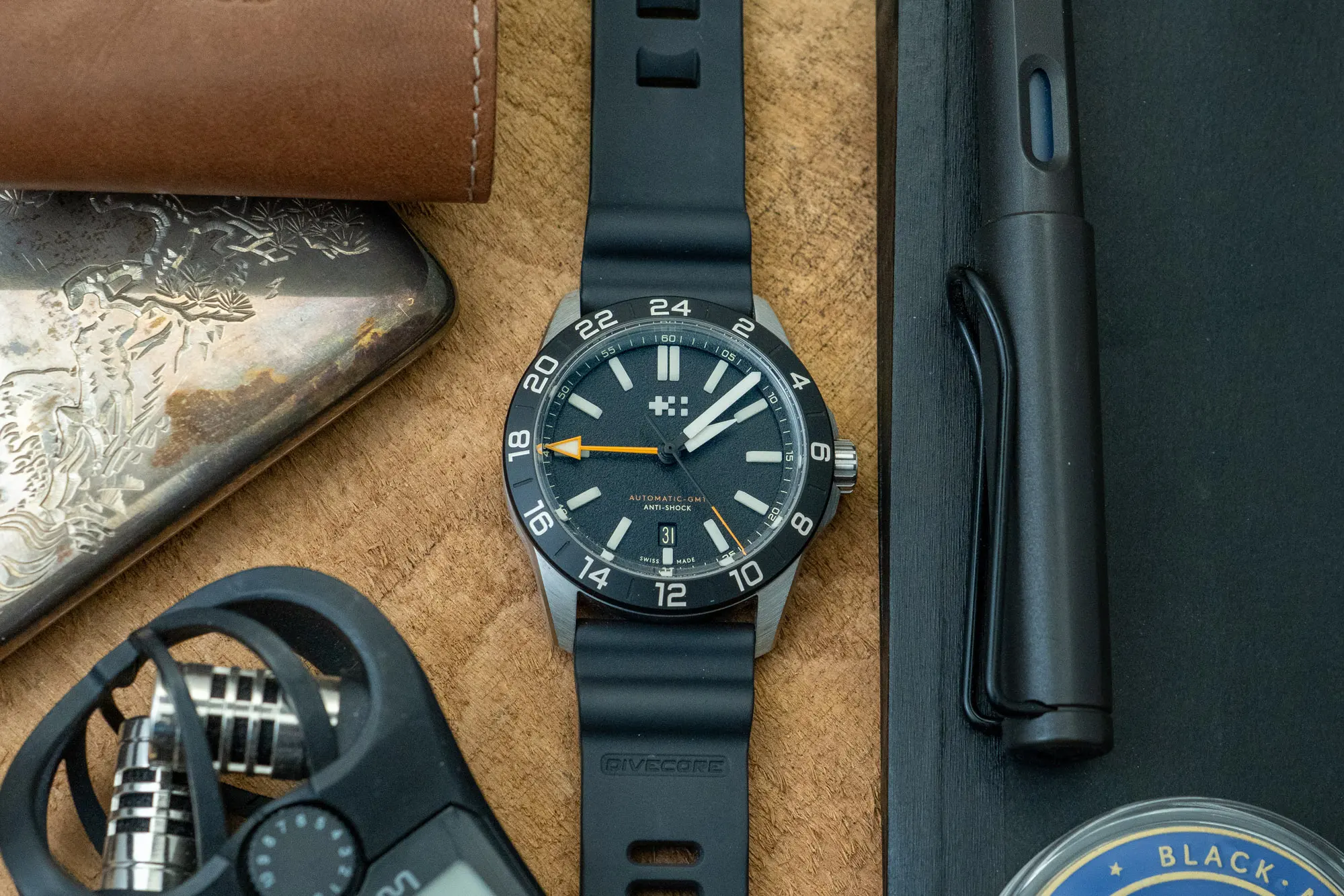
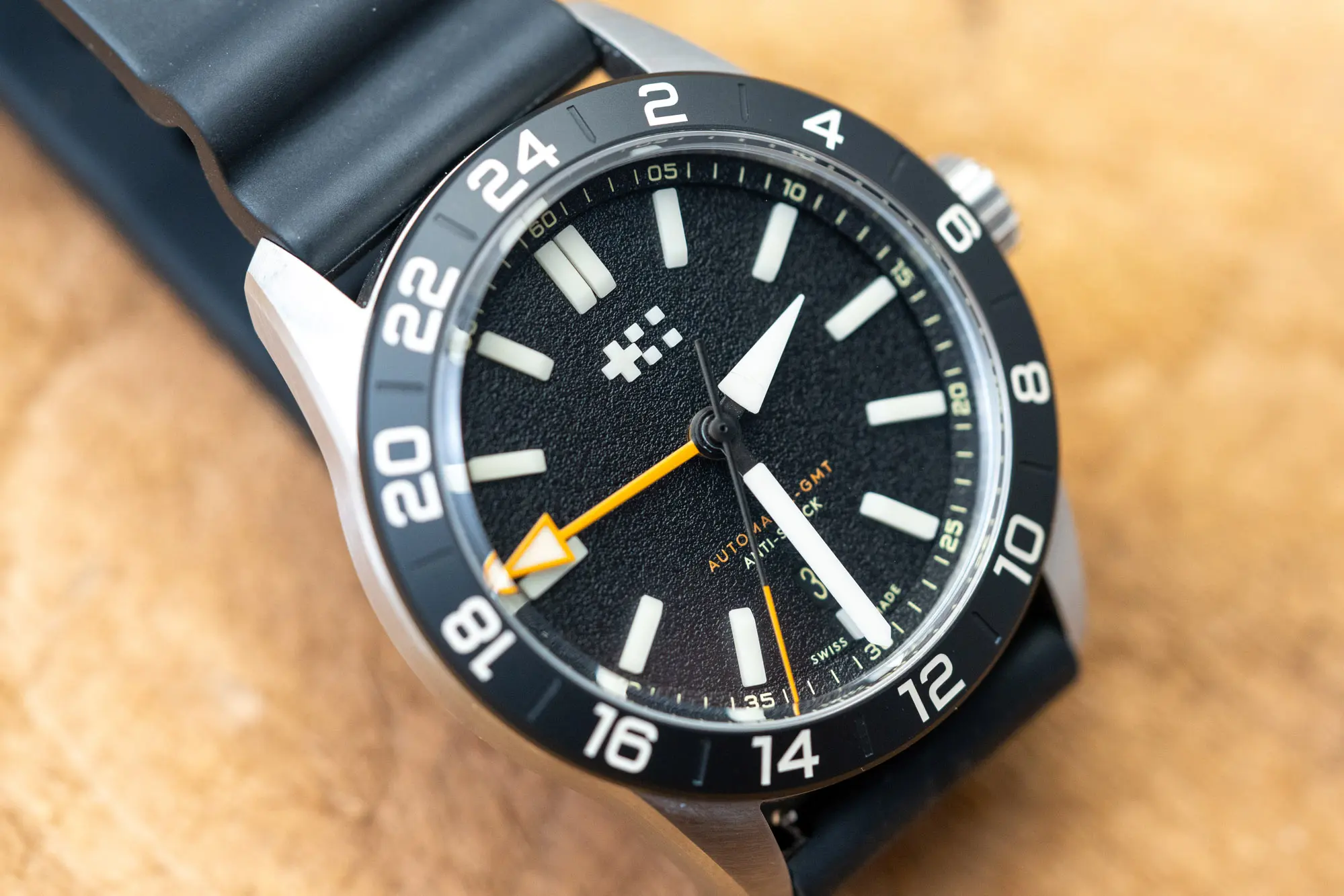
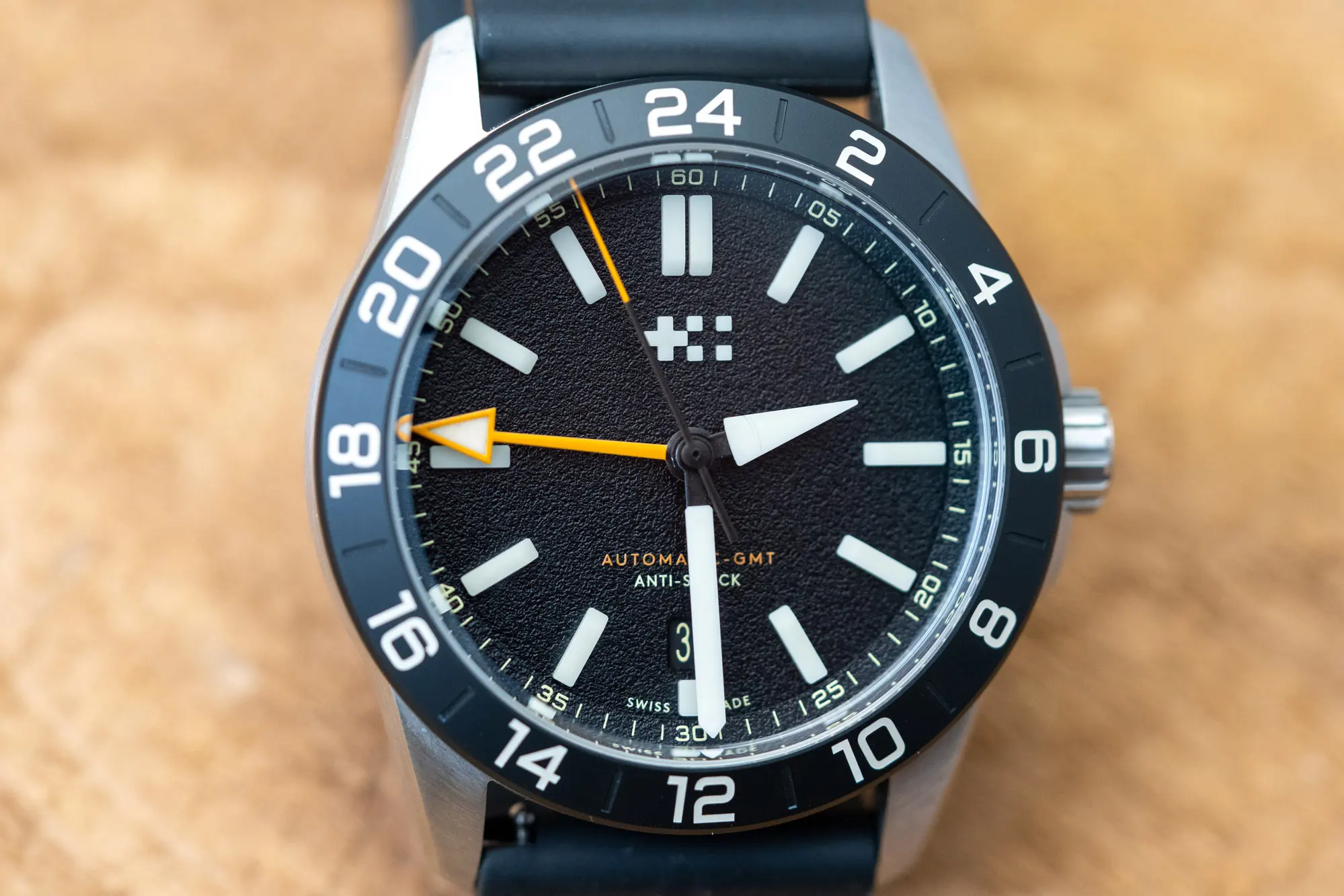
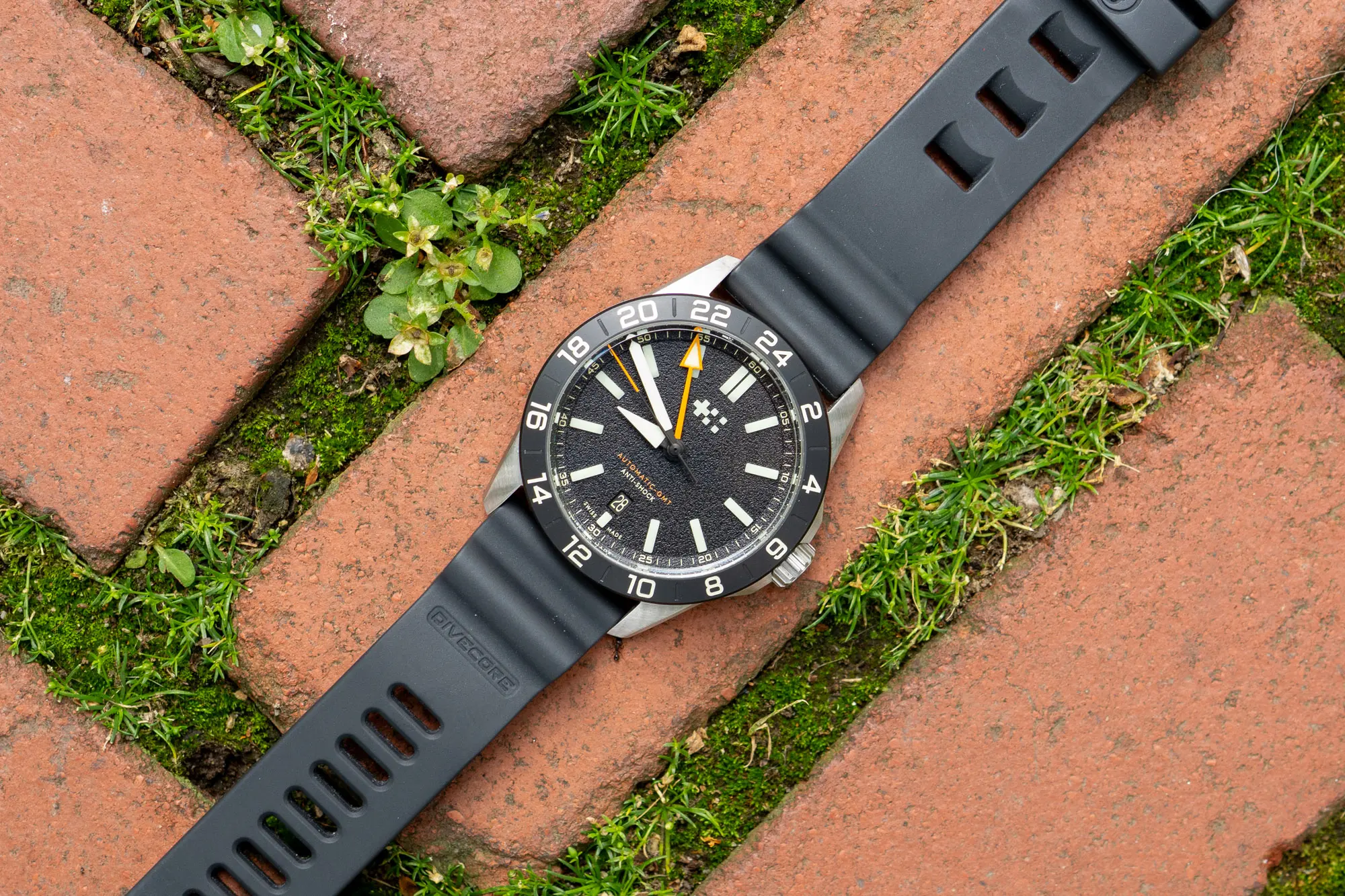
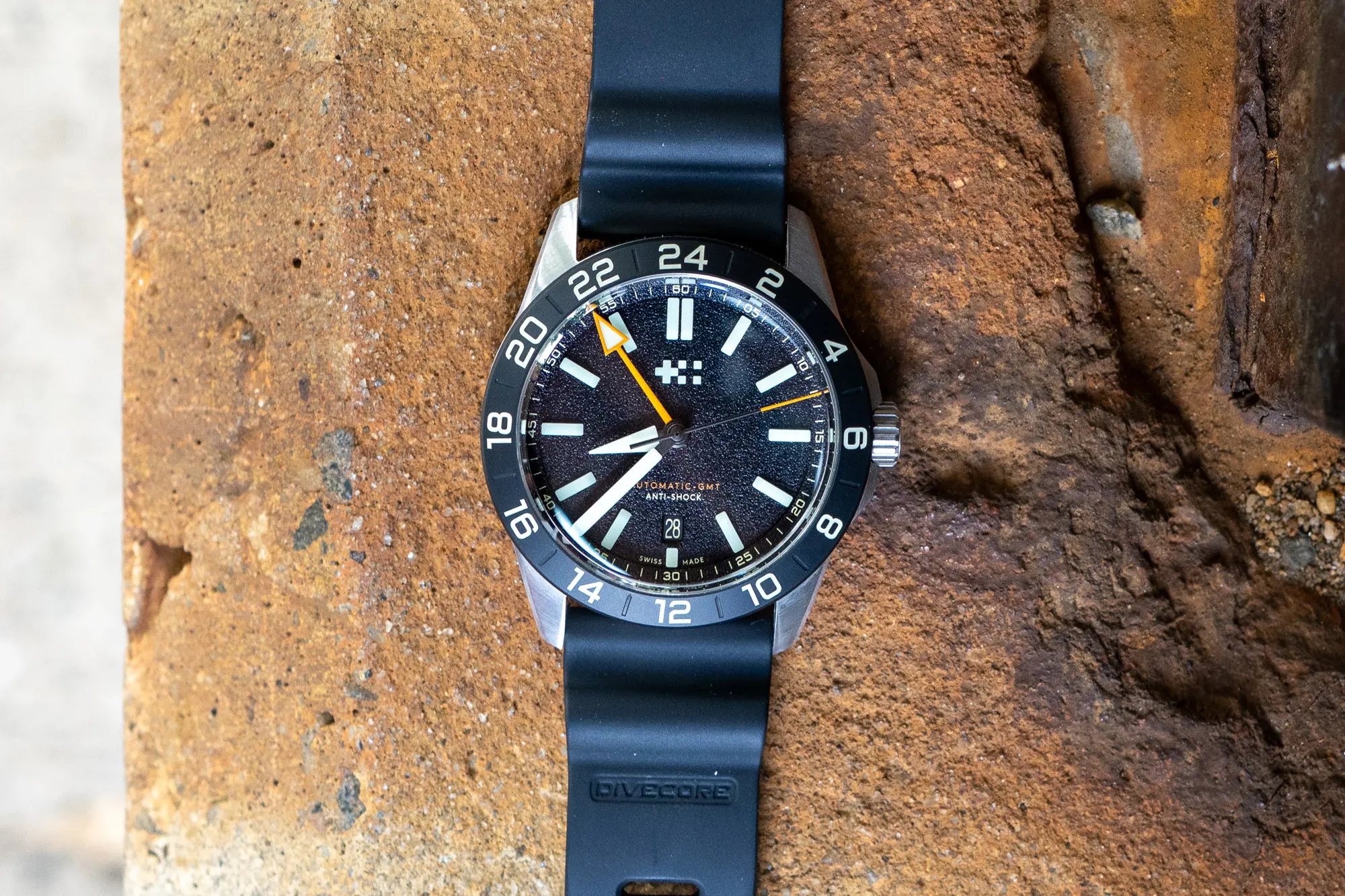
Where the standard C63 GMT earns its place through refinement and surprising bracelet quality, the Extreme GMT arrives with a different mission entirely. This is a watch that leans forward. It is bold, aggressively legible, and textured in ways that communicate intent before reading the specifications. It does not draw from overly recognizable design shorthand. It has its own language, and it speaks loudly enough that you know exactly what you are dealing with the moment it lands on your wrist.
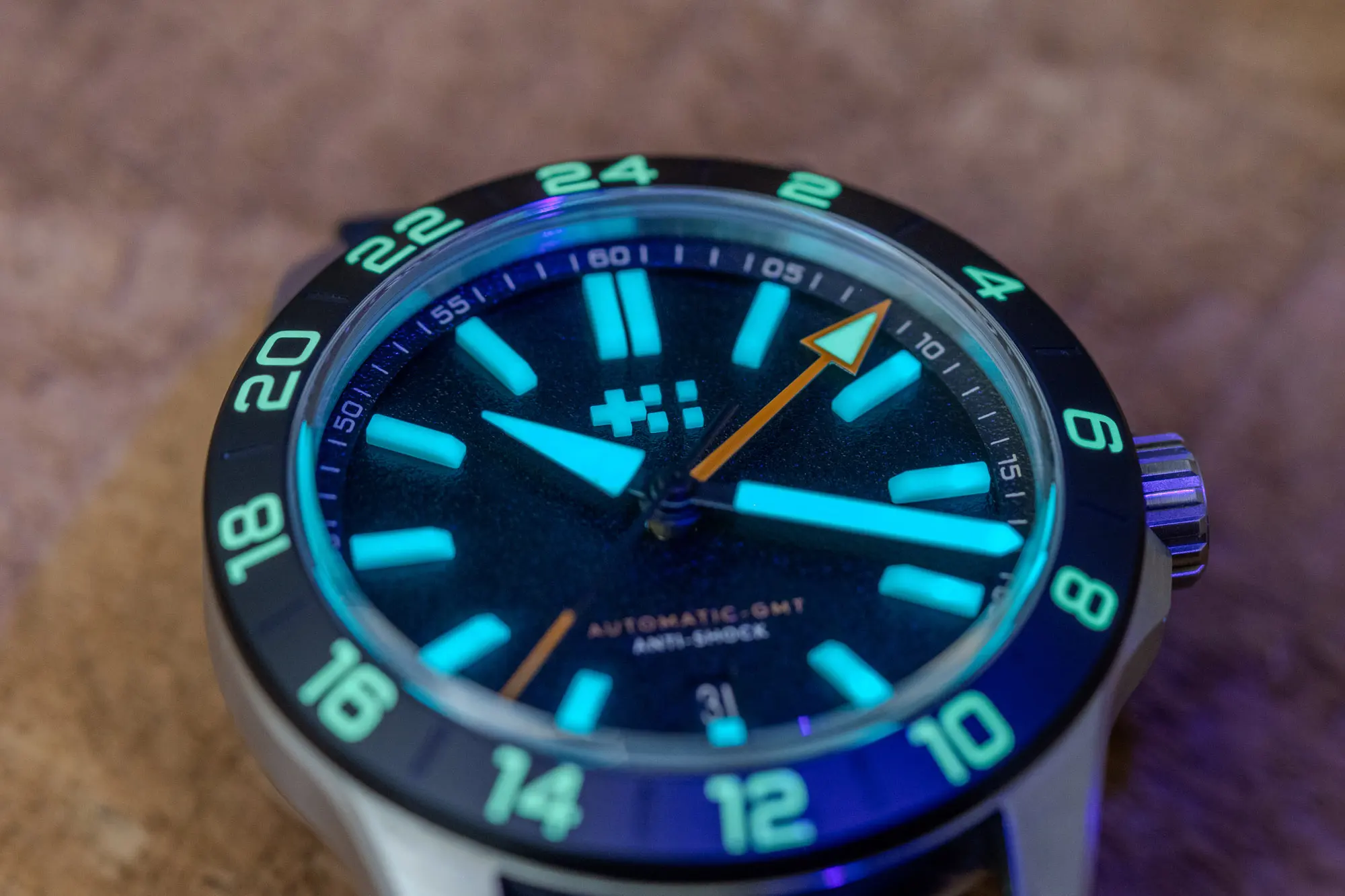
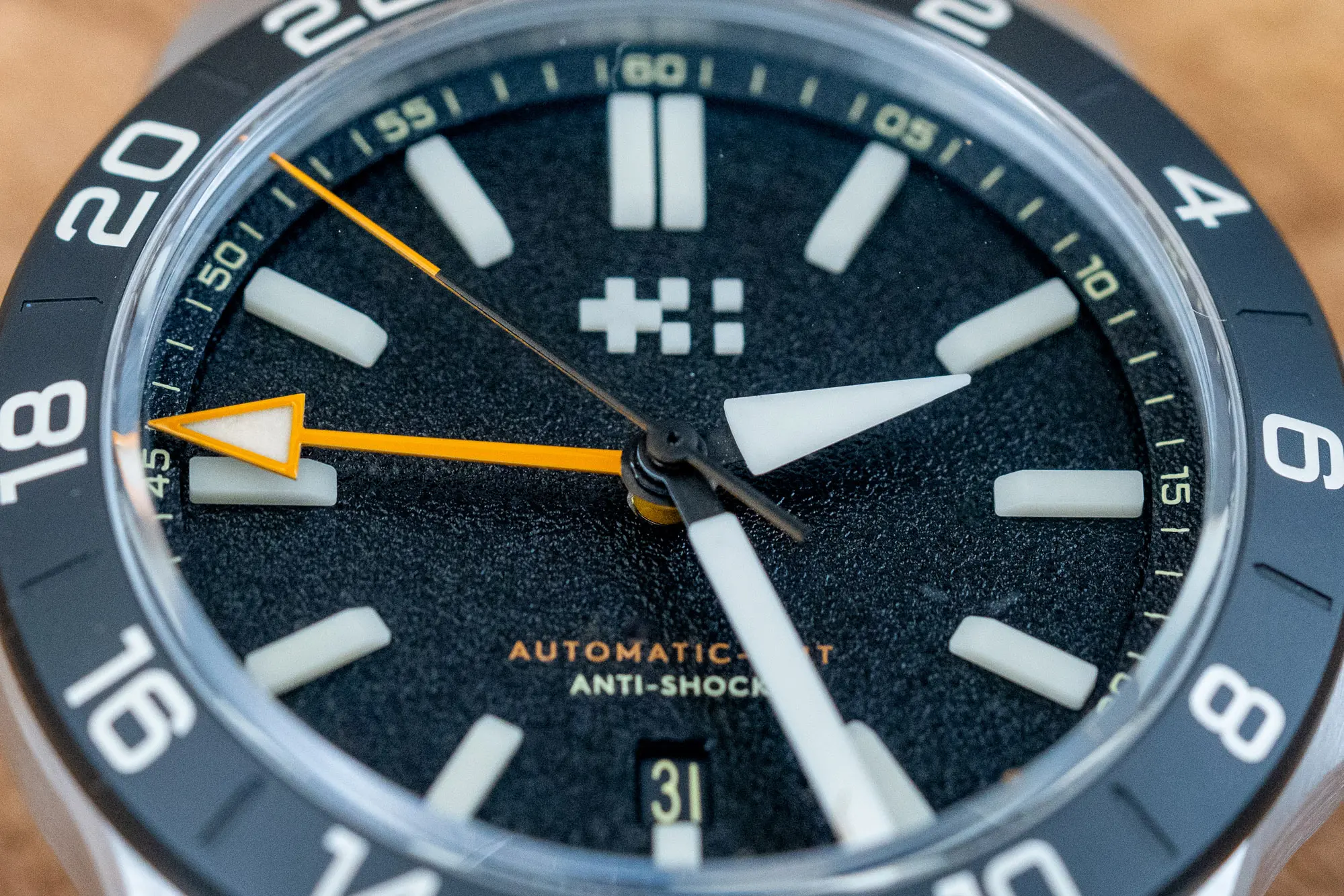
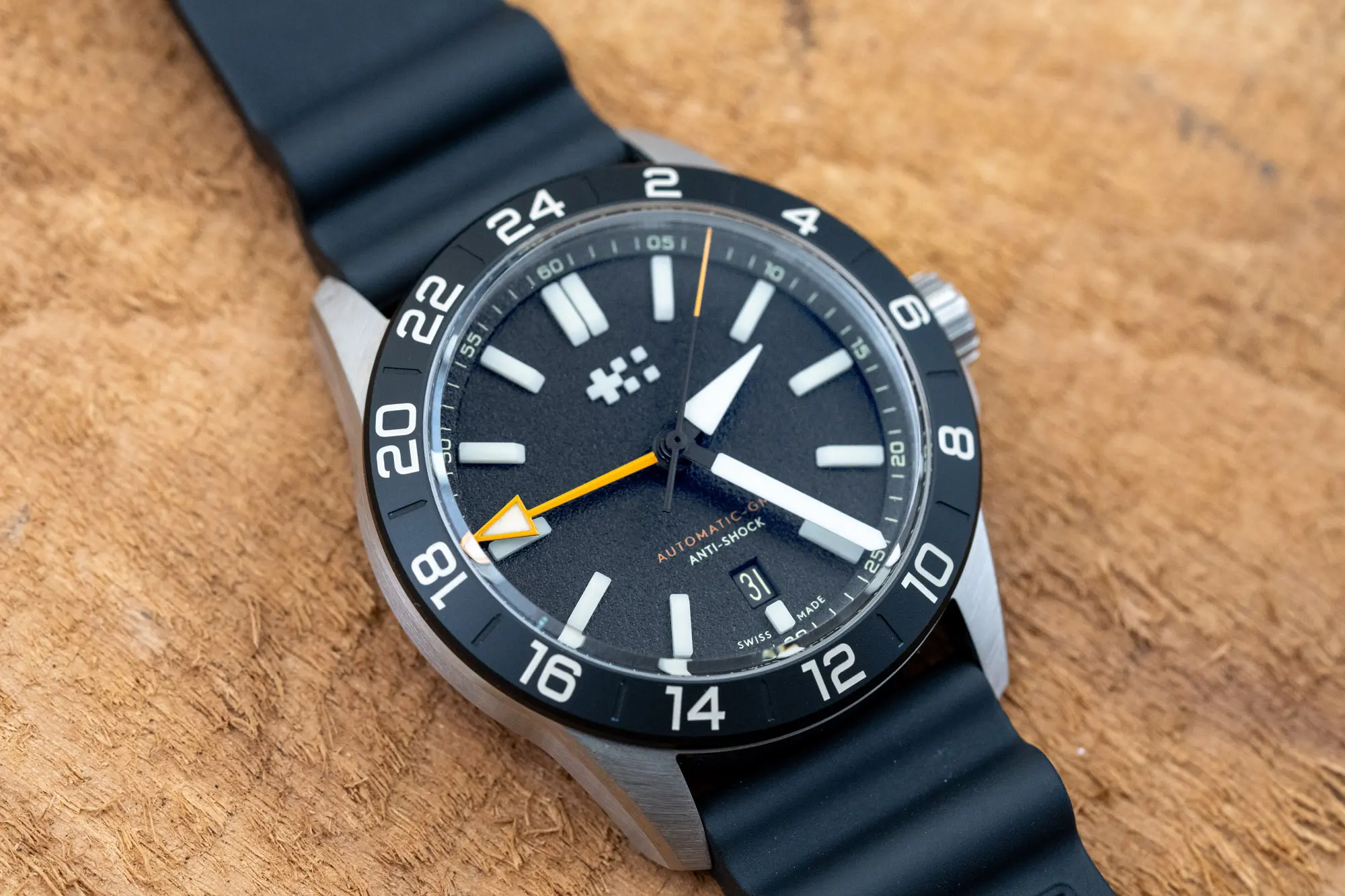
The dial is where the Extreme GMT shows its differences and makes its most convincing argument. A fine texture across the primary surface leans into the field watch aesthetic with confidence that manufactured ruggedness rarely achieves. The lume blocks are generous, almost absurdly so and in the best possible way. They sit in stark contrast by day and then by night switch to glowing so brightly and hold so long that you may find yourself hiding the watch under a pillow at night. Flat lumed hands that I initially suspected might feel a bit compromised instead live up to the challenge with their own legibility. They sit relatively flat to the dial, read instantly, and reinforce the watch’s commitment to function over flourish.
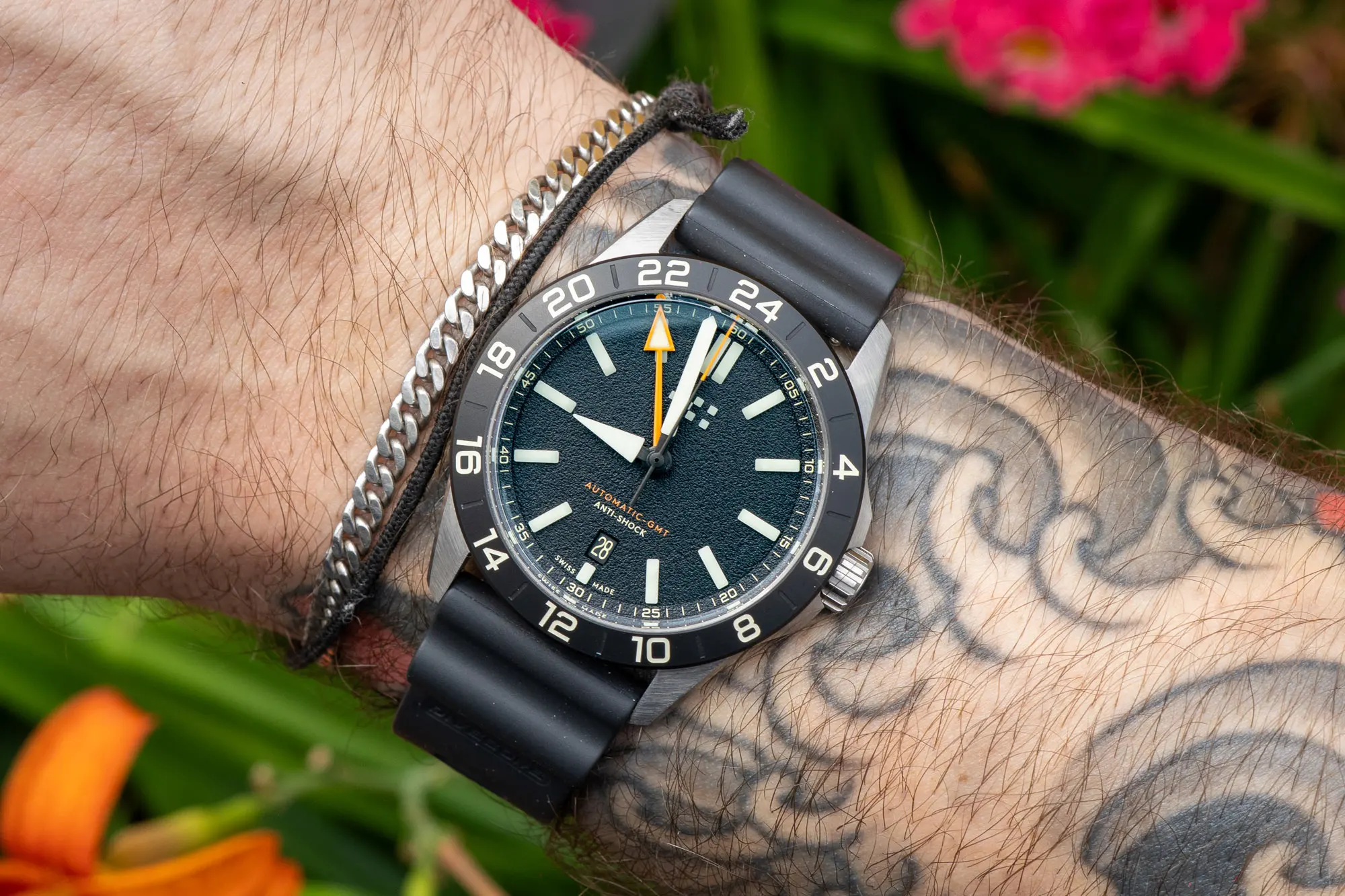
Color consideration across the dial is one of the more considered things Christopher Ward has done well across its entire line. The lume block indices, the logo itself rendered in lume, the filled Arabic numerals on the bezel, and the orange accents are complementary and cohesive enough before emitting different colors in lower light for purpose built discernment. It is the difference in the watch being designed by someone aiming to achieve the look of an adventure ready field watch versus someone intentionally building one.
Here, the Lightcatcher case is the previous generation rather than the updated version found on the C63 GMT I had in. This is worth noting not as a deficiency but as a character detail. The slightly older architecture, without the newer model’s refined angles, slimmer profile, and fantastic crown, leans slightly more into its rugged aesthetic in a way that serves the Extreme’s personality. The newer case certainly improves things, yet in practice, it is hard to find fault with the older setup.
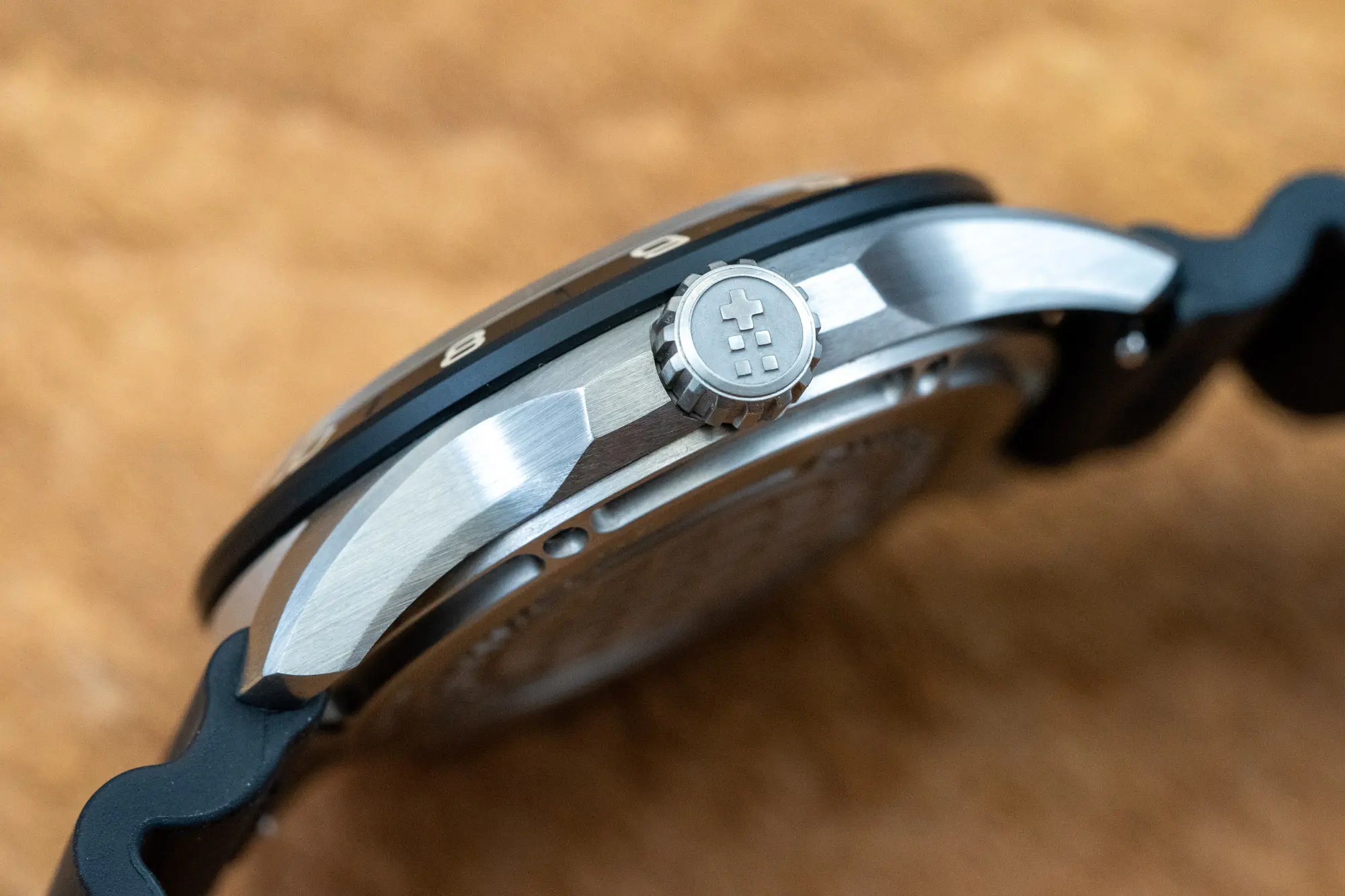
In tandem, the Extreme GMT runs on the same Sellita SW330-2, running equally well at -5 to +8 seconds per day. Consistent, regulated, and quietly reliable is the way to a good tool watch stamped with the sort of go-anywhere-do-anything ethos it aims for.
The V-strap, however, is where my enthusiasm for the model finds its limits. It looks exactly right to suit the personality, but in practice it accumulated dirt quickly, losing its color vibrancy faster than expected, and sat stiff the entire time despite rigorous efforts to soften it. The velcro and buckle system, while clever in concept and visual, produced a strap that resisted breaking in. It fought folding back on itself in a way that looked wrong on wrist even though it functioned fully without issue. I tried, then I swapped it out. The good news here is that this watch is an exceptional strap monster looking genuinely great on everything I tried. In the end, perhaps unsurprisingly, it wound up on a black Divecore FKM rubber strap and never left. For those curious, yes, the iLink Bader bracelet did fit on the Extreme GMT, though the older generation of case here did not marry the endlink easily.
None of this diminished my enthusiasm for the watch itself. If anything, finding it on other straps revealed just how versatile and strong the case design is when freed from a strap that, for me at least, oversold the concept in marketing yet undersold in practice.
The Decision
After spending meaningful time with both watches, I can tell you that the choice between them is less about which is better and more about which customer you are. Both are, by any measure, excellent options.
The more standard C63 GMT on the new Bader bracelet is the more immediately accessible proposition. It arrives as a complete package with a design language that will read as polished and versatile across a range of contexts. It is the one that looks most at home under a cuff, that will draw the most knowing nods from enthusiasts even if they get the reference wrong, more telling perhaps are the nods you will get from non-enthusiasts, and it delivers the more surprising value-to-finishing ratio given what the iLink bracelet and updated Lightcatcher case bring to the table.
Meanwhile, the Extreme GMT is the one that feels alive. It is a caged animal sitting on wrist or on your desk, begging for the adventure it was built for while being buttoned up enough to politely wait for it. It does not dress up well and does not particularly want to. It wants to be on a hike, on a boat, in the water, and ultimately on the wrist of someone intending to use it in the field adding stories to its well executed case.
And that, in the end, is Christopher Ward’s problem. Not the quality, certainly not the pricing, not the design. The problem is that they have built a catalog good enough to make the decision genuinely difficult. In the absence of hands-on time, that difficulty becomes a barrier rather than an invitation. For a brand that operates primarily online, with customers making real purchasing decisions from product pages and press images, the paralysis is real and the stakes are higher.
The solution is already in motion. More showrooms, more events, more watches in more hands. Christopher Ward has never been afraid to show up and let the product speak for itself. For a brand whose biggest obstacle is simply getting people to spend time with what they make, that instinct is exactly right.
A ho-hum ending to this story, I still do not own a Christopher Ward. But now, I know which one I want.
Leave a Reply