

The most important watch release of 2025 has less to do with the watch itself, and more to do with what’s going on inside. All hyperbole aside, the Land-Dweller is not only a milestone for Rolex, but also represents a meaningful shift in how we should be thinking about horological innovation. As impressive (and important) as watches like Breguet’s Expérimentale 1 or Audemars Piguet’s RD#5 are, they live at the cutting edge, and aren’t representative of what we might see at any kind of scale (for now, at least). The Land-Dweller, on the other hand, carries with it a novel escapement that indeed is quite likely to see meaningful production, and that’s a detail worth holding brands to account over.
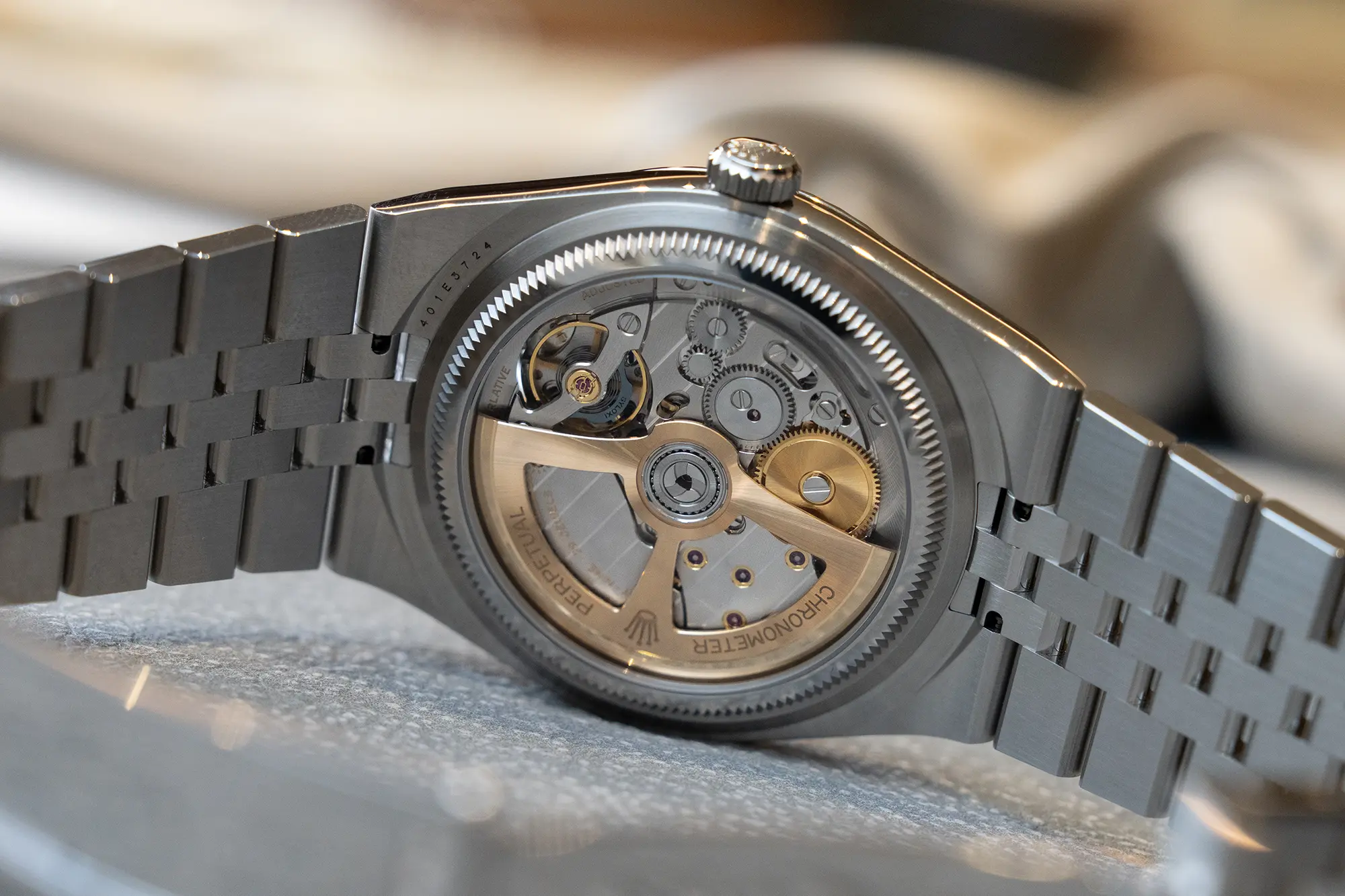
For full details of what exactly the Dynypulse escapement is, you can read an introduction here, or a deeper dive here. In short, it represents a new kind of escapement that places a premium on efficiency and reliability, converting more of the stored power reserve into accurate, reliable timekeeping. It does so with an original (not natural) design that’s different from a traditional lever escapement, reducing (though not eliminating) sliding friction along the way. As technical as it is, the net result of a superlative chronometer with a ~70 hour power reserve is largely unchanged. The real benefits will be realized in time, theoretically. But, to reduce innovation to whatever its effect on timekeeping may be is to miss the forest for the trees.
Taking a step back, the idea of a novel solution to increase efficiency that can be produced at scale is laudable. The Dynapulse will likely make its way into a broad selection of the Rolex catalog, in their own methodical way. If you were around for the transition to 32XX movements, you know how long that took. It might be tempting to view the potential amplitude issues of the Chronergy escapement as a driver for pushing the development of the Dynapulse, but the fact of the matter is that we are a long way out from a complete transition. The Chronergy escapement is just 10 years into its production run, and at the rate Rolex rolls out updates, likely has a long road ahead.

Designing and producing a movement with an entirely new escapement is a rare sight these days, and it’s rarer still to see it done within a production ready collection. There are generally plenty of kinks to work out when it comes to new movements, many of which can’t be predicted with any amount of testing. Sometimes, it just takes real world usage to identify and address issues. Obviously, we haven’t seen a huge number of Land-Dweller references in the hands of the general public, so the jury is still out on just how effective the Dynapulse will be at achieving its goals.
There’s another reason that the Dynapulse is an important milestone, though. In my introduction of the Land-Dweller, I noted that this could represent a step further in the trend of removing the watchmaker from the eventual lifespan of the watch. This is a drop in unit, and the individual pieces will not be easily replaceable, if at all, over the long haul. It further exemplifies the ‘replace over repair’ idea that took root with the 32XX movements.

This is a troubling trend that largely removes the human element from the long term care and life of a watch. Ask any watchmaker and they’ll likely have plenty of fond memories of movements like the 3130, lauding its workhorse qualities and its ease of serviceability. With the newer movements, the outlook takes a decidedly different tone. For context, I’d like to highlight a passage from watchmaker Ashton Tracy, writing for Quill & Pad, about the difference between 31XX and 32XX movements:
If a 3135 had a mainspring grinding along the barrel wall, the fix was simple: remove the mainspring, polish the bridle, lubricate the barrel wall, and reinstall. But this is no longer the case with the 3235: it’s replace, replace, replace.
You will be told that all new barrels work right out of the packet, but this is rarely the case for any caliber. Typical complete barrels regularly need adjusting when new due to mainspring bridles not being polished correctly, causing the watch to knock.
So the replace mentality isn’t always the best option. A barrel can outlast a mainspring by many years. That family heirloom you were leaving to your grandchildren is now at the mercy of the manufacturer. How long will parts supply be supported – 30, 40, 50 years?
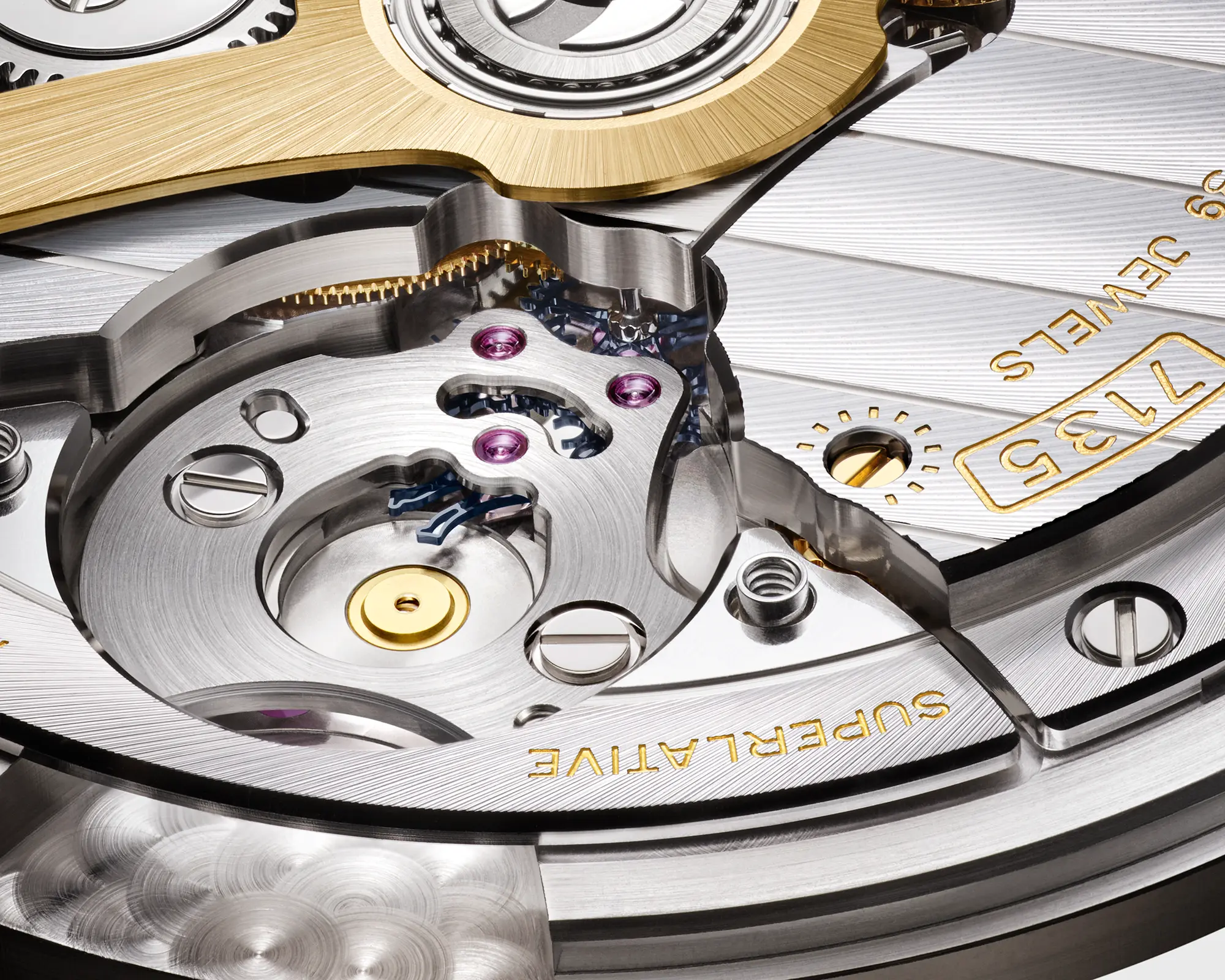
If this is the case for a part like the mainspring, you can imagine the art of repairing and maintaining parts within the escapement itself. Point being, there is an art to keeping these things running over the course of generations, a fact that has partially helped Rolex gain the reputation they enjoy today. The removal of that human element lends a slightly colder vibe to something like the Dynapulse, impressive though it may be.
Mechanical watches represent a connection to old-school human ingenuity, and they have long since outlived their days as a practical necessity. They aren’t as accurate as their cheaper quartz counterparts, so the appeal can’t boil down to that alone. Watchmaking is an artform, and that connection needs to remain intact. At the moment, things are getting a little blurry, and while the Land-Dweller might not represent a crossing of that line, it should be forcing the conversation about what exactly we want out of these things, and at what cost.