
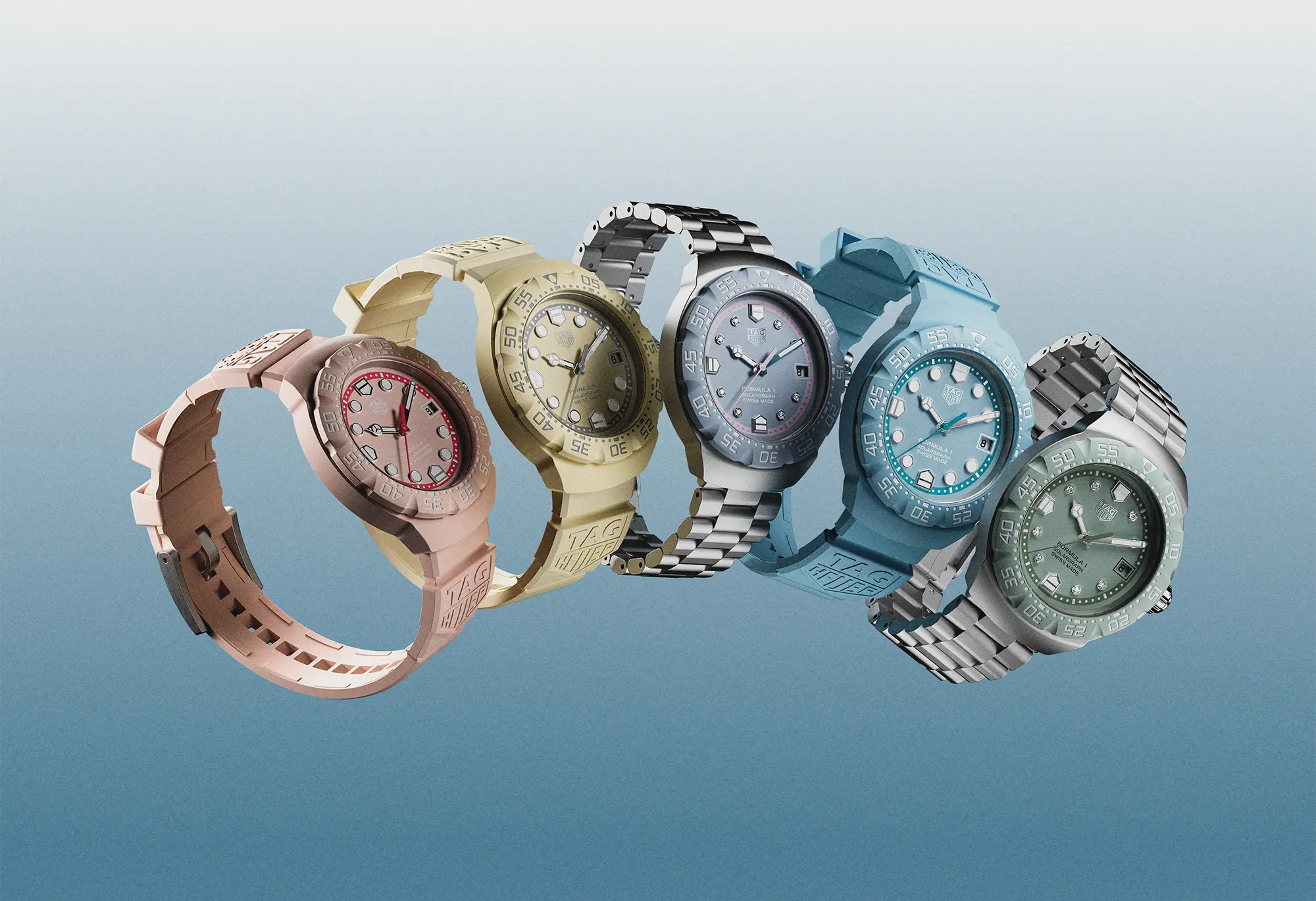
TAG Heuer has clearly been having a lot of fun with the modern generation of the classic Formula 1 watch. From the collaborations to limited editions, it’s a watch that seems to be firing on all cylinders, taking full advantage of the brand’s newfound status Formula 1’s (the sport) official timekeeper. With the Miami GP just around the corner, TAG Heuer has revealed a new set of limited editions that feature a pastel color palette. It’s exactly the kind of things these watches were brought back for.
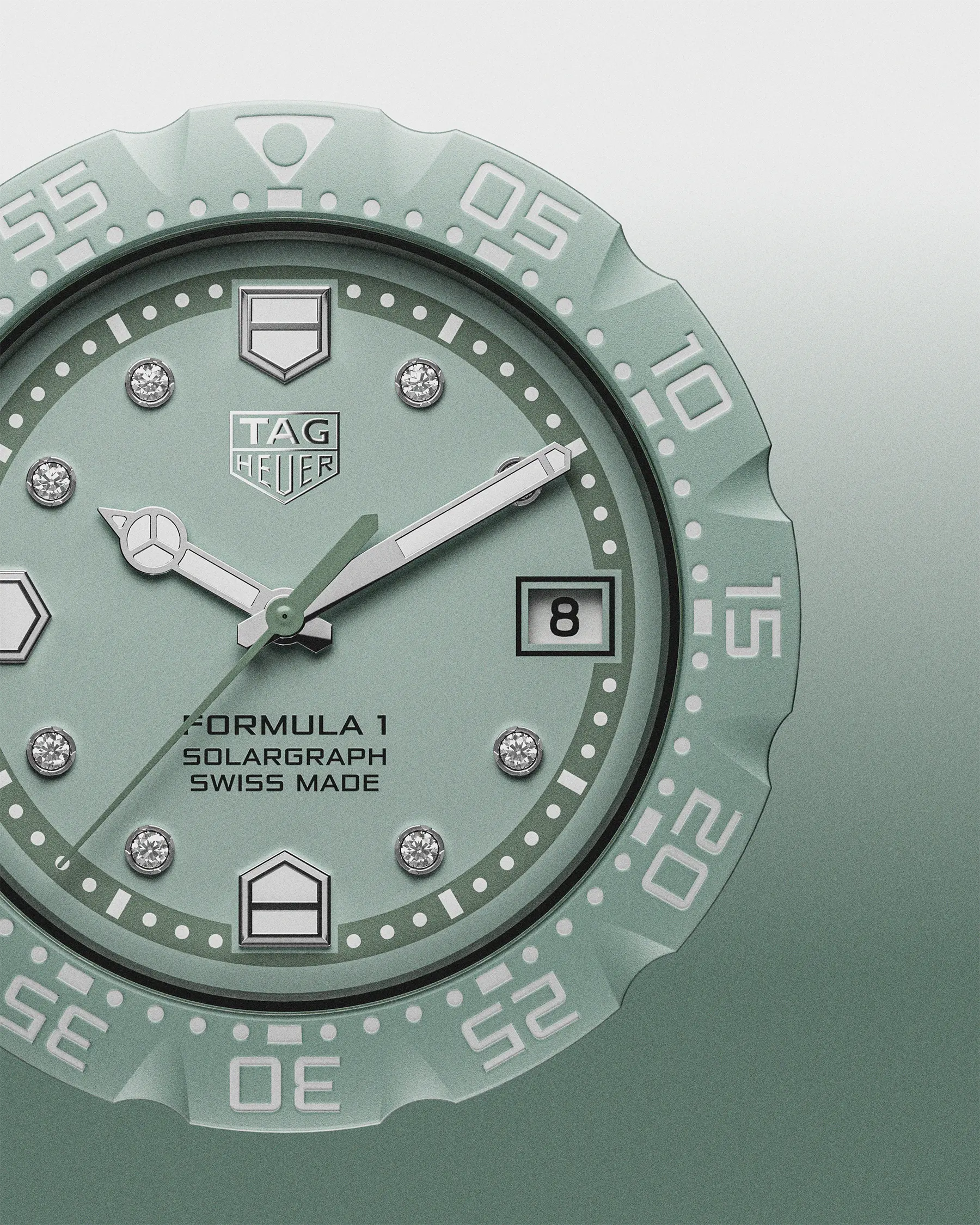
This collection consists of five distinct references, each of which will be limited in production. Three of them are paired with color matching rubber straps, while the other two get steel bracelets and diamond set indexes. It’s new territory for the Formula 1 watch, but this is a design that feels right at home when pushed to the expressive end of the spectrum. I’m not sure who was asking for diamond set indexes on these watches, but here we are, and they kind of work in their own way. All of this setting aside the price, of course (more on that later).
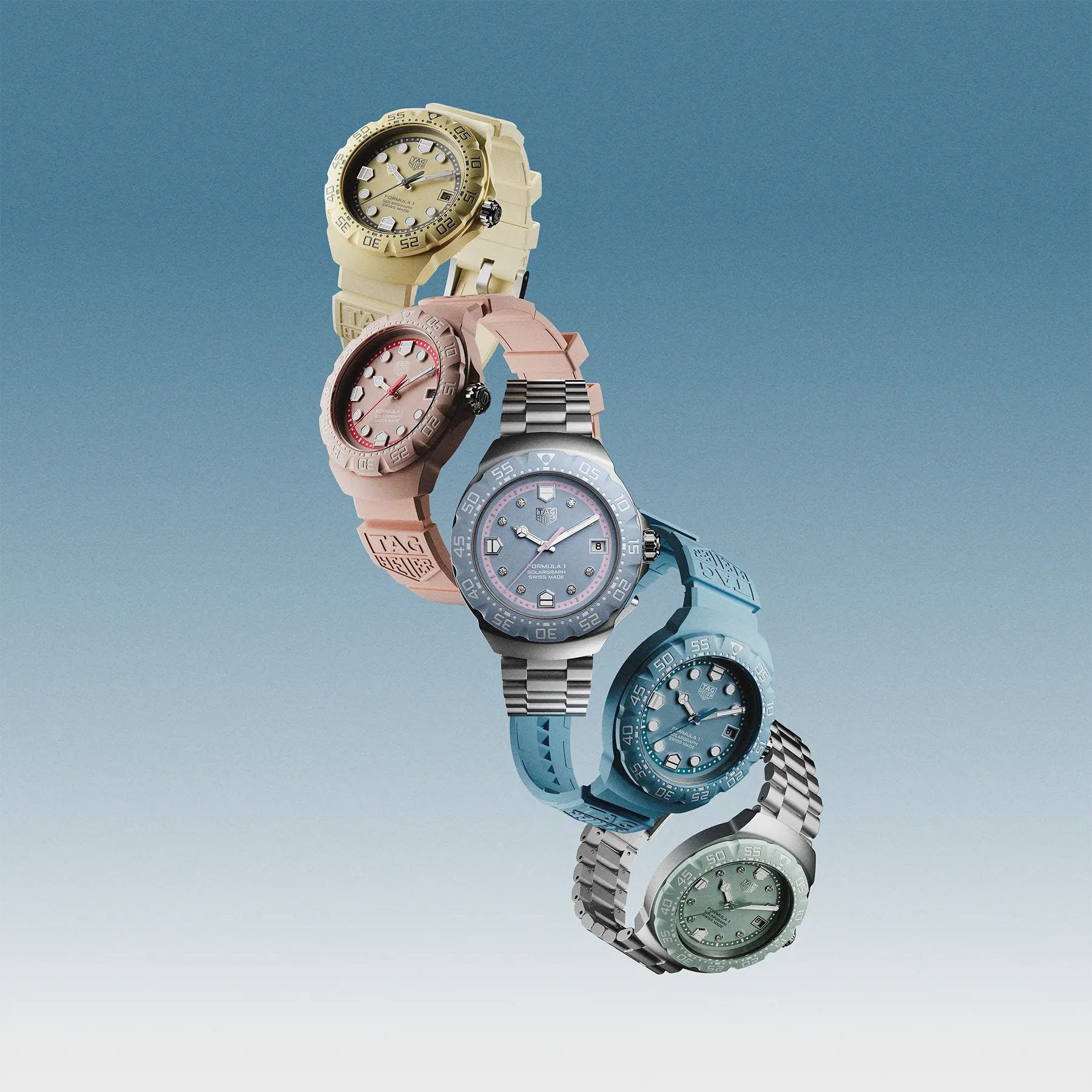
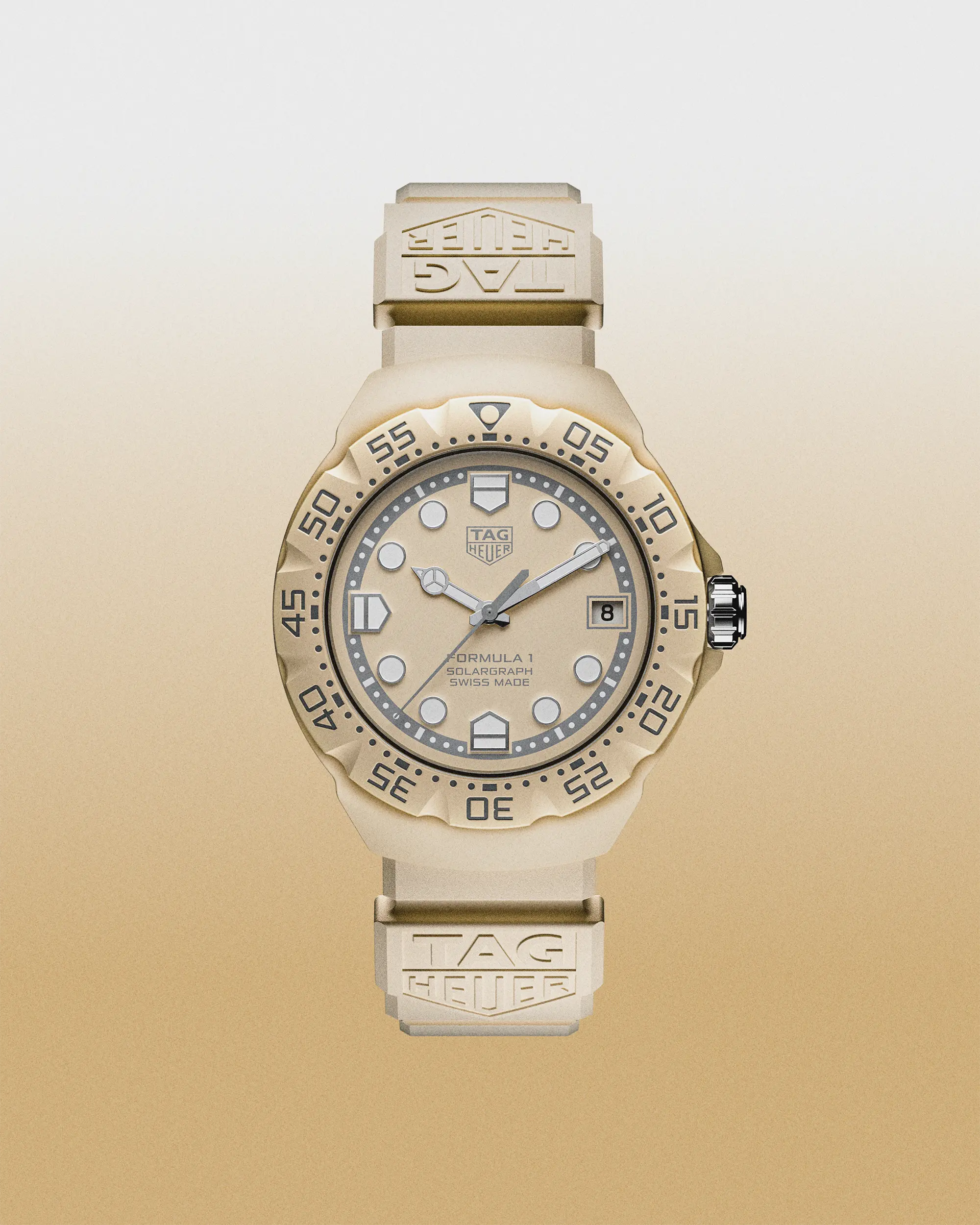
The colors are the real draw with these, and it begins with the three base models in Beige Opalin (3,500 pieces), Pastel Pink Opalin (1,110 pieces), and Pastel Blue Opalin (3,000 pieces). The colors and material (TH-Polylight) come together to take on something of a nostalgic appearance, like plastic toys from the ‘90s, which is kind of the point with these. The two additional colors are Pastel Green Opalin (1,500 pieces), and Lavender-Blue Opalin (1,000 pieces). All of the watches use the same 38mm case fitted with the brand’s Solargraph caliber TH50-00, which converts both natural and artificial light sources into energy.
Pricing follows a familiar trajectory with the trio of base models on rubber straps, each listed at $1,950. The two presented on steel bracelets with gem set dials rise to $2,800, making them the priciest Formula 1 watches to date. They are limited in nature, and the movement isn’t your average off the shelf quartz unit, however, TAG Heuer seems to be testing the limits of what they can get away with within this collection.
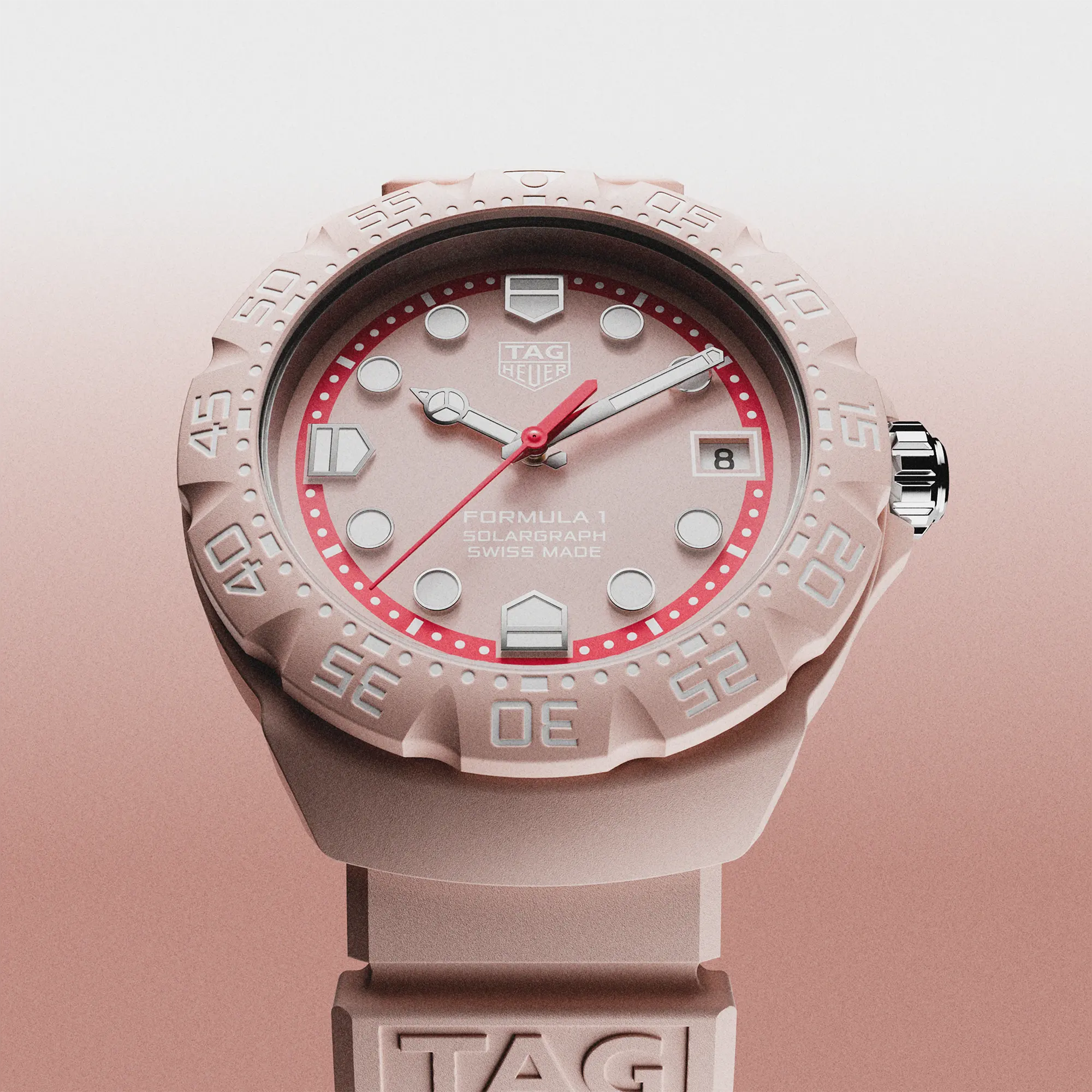
Given the accessible spirit with which the original was released back in the ‘90s, I still think TAG Heuer would have been wise to have a lower entry point to this collection that slotted in closer to the $500 mark. Arguably, they could have taken a similar approach to what we’ve seen in the MoonSwatch craze and tapped into hype culture to drum up interest for ultra limited releases. I think a standard entry point that moved up to include more premium models would have been a welcome choice by most enthusiasts.
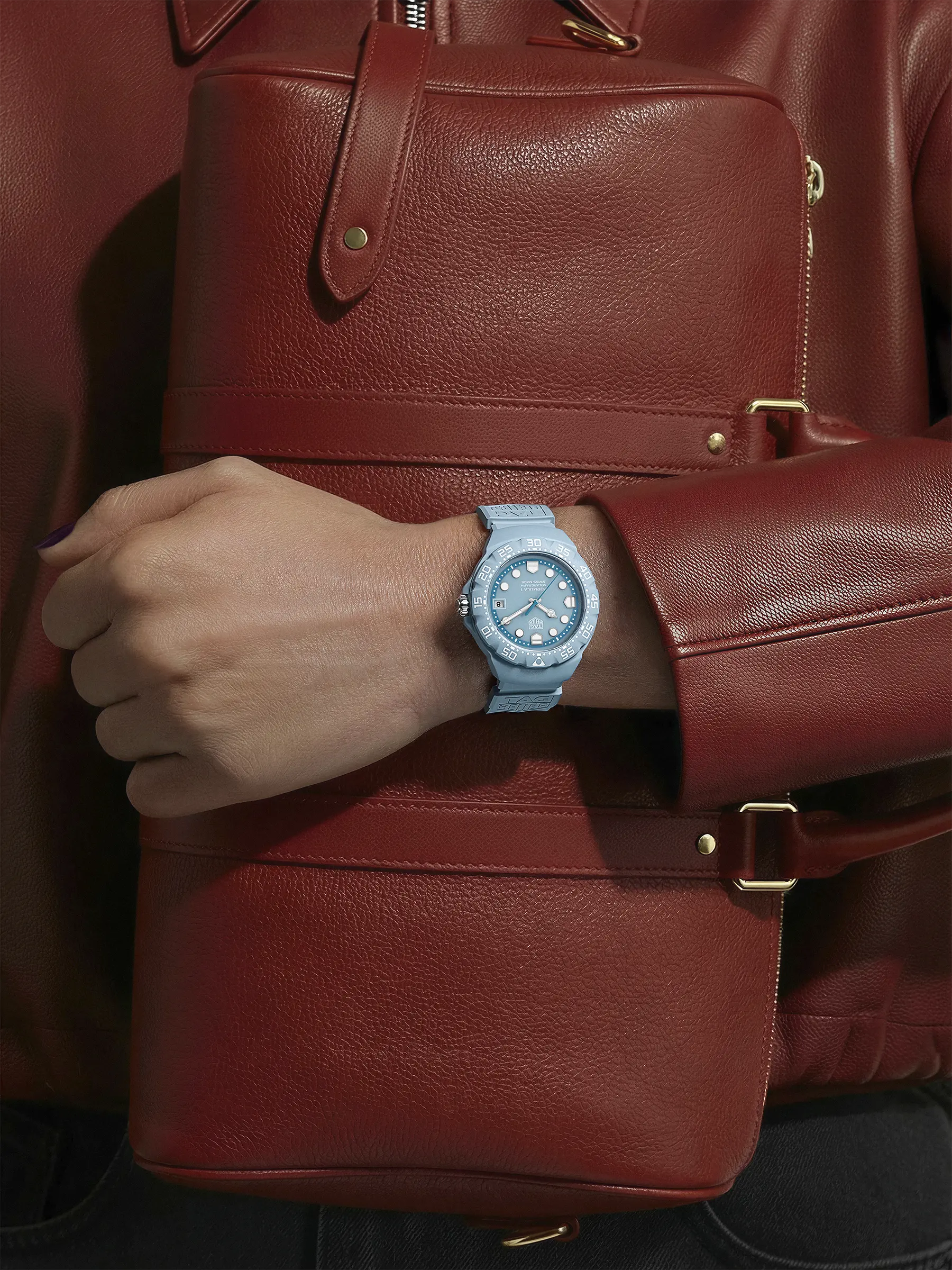
Whatever the case, these are still fun watches to see – even if they aren’t quite as tempting to purchase given their price structure. It’s a great design at its core and I always welcome the wash of nostalgia when I see one. TAG Heuer