
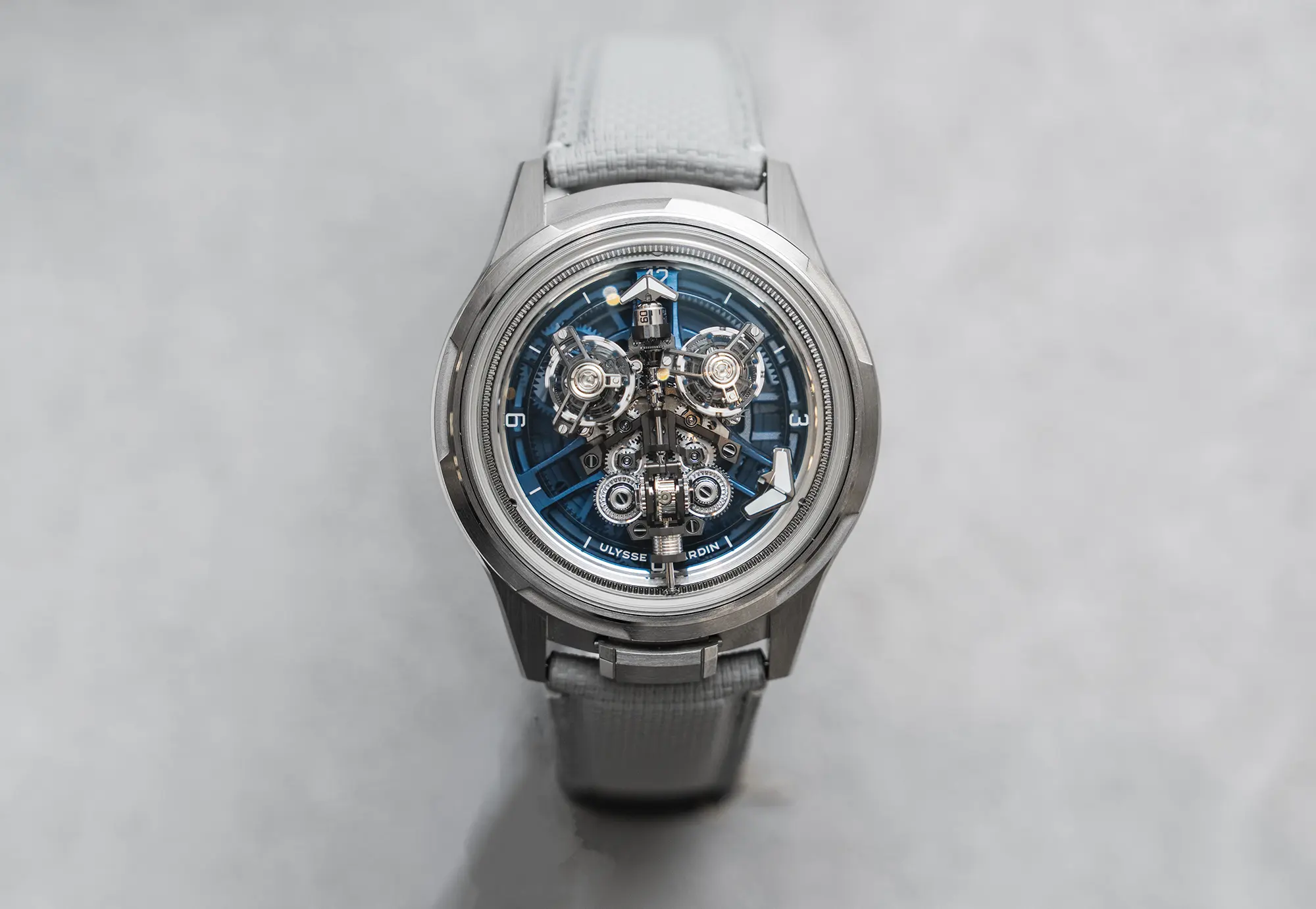
Ulysse Nardin has hit a nice stride over the past 12 months, not least of which within their latest generation of the Freak, which saw a collaboration with Urwerk late last year, and made way for the world’s most complex time-only watch at Watches & Wonders 2026. The brand has always touted an impressive horological knowhow from a mechanical standpoint, even if the design DNA has, at times, had trouble finding its footing. With the current generation, every piece of that puzzle has come together in a compelling manner, culminating in the Super Freak, a watch that not only boasts Ulysse Nardin watchmaking at its best, but also a cohesive design from an aesthetic and ergonomic standpoint. More than that, it’s just a fun watch to nerd out over.
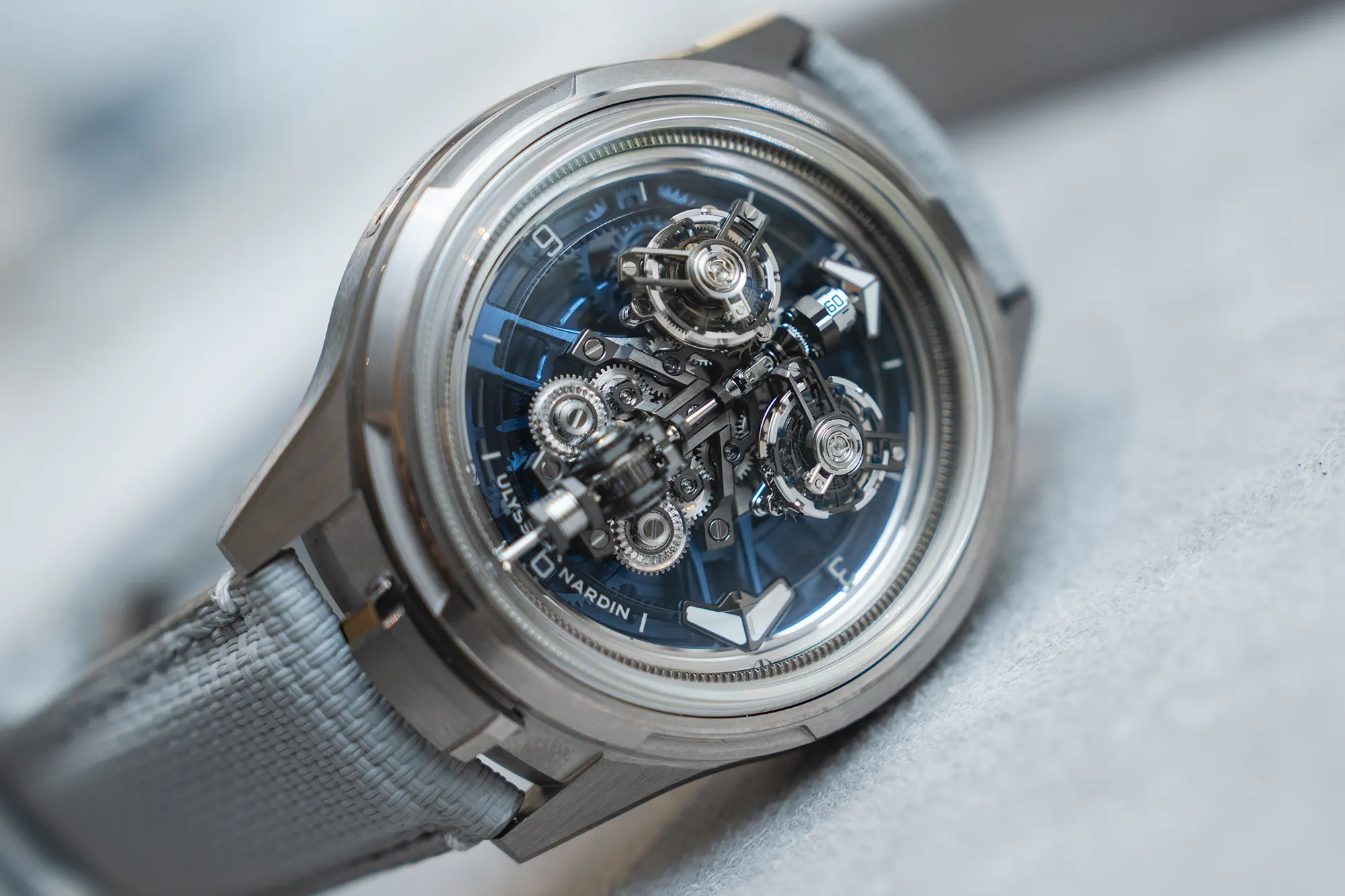
If there were such a thing as ‘watch-maxxing’ I’d nominate Ulysse Nardin for their long term approach to the Freak. It’s a watch that’s never taken a conventional approach to even the most standard of complications, and the latest Super Freak sits at the apex. There are more than 500 components at work here all working together to provide, well, the time. Hours, minutes, seconds; that’s it. But if you’re going to do something, you may as well do it with some style.
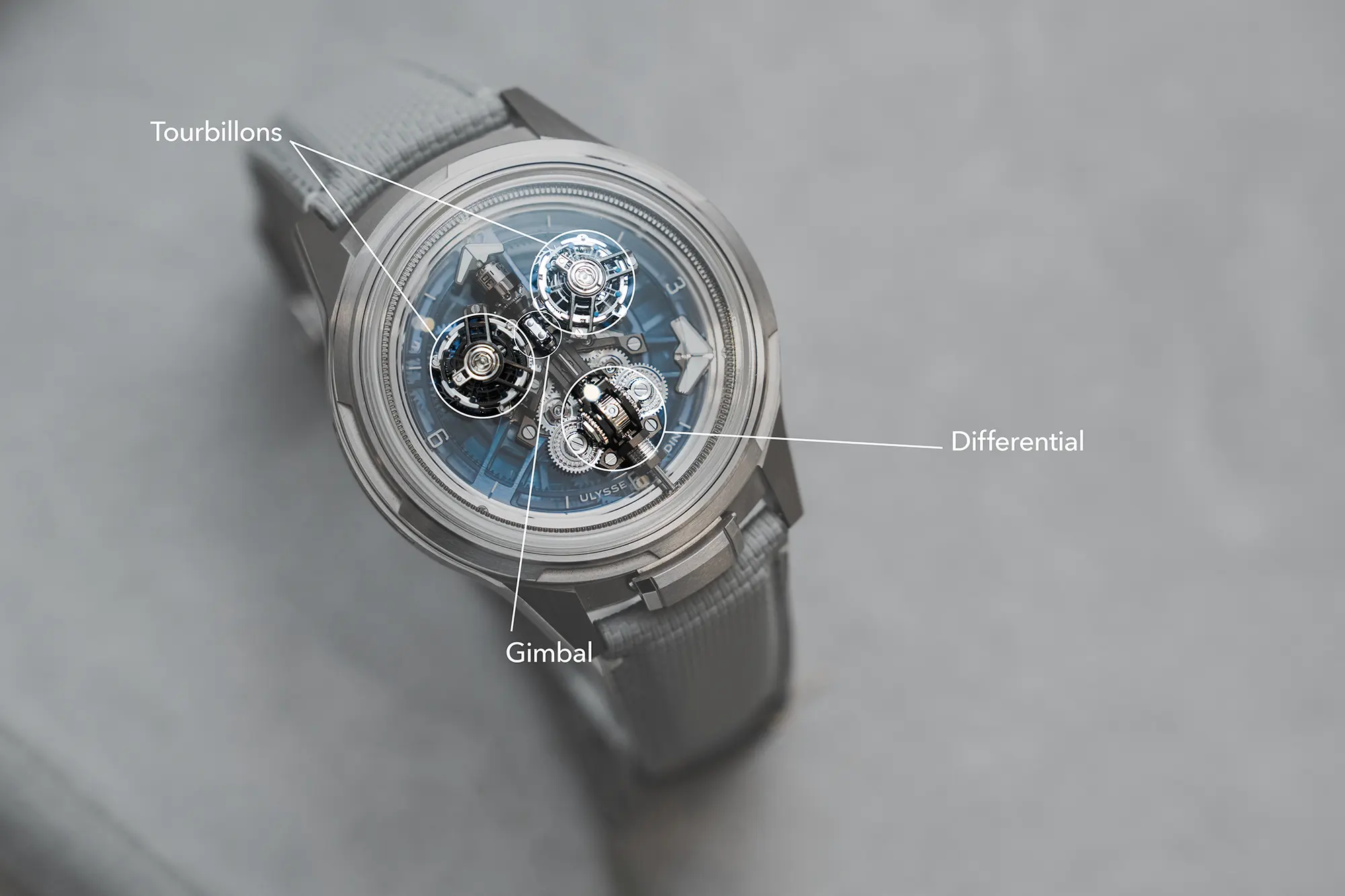
There are two components that I’d like to highlight with the Super Freak: the vertical differential, and the gimbal system transmitting power to the seconds display. Not only do these parts represent something novel, both representing the smallest ever created, but they also play a large role in the visual drama of the dial itself. As special as everything else for this movement, from the dual inclined tourbillons to the gear train running the length of the minute hand, the differential and the gimbal immediately stand out as unique, and demand a closer inspection.
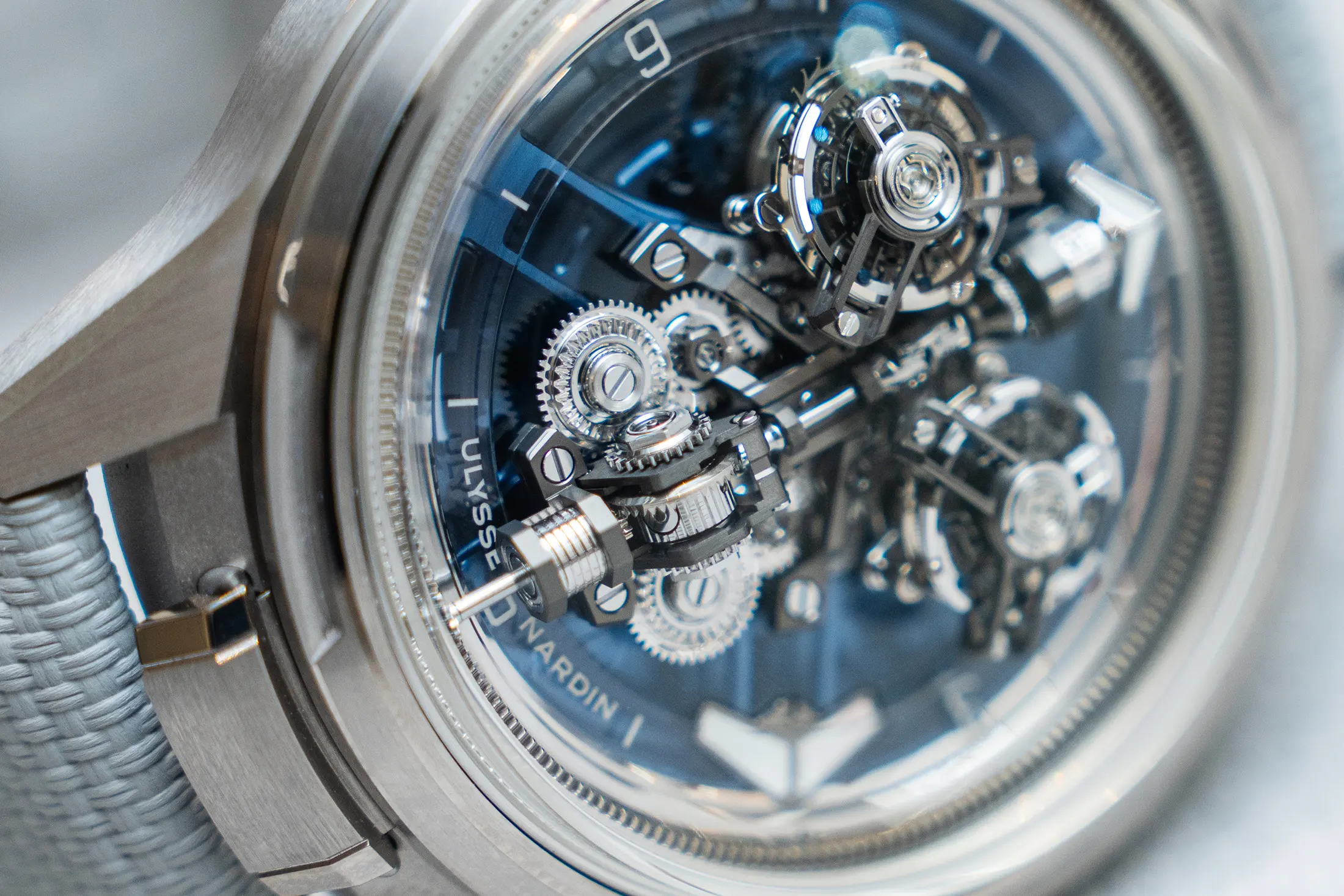
Beginning with the vertical differential, which sits at the opposing end of the minute hand. Most watches that use dual escapements deploy some form of differential to average out the rate between the two regulating organs, passing along the energy to the wheels offering the time. Here, we can follow the train of gears from the pair of tourbillons, running underneath the bridge structure, to the differential, which is oriented vertically. The differential measures 5mm in height, and is composed of 69 components, including eight ceramic ball bearings, and it is the world’s smallest such mechanism.
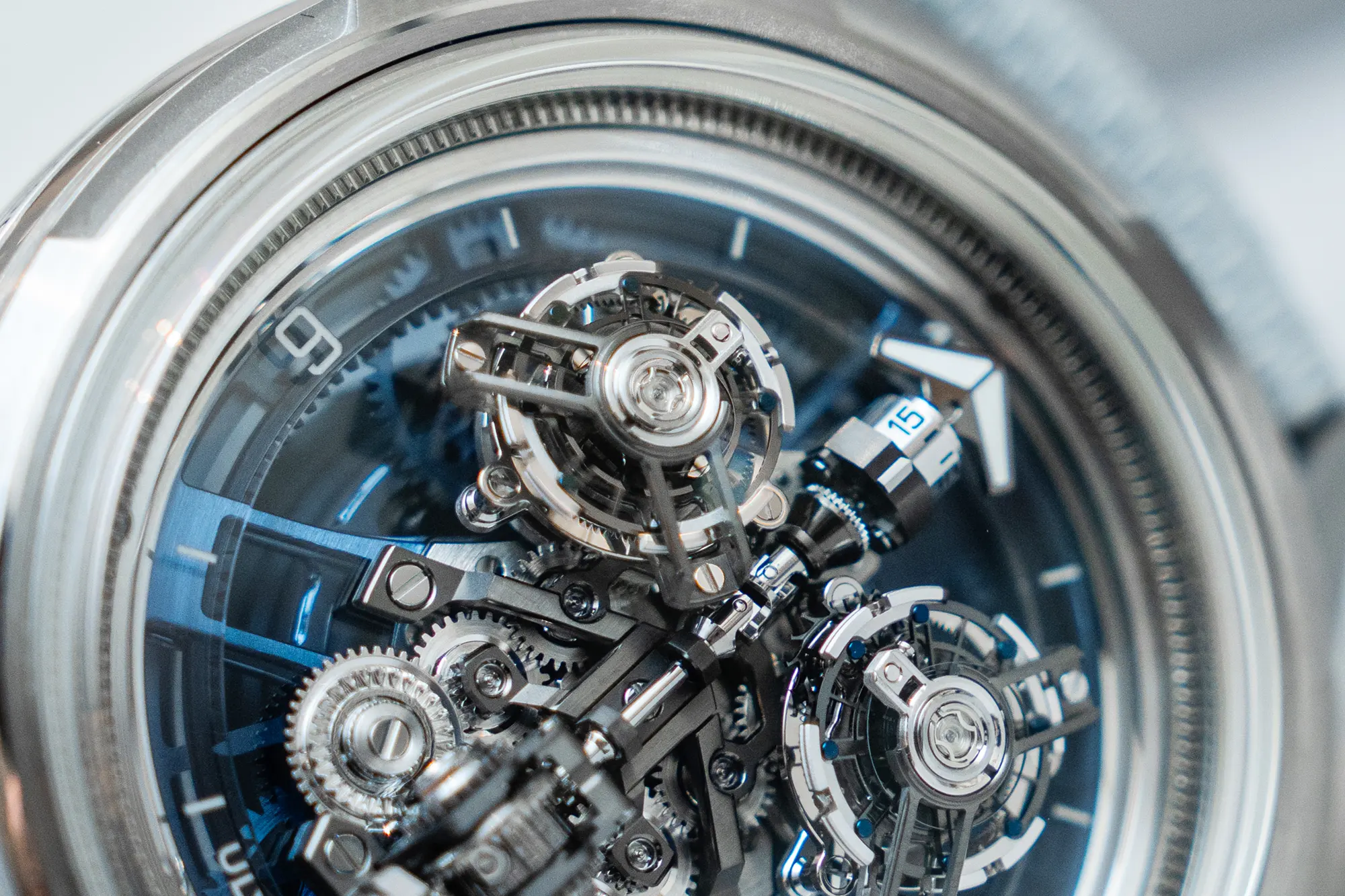
As mentioned, this is not the first watch to use a differential in this manner, and while others may have a smaller diameter (such as the iconic Duality from Philippe Dufour), this differential used by Ulysse Nardin is the smallest vertical differential. Such bragging rights shouldn’t carry all that much weight, though, as the bigger picture of how everything comes together is more important.
A ‘driveshaft’ leaves the differential to carry its energy to the other end of the minute hand, which also hosts the running seconds display, but there’s a problem as the two ends aren’t on the same horizontal plane. To solve this issue, Ulysse Nardin designed the world’s smallest gimbal, which allows the energy to travel between the two ends uninterrupted. Well, largely uninterrupted as there will inevitably be energy loss as it travels through the system (thank those pesky laws of thermodynamics).
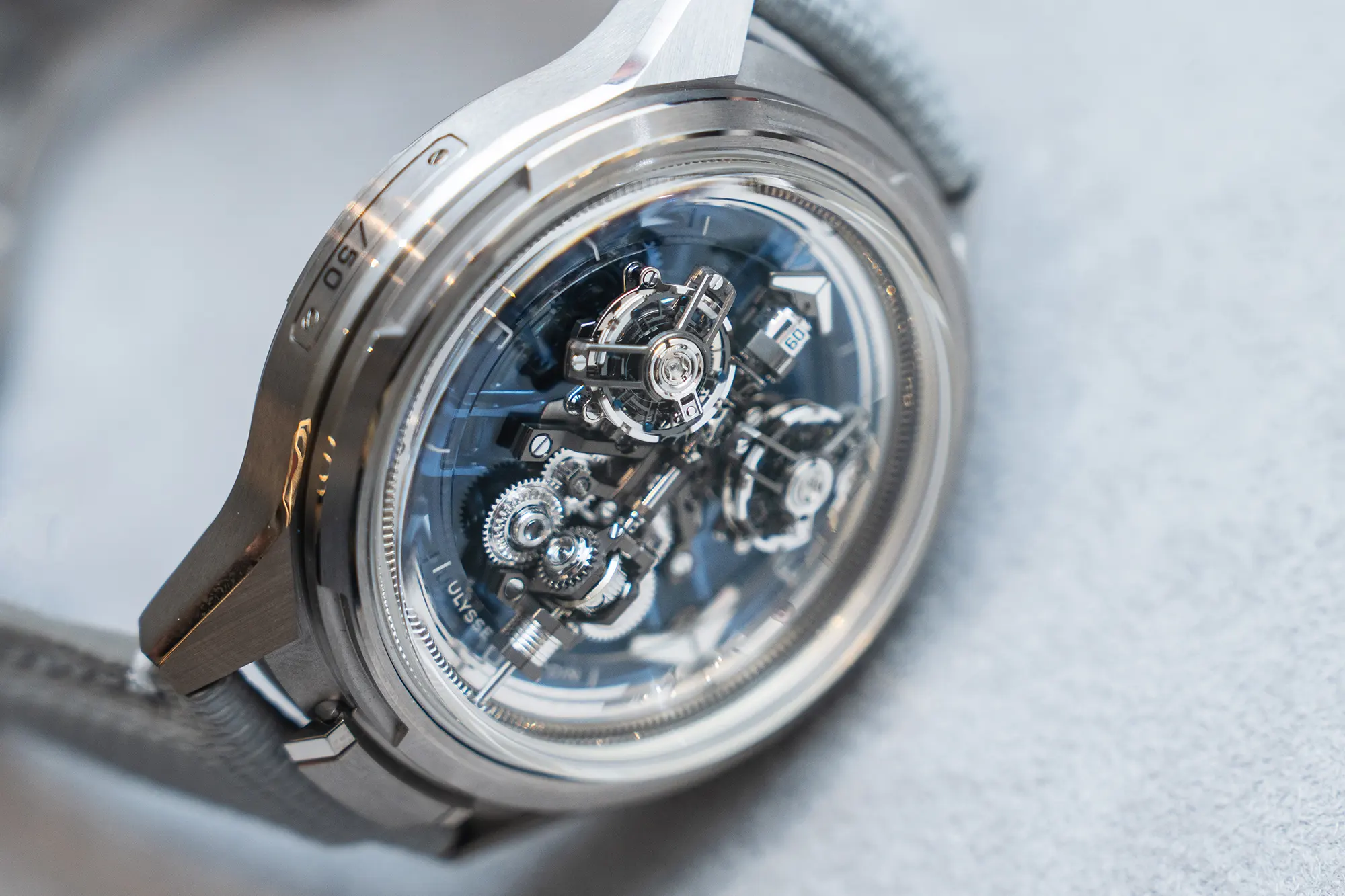
The gimbal sits neatly between the two inclined tourbillons, and leads directly into a cylinder that serves as the running seconds mounted at the end of the arm structure. It’s a bit of a full circle moment, as you’d traditionally find the running seconds hand mounted to the balance shaft at the center of a tourbillon. The entire structure sits atop the mainspring, which basically occupies the entire bottom section of the case. Winding is handled through the brand’s proprietary Grinder system that does away with the crown altogether.
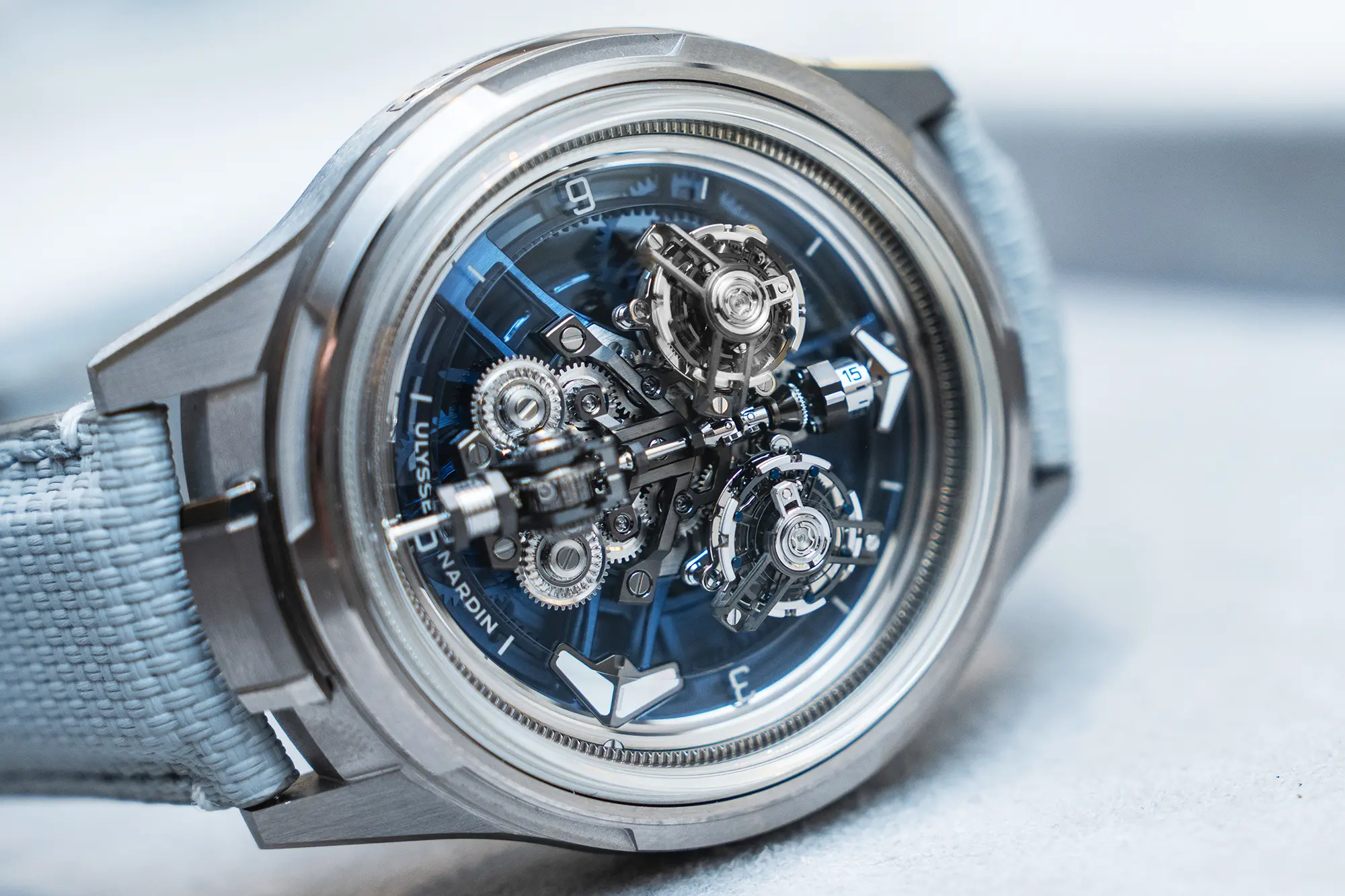
Taken as a whole, the ‘dial’ is, well it’s an eyeful, and getting a read on the time might be the last thing you come away with here. Zooming in reveals a hive of activity, and a universe of depth to get lost in. Ulysse Nardin claims that the Super Freak is made for “collectors and connoisseurs seeking the most complex time-only watch ever made” but I think there’s more to it than that. There’s a mechanical drama that elicits a pretty strong emotional reaction that separates itself from the timekeeping aspect here, and while it all serves a purpose, the first question that springs to mind when experiencing this watch isn’t exactly about the net accuracy gain from the dual tourbillons, if you know what I mean.
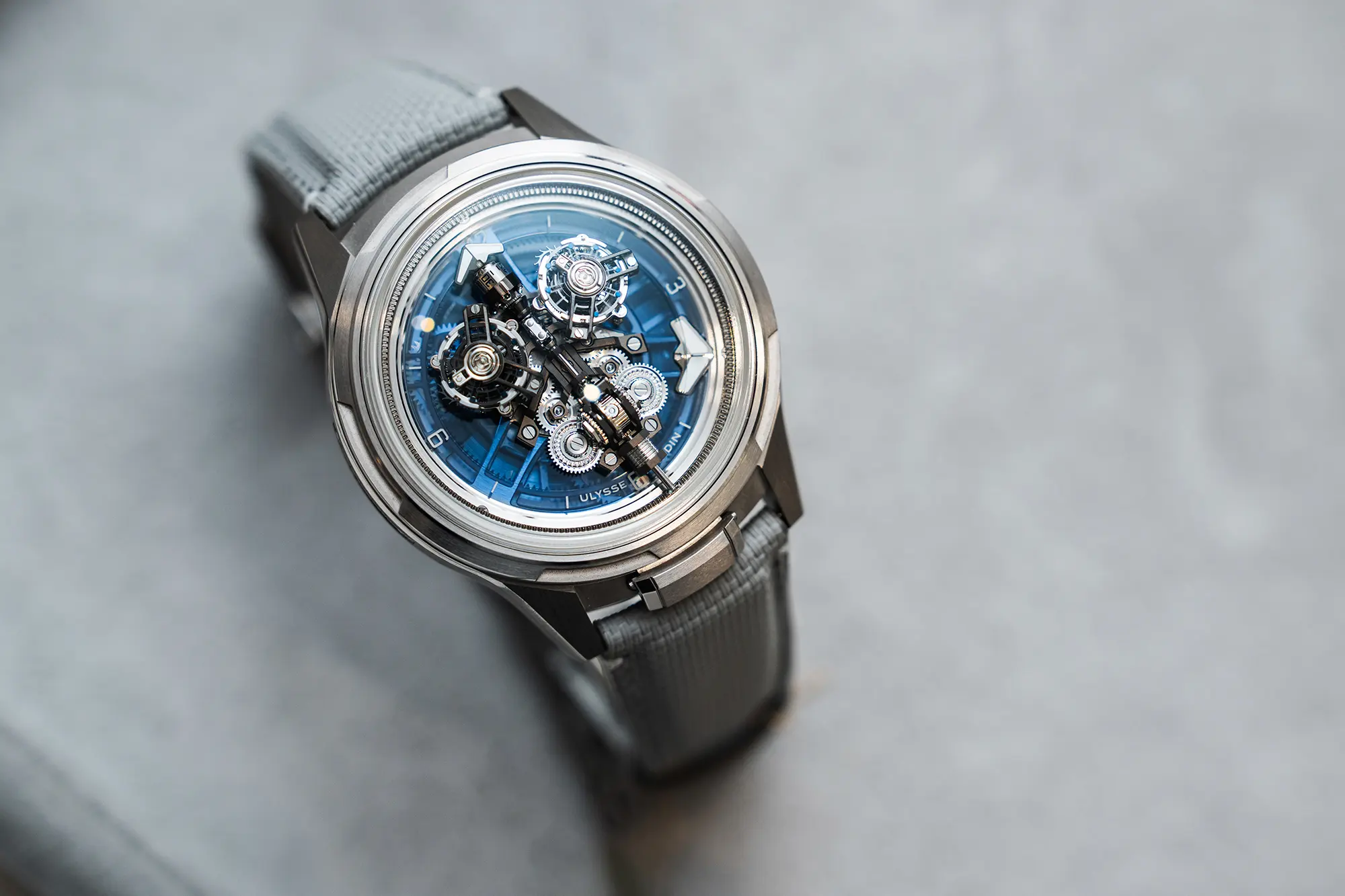
The Freak continues to be a special and somewhat mysterious watch, and the Super Freak is a distillation of the core idea dialed up to 11. It’s not a watch for the masses, and it certainly wouldn’t be a great daily wear option, but it is a celebration of mechanical engineering in watchmaking and it’s a good reminder that watches don’t need to be practical to be fun. Ulysse Nardin