

It’s only been around for three years, but the current generation of the Rolex Daytona has already separated itself from the previous generations in some pretty important ways. A handful of unexpected releases have shown a willingness to divert from the well beaten path, and a willingness to acknowledge the past. From the 126529LN quietly dropped at LeMans in 2023, to a gold and turquoise 126518LN just last year. This week, we’re getting another unexpected addition to the famous chronograph’s stable with the 126502 that pairs a steel and platinum case with a four piece enamel dial.
At a glance, the 126502 appears to be relatively straightforward in nature, a steel Daytona with a black bezel and a white dial. The most unusual detail appears to be the lack of contrasting rings defining the counters. And taken as a whole, the watch is in fact, just that. The closer you get, however, the more the watch breaks character. The biggest tell is right in the reference number, with that number 2 appearing at the very end denoting this as a Rolesium material, specifically the mixture of steel and platinum.
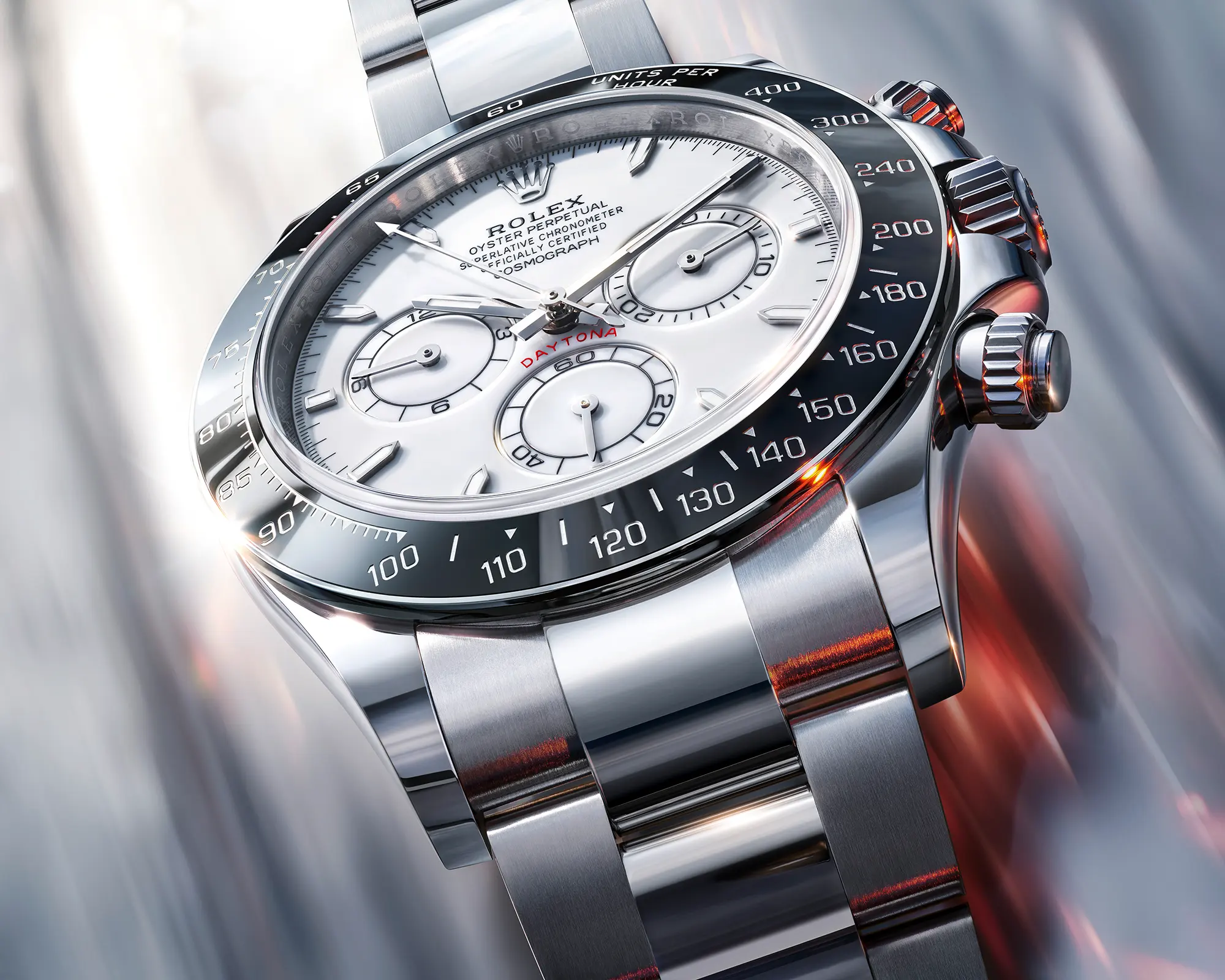
A quick look at the crown and the three uniform dots would suggest that this is a steel case, and for the most part, it is. Only the bezel surround and the base of the case are rendered in platinum, which seems a strange decision at first. Has the platinum been added purely to crank up the ‘unique’ quality of the watch? Is it serving a functional purpose here? The fact that it is being used around the bezel would suggest not, as platinum is more malleable than steel, and would thus be a poor choice for protecting the bezel. Of course, not everything needs to have a practical explanation, and the use of platinum denotes something more special going on with this reference, and that brings us to the dial.
Rolex has an interesting history when it comes to all white dials. Well, perhaps not all that interesting. Mysterious might be a better word. Early examples of some of the brand’s iconic sport references such as the Explorer, Submariner, GMT-Master, and Daytona all saw the (very) limited use of all white dials prior to the standardization of the black dial. The ‘why’ is probably more pragmatic than mysterious, though, as the brand was simply making use of dials they had produced prior to locking into a specific aesthetic. Like many things in the world of Rolex, the lore has taken on a life of its own.
Still, there’s a certain aura to the all white dial that remains compelling even when they appear on new examples of these sport references. To add another layer here, the Daytona in particular also has a (brief) history with a porcelain dial that appeared in the early production years of the five digit reference 16520. Except, that too isn’t quite accurate. The dial is not porcelain at all, but rather has the effect of it, again thanks to a manufacturing process in how the lacquer was applied that hadn’t quite been nailed down. These are also known as ‘floating Cosmograph’ dials for the space between the text stack at the top, and the word “Cosmograph” underneath (a detail that, frankly, would have been a great easter egg in this new reference).
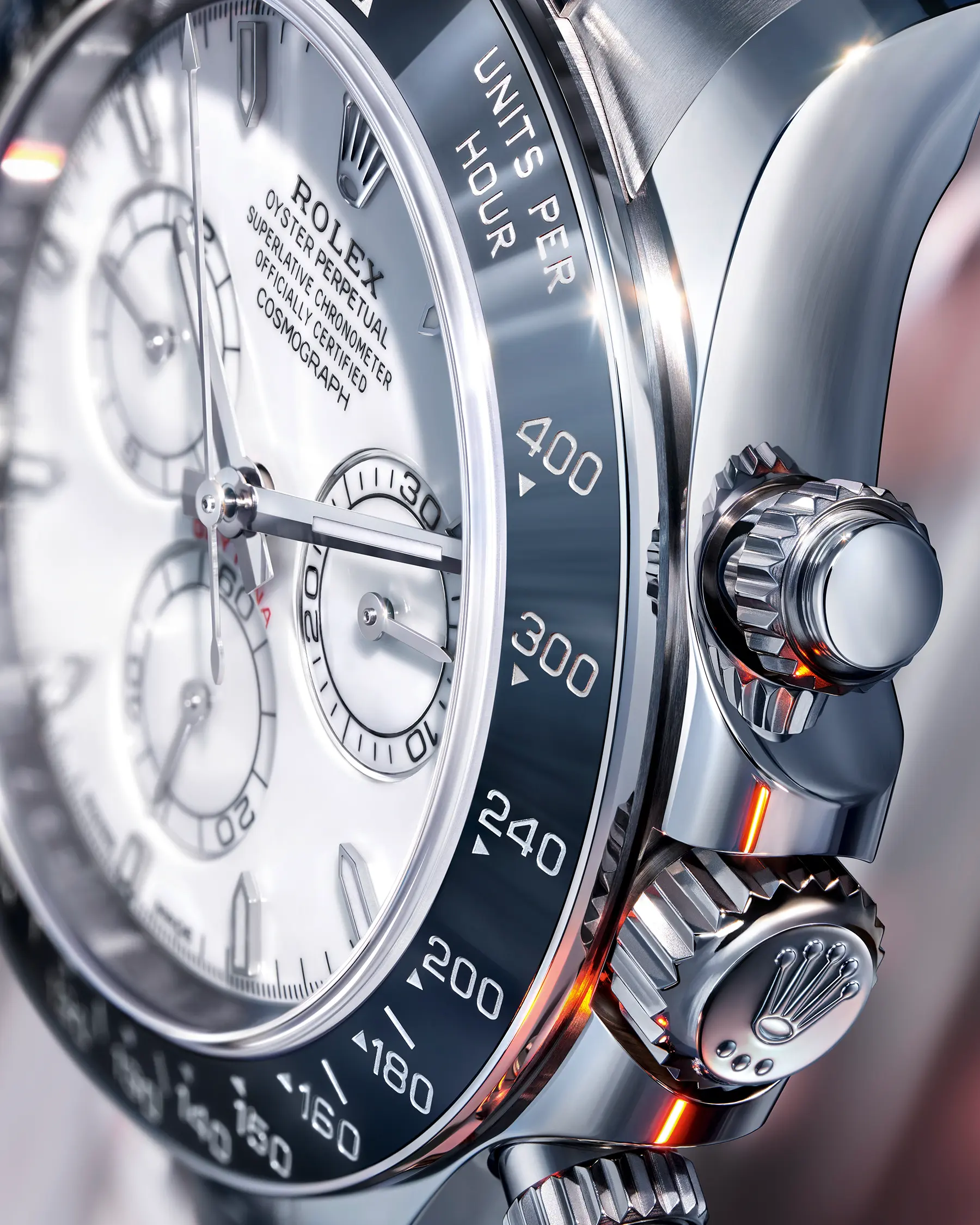
So here we are in 2026, with a new Daytona that uses a ‘grand feu’ or ‘high fire’ enamel dial, embracing that history in a now cannon manner. For this dial, Rolex places the enamel mixture over four separate ceramic plates, one for the main dial, and three for the sub-registers, before firing them at 800° C. The pieces are then fit to a brass base after the vitrification phase and brought together in the final composition you see under the crystal. The result is quite ethereal in nature, especially when viewed up close. The hands and dial furniture are polished before being applied, meaning legibility will largely depend on your surroundings.

This kind of attention to detail extends to the bezel here as well, which also is not quite what it seems at a glance. It isn’t black, but rather anthracite, and it’s been produced using a new method involving zirconia enriched with tungsten carbide. Further, the tachymeter itself has been redesigned, with the numbers being displayed horizontally in a nod to the original Daytona reference. This is the detail that makes a bigger difference than you realize. Looking at this bezel next to a standard 126500 bezel makes the latter instantly feel a bit sloppy in comparison.
The design of a bezel is one of those things that doesn’t jump out at you, but has a big impact on your overall impression of a watch. It’s what instantly sets the Black Bay 54 apart from other Black Bays, for instance. This bezel has a similar effect, and manages to set itself apart from the standard Daytona references in the process. This is easily my favorite detail of this watch, and one that I’d love to see migrate to other Daytona references in time.
Like the red line of text added to the Sea-Dweller in the 126600 when it was released in 2017, this bezel represents a nod to history the likes of which we rarely see from Rolex. A number of releases between those watches have also shown a willingness to acknowledge that history. If anything, the 126502 is a tip of the hand that Rolex feels more comfortable than ever embracing that history in a way it never has.
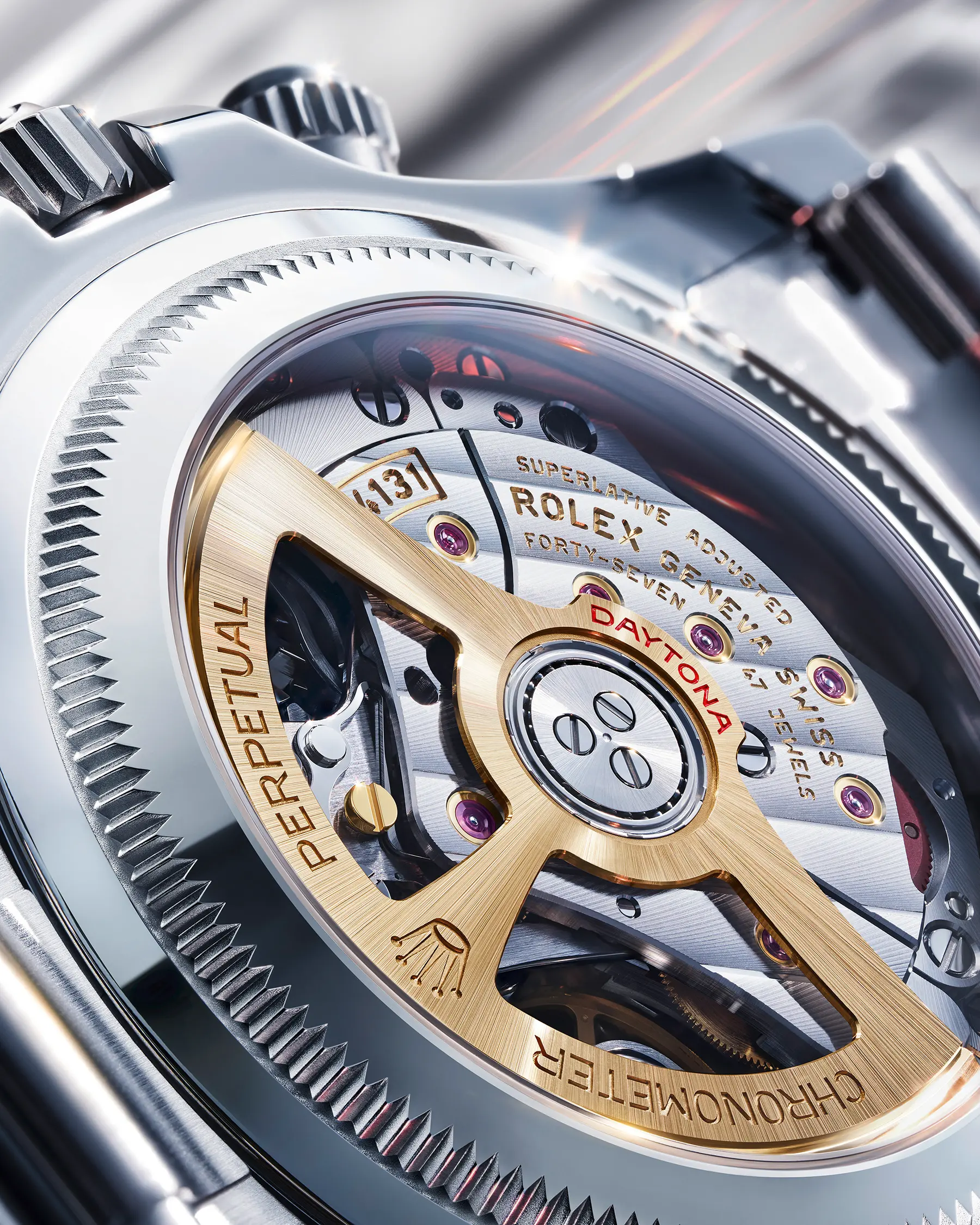
Other details worth noting about this watch include a display caseback, and an otherwise standard Daytona case (40mm x 12mm) and movement (caliber 4131), both of which are covered in my full review of the 126500 right here. Oh, there’s one other notable change, and that’s the price. The 126502 is $57,800. Yes, that’s more than some full precious metal Daytona references. There’s a lot going on with this reference, and the demand is certainly there for a watch like this, but that’s a big leap from the now $16,900 retail price of the 126500 (side note, that MSRP was $15,100 when it launched).
When it comes to a special edition Daytona such as this, the price, which could be an order of magnitude more in the secondhand market, feels like a less important detail to the overall story. Few can afford it, and far fewer still will be offered the opportunity to purchase it. For me, a watch like this is a new chapter in the modern history of the Daytona, which is interesting for different reasons. The small details that may present as footnotes, are actually the threads that pull everything together, and the 126502 has many of those threads. Rolex