
So many watches spend their lives just waiting for the right moment. Not exactly sitting idle, they are worn on occasion, admired even, kept wound out of respect for the piece, but waiting nonetheless for conditions to justify their existence. The Heuer Regatta ref. 134.601 is exactly that kind of watch. Designed in the golden age of purpose built tool watches, constructed specifically for precision during the chaos of sail boat racing. If I am being honest, I have also at times felt like that kind of human, though perhaps in worse condition than this piece, just waiting for the next adventure while telling tales of past trips. That is, until recently when both of us took to lake Erie to shake off the dust.
Waiting for the Right One
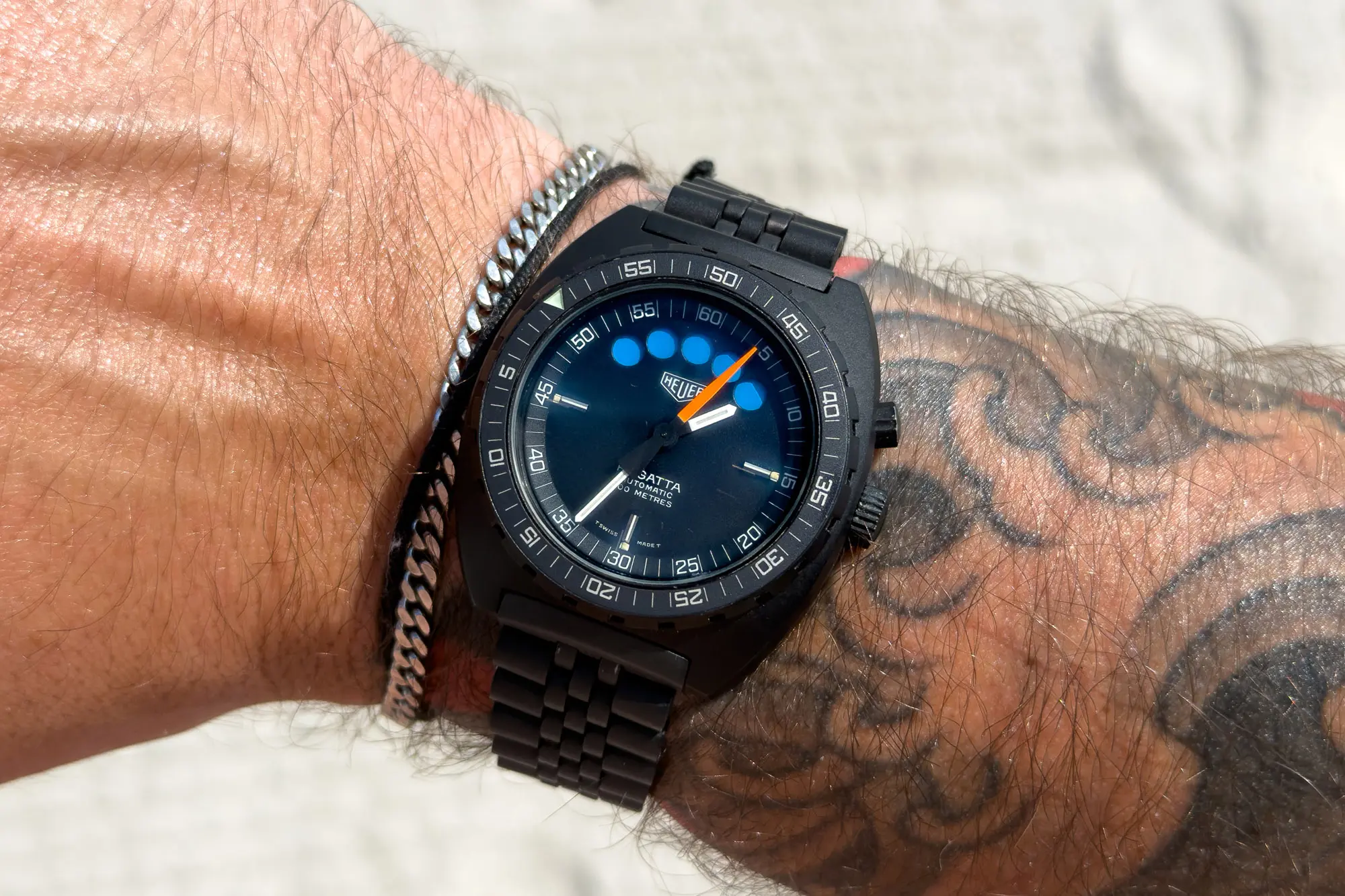
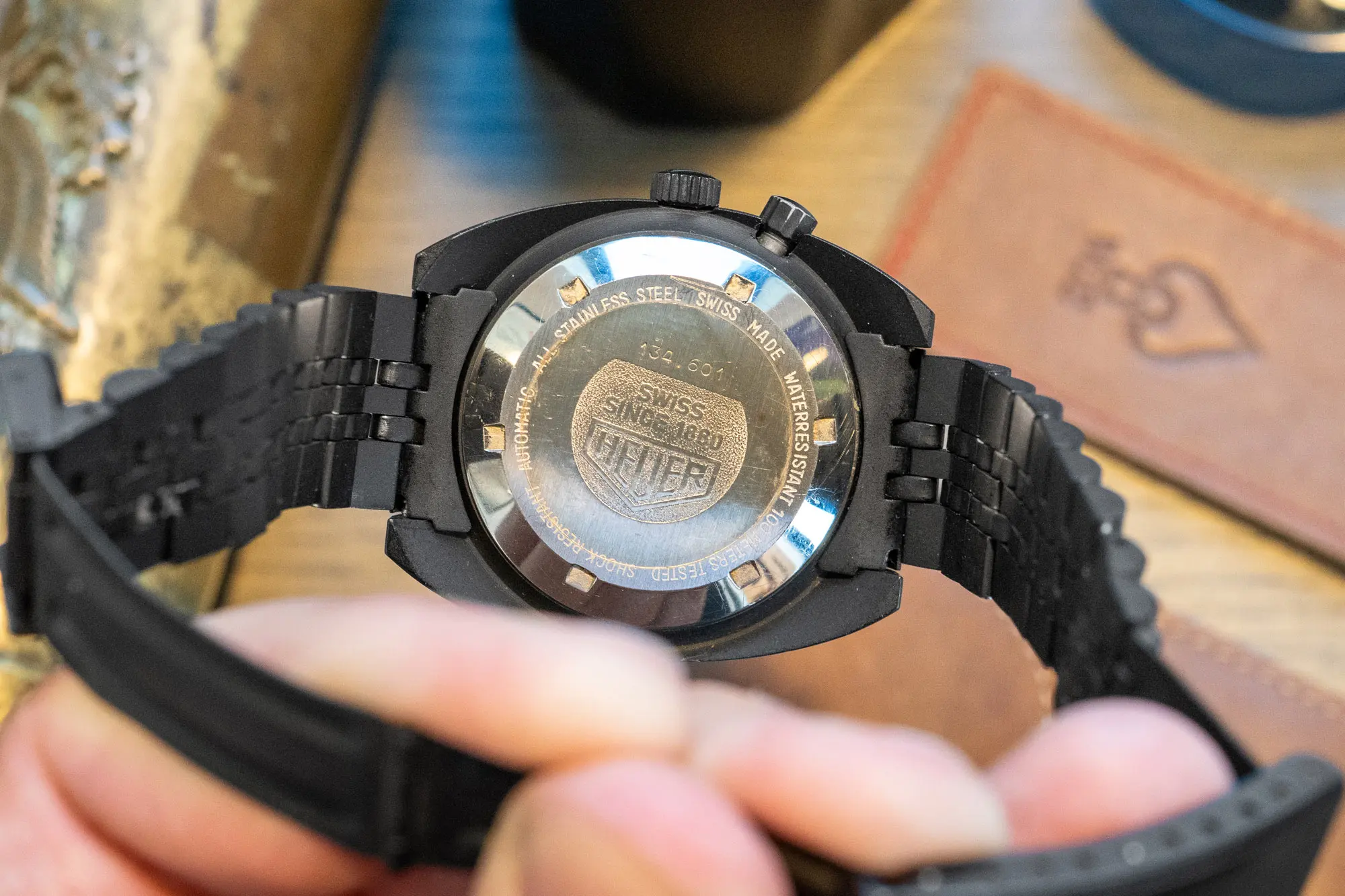
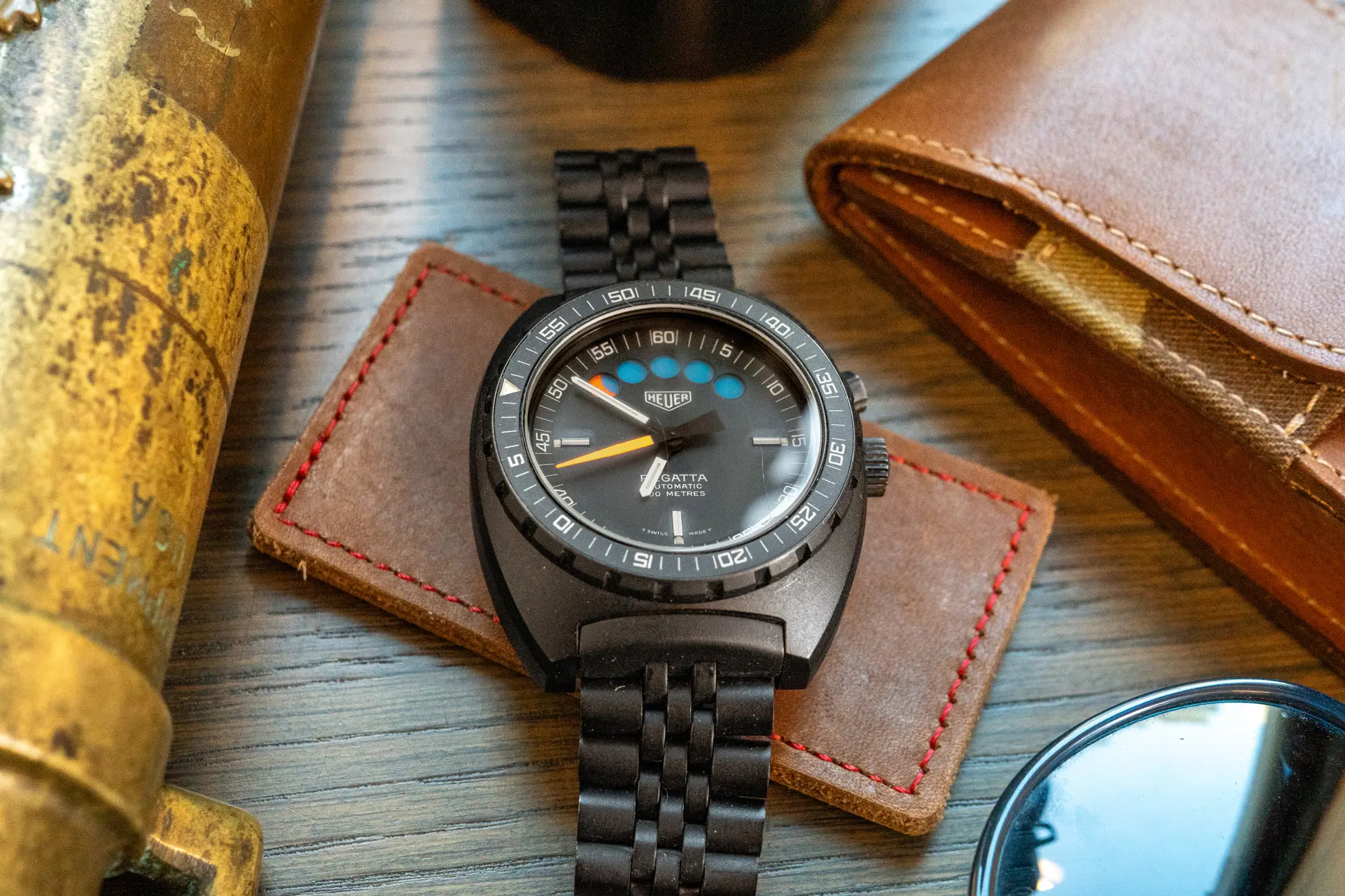
Some watches, the ones you really lust after, have a way of making you wait before they appear. The Heuer Regatta in PVD is not a common find to be sure, though neither is it the rarest of references. Finding one in this condition with the correct bracelet sized to fit my large wrist, well that did require some patience. More often than not, the bracelet is too short and missing links, the case dinged up from hard wear, or it appears in its more common silver variation. Near-mint ones, on a matching bracelet, with a flawless dial and handset, those are something else entirely.
This one appeared at exactly the right moment, as the best watches tend to. Recently serviced, wearing its decades with grace, and looking far too good for a watch built to be used rather than preserved. The only appropriate response was to use it
A Brief History of Speed on Water
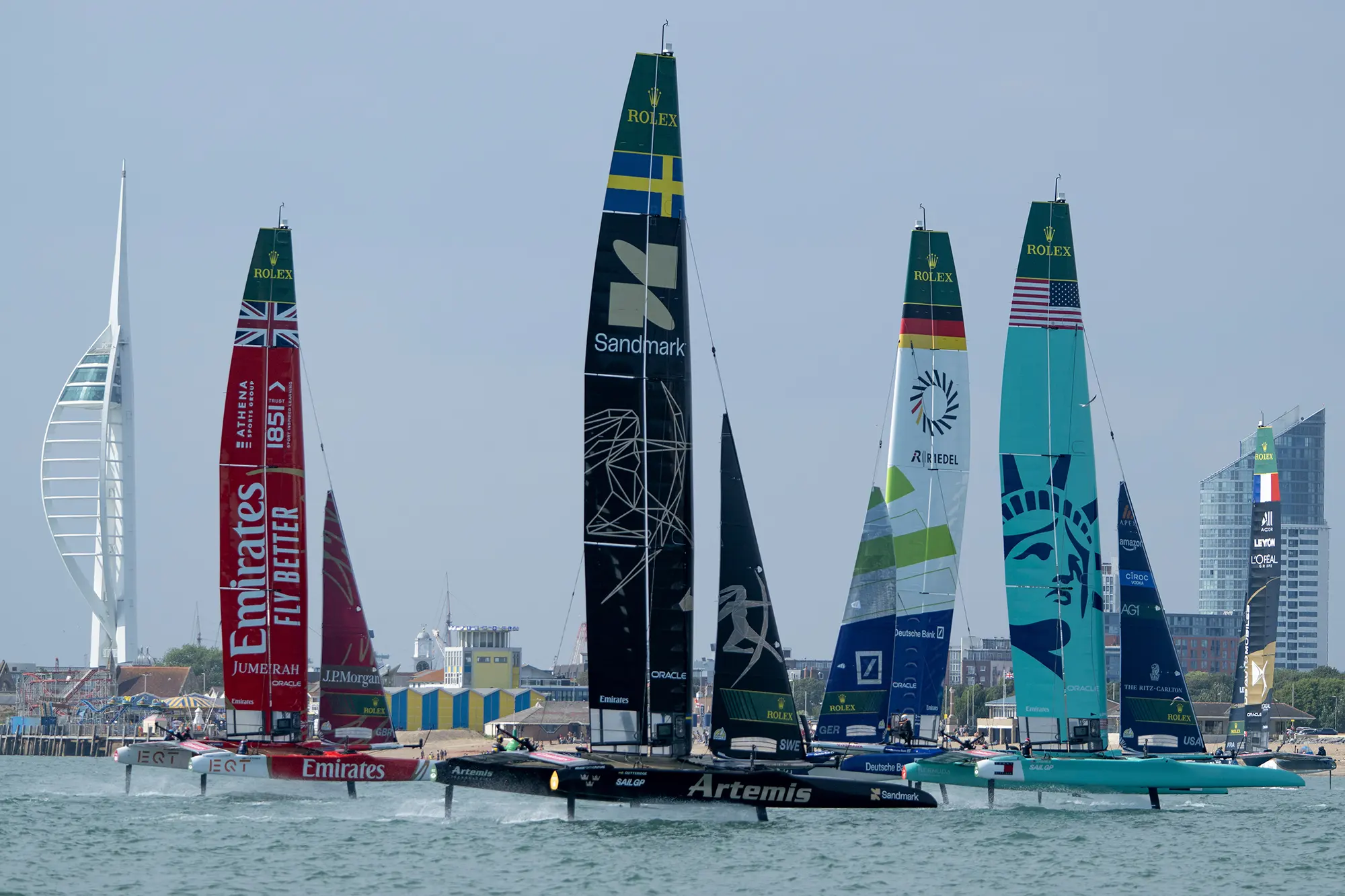
To understand why the Regatta timer exists, you need to understand the particular problem it was designed to solve. Sail boat racing does not begin from a standing start like many other races do. Boats can not stop on command and are hard to get going at speed, which means the minutes before a race gun fires is a display of controlled chaos. Vessels jockey for position behind the imaginary line drawn between two buoys, each crew attempting to cross the line exactly at race start, at full speed, on the right tack, breaking the plane either too early or too late. The consequences of crossing too early can be disqualification or a rounding back to cross the line again. The consequences of crossing late are simply losing.
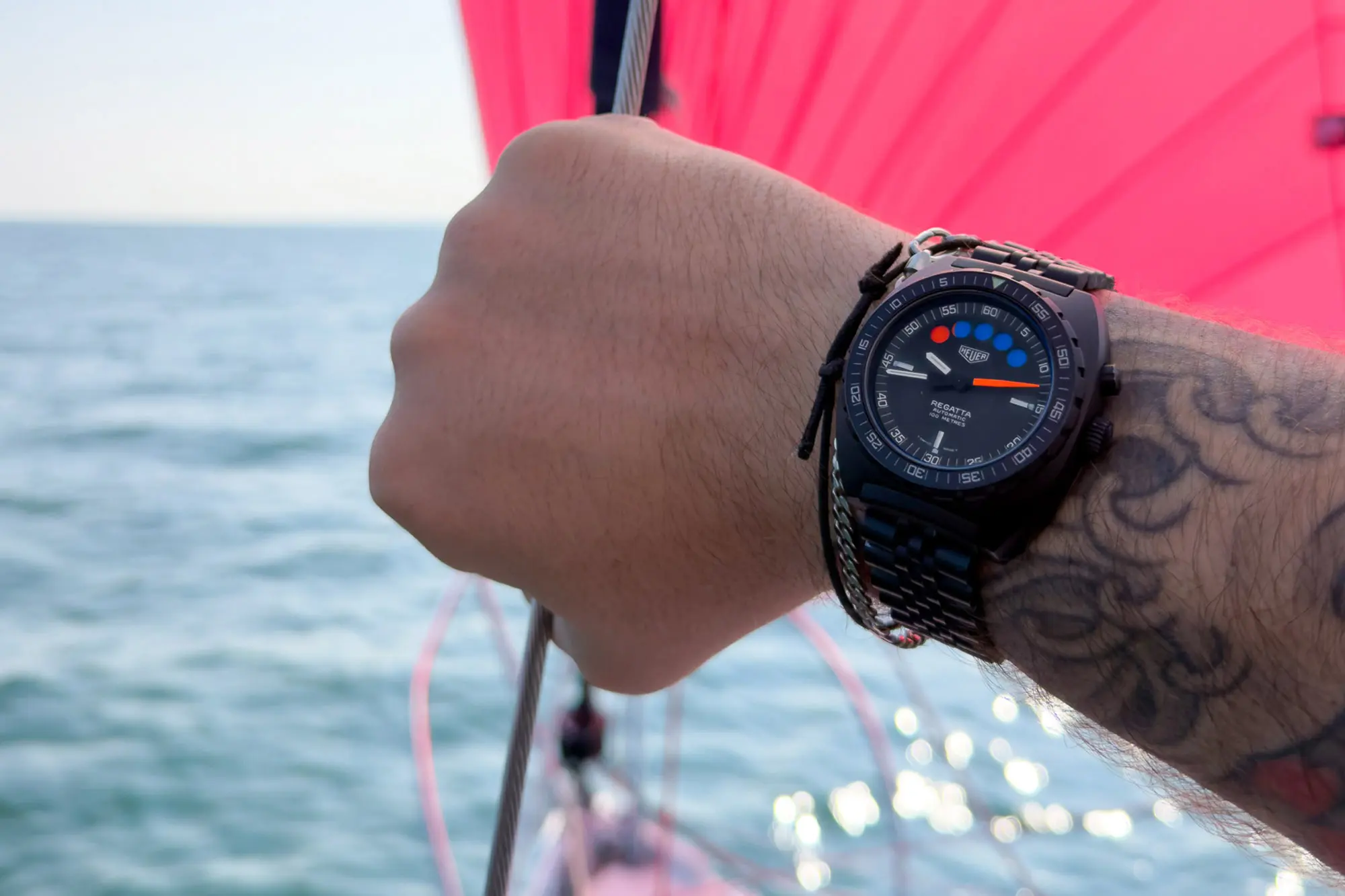
Heuer, a brand constantly pushing to solve timing problems in extreme conditions, introduced the Regatta timer to manage exactly this. Its large countdown indicators – bold, color-coded, and readable from a distance in clouded light and constant motion – were designed to be operated and read by someone actively working a boat rather than sitting still at a desk. With the crack of the warning horn, the pusher is depressed, resetting the second hand and pushing the black disks to blue creeping ever closer back to black as with each minute blue turns to orange, then back to black. In a display, it looks almost comically purposeful. On the wrist, on water, it becomes obvious.
First Leg
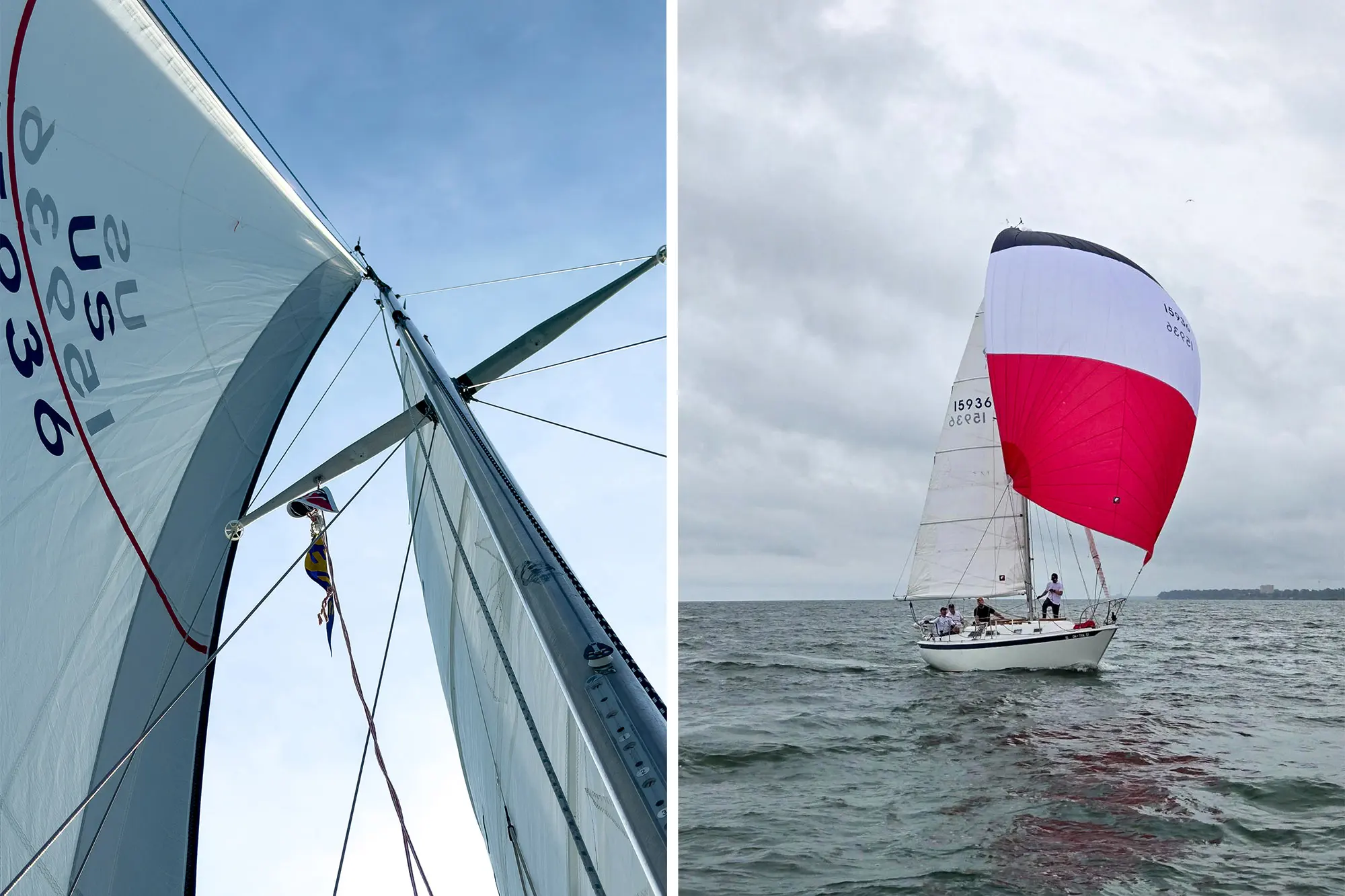
We shoved off from Cleveland at 8am on Friday morning under surprisingly clear skies and what the forecast promised would be favorable winds. I had arrived after some delay that very morning at 2am, which by any reasonable accounting left me running on optimism and excitement and not much else before we cleared the marina.
What followed made it easy to erase that deficit. The winds built steadily as we headed out, and with the hour the asymmetrical spinnaker was flying. At full stretch with the asym on starboard and the main sail pushed to port, the boat came alive as it worked with the wind to gracefully cut through the flat waters. For the better part of nine hours, it stayed that way.
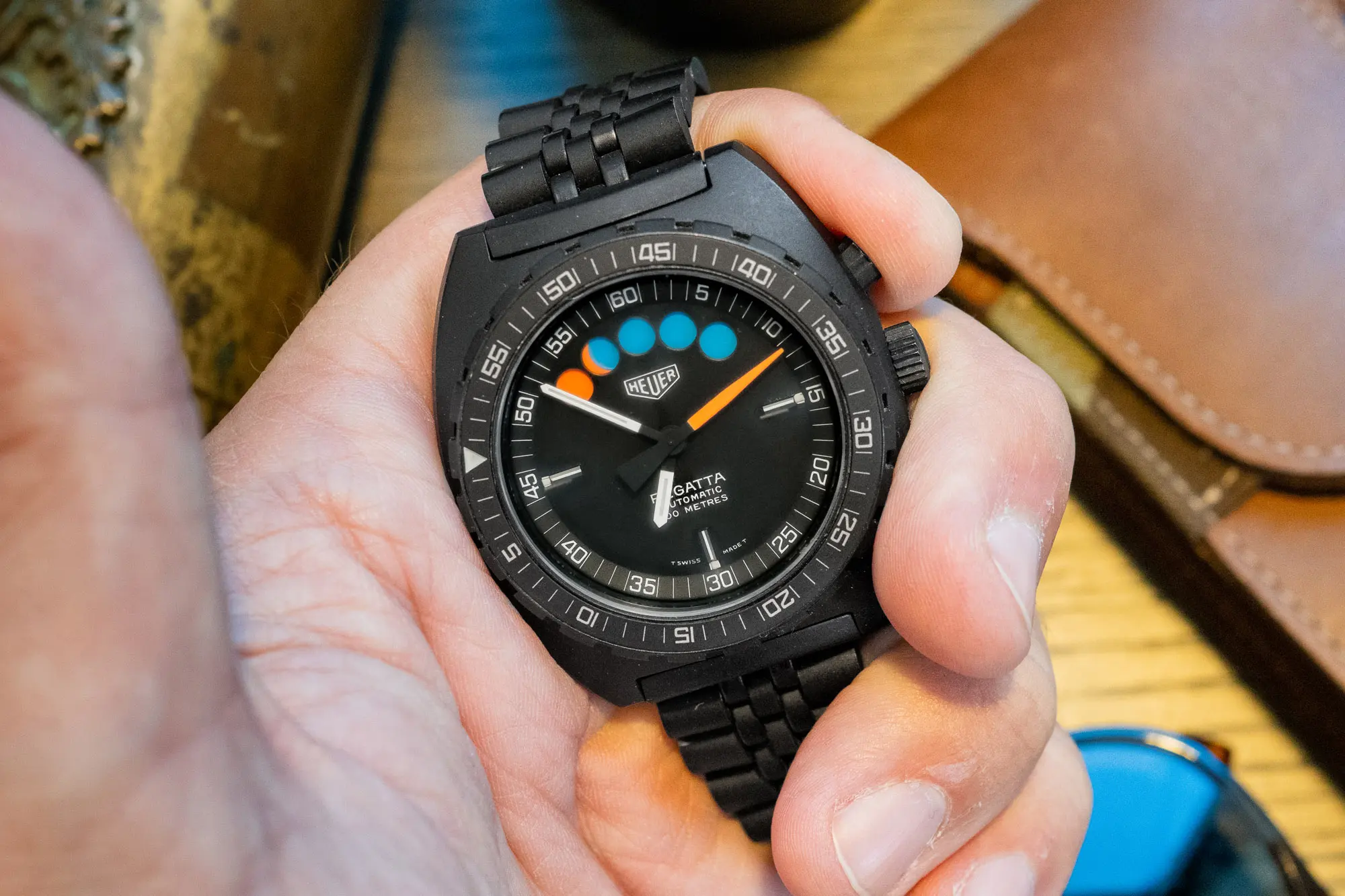
As we settled in, I spent a few minutes walking bow to stern proudly showing the Regatta to each member of the crew in turn. One by one, I walked them through how the countdown system worked, the color-coded sectors, how it was used at a racing start, and why Heuer built a watch to solve this specific problem to begin with. Despite its specific, obscure, sporting application, the watch explains itself completely. That is the quality of truly considered design.
By midday, with the sun doing its best to cook us off the deck and the sails no longer providing any meaningful shade, I found myself glancing more towards the black PVD more out of appreciation than necessity. Against the light on open water it reads with clarity that reminds you exactly why Heuer prioritized legibility above most everything else in this period. Sitting just below deck in my bag brimming with tide tracking and racing timers of its own, the Citizen WaveTracker somehow never made it out there save for a few pictures. There was nothing that it could in that moment offer that the Regatta couldn’t handle, and the Regatta did it with forty years of accumulated intent behind every detail and no shortage of romance.

We reached our destination in the evening without incident – no sea legs, no meaningful seasickness, shockingly smooth for a long leg on Lake Erie which has historically reminded sailors of their place in the natural order. We found a brewery, ate well, put away a few well earned beers, and let the physical exhaustion of open water melt into the night.
The Night Nobody Asked For
Five people sleeping on a boat designed to comfortably sleep three is an exercise in creative optimism. The evening presented a binary choice: blanket yourself and sweat through what remained of your dignity and the blanket, or leave yourself exposed offering your ankles and arms to every insect that had stowed away waiting patiently for the opportunity.
I, impressively, managed to choose both.
Somewhere around 3 am, having accumulated what I would generously describe as 30 minutes of non-consecutive sleep, I found myself out on deck. The cool air cutting through my sweat-soaked shirt and graciously blowing most of the nipping bugs away, it was a momentary respite. There I sat, my watch on wrist offering a faint glowing reminder of how much time I had left before the heat came back, as I scrolled through Hotels.com determined to have one restful night on this trip. I was a desperate man, caught between two very different timing instruments measuring their own species of despondence. Ultimately, I did not book the hotel. I returned to my bunk below for reasons that remain unclear to me even now.
The Second Leg
The following day passed in an uncomfortable haze of proper sleep deprivation and sun burn soreness. Some of the crew attempted a ropes course while the rest of us found coffee, paced up and down the main strip of the town, found shade in an Irish pub, and quietly made peace with another night ashore. Then, our captain found us outside the dinner restaurant with news that reframed the entire evening considerably.
A storm was coming and we needed to leave that night.
The crew went quiet in that specific way it does when everyone is thinking the same thing but nobody wants to say it first. I checked the radar. We all checked the radar. The stormy winds were there, theoretically, in the near future threatening the next day. We looked around, and silently headed into the restaurant for our final meal.
What followed was, against all reasonable expectation, genuinely good sailing. The night was clear minus a few small pockets of brisk rain. The water was flat in a way that felt almost apologetic given what the previous evening had offered. Over the next six or seven hours we settled into the rhythm that long night passages tend to find on their own – quiet rotations, good music played a little lower, stretches of silence interrupted by the kind of delirious, tangential conversation that seems to surface when everyone is running on fumes and you can’t quite see their face, and candy whistles at near midnight playing the Top Gun theme song.
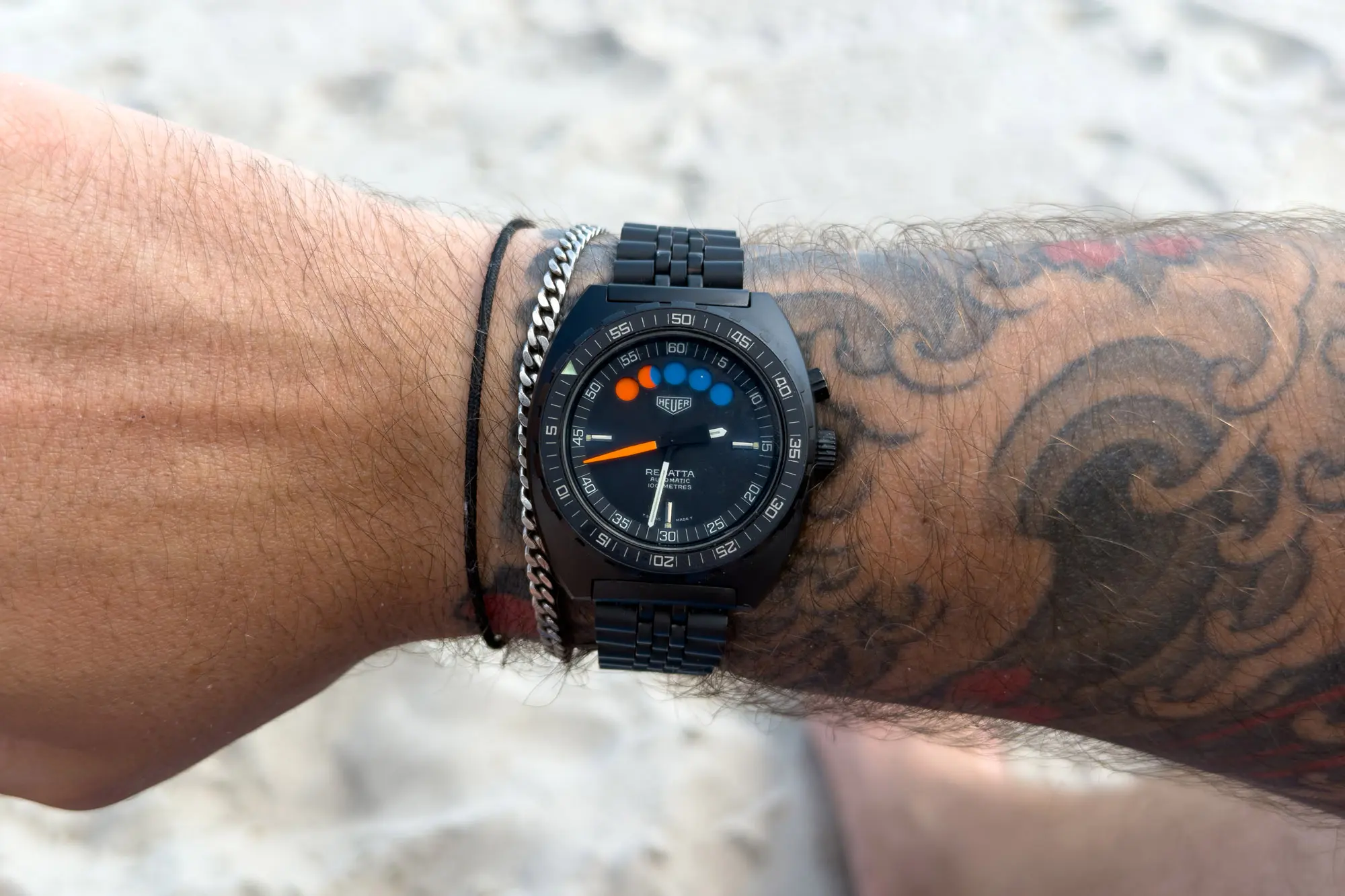
Throughout all of it, the watch remained on my wrist. It did not time a single race start. It did not need to. What it did was sit on my wrist in quiet confidence quietly enjoying a renewed life of adventure. It also left me with a vibrant tanline that I am pretty sure makes me go faster. Sometime on Sunday morning, the flashing green and red lights from our home marina appeared on the horizon. We docked quietly, packed our bags, and said goodbyes that carried the weight of farewells after a shared experience, and went our separate ways.
The Watch
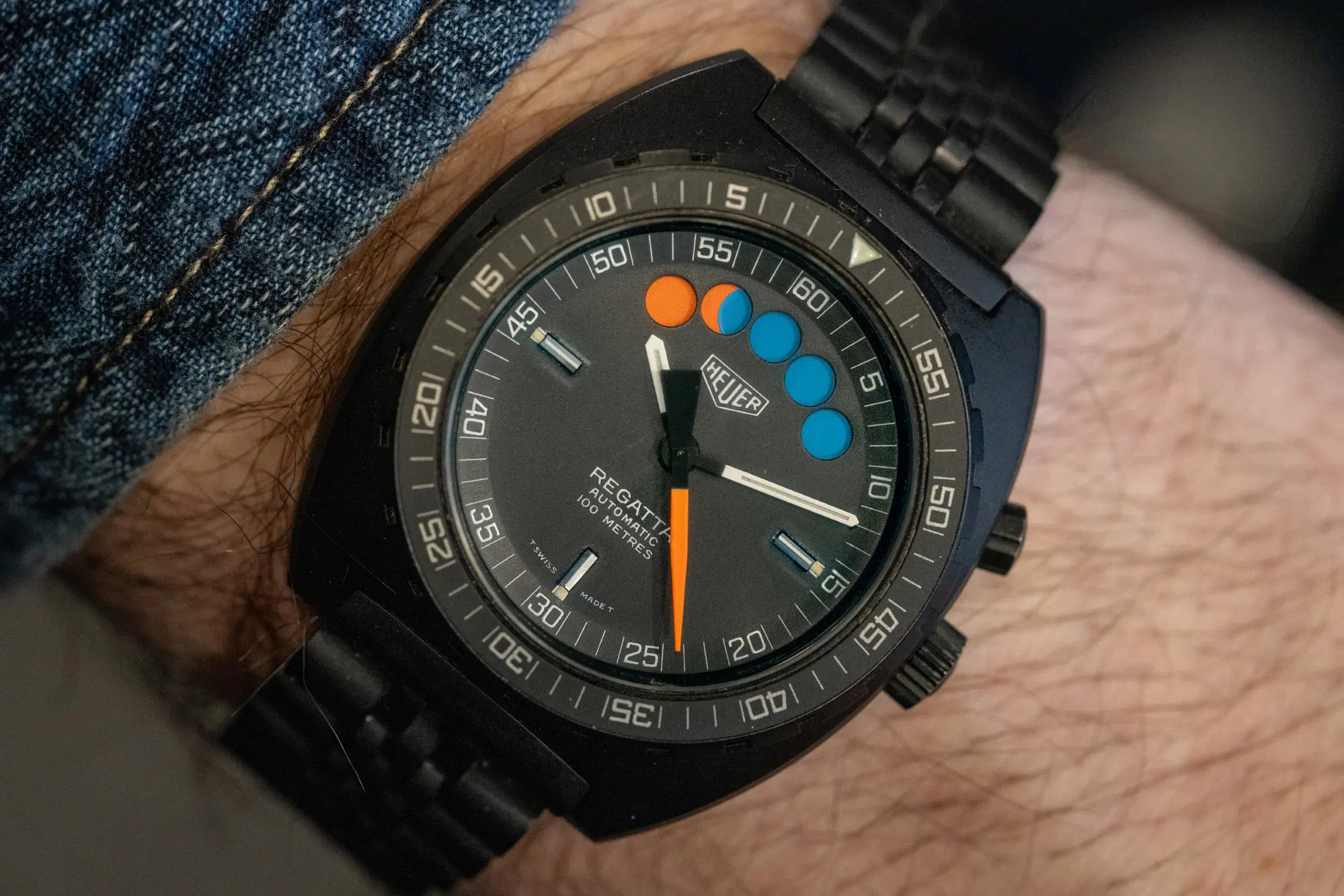
The Heuer Regatta ref. 134.601 occupies a particular and wonderful corner of vintage horology. It is not a Carrera, a Monza, an Autavia, or a Monaco. It will never command the same cultural recognition or role in the auction house that those references might attract. That means that for those who find it, it tends to feel more like a discovery than an acquisition. It rewards knowing both what you are looking at and what you are looking for.
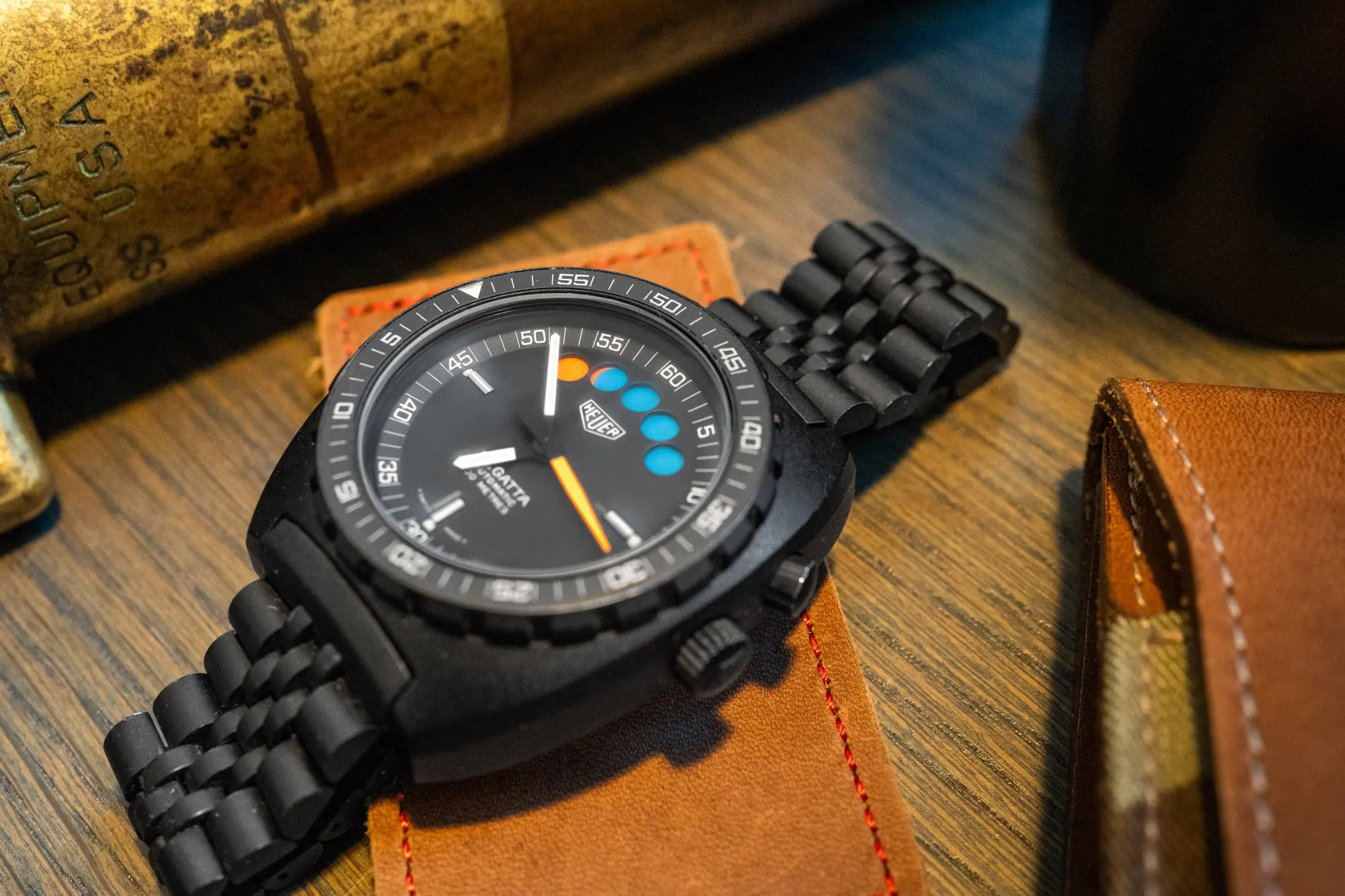
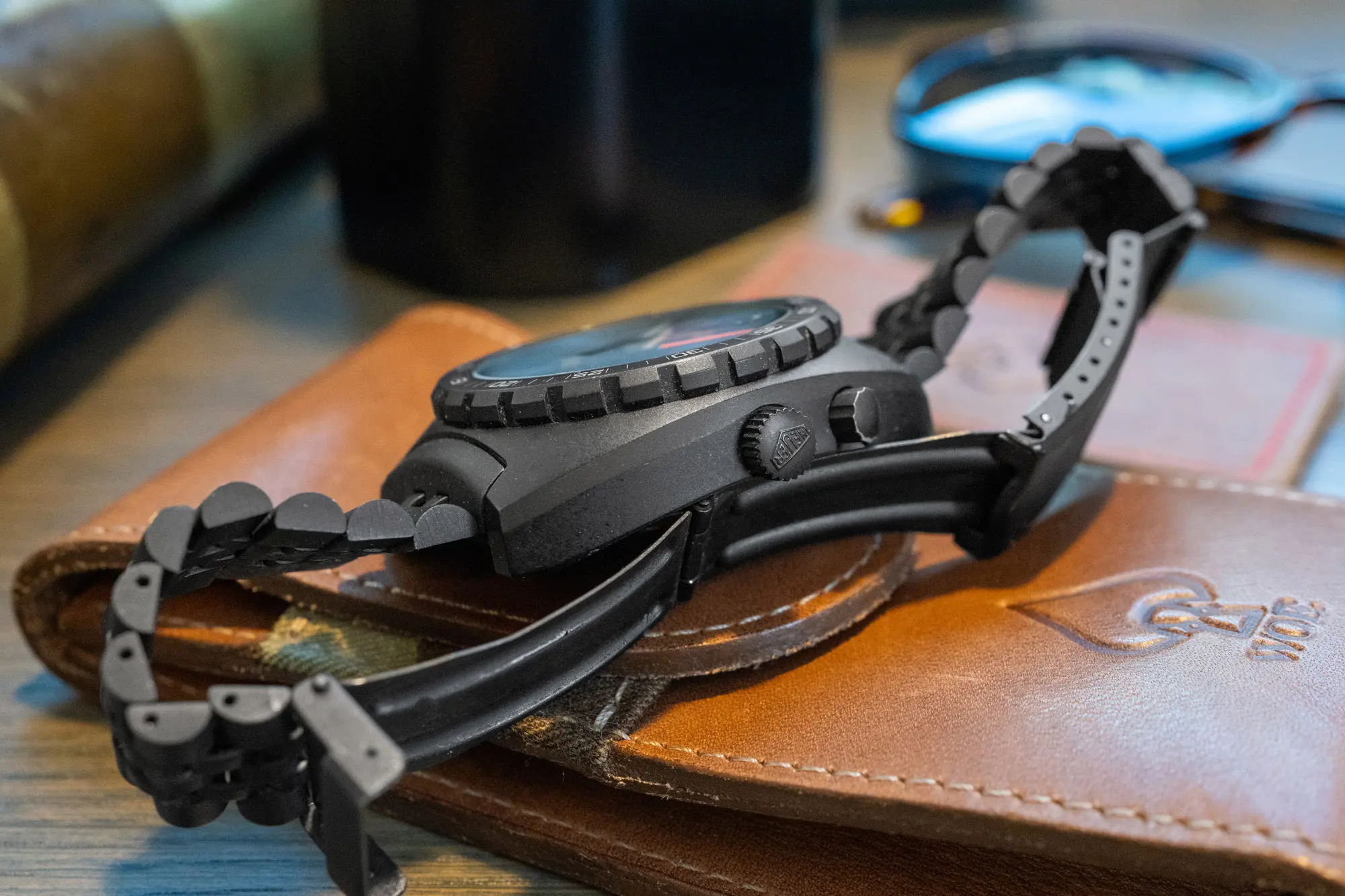
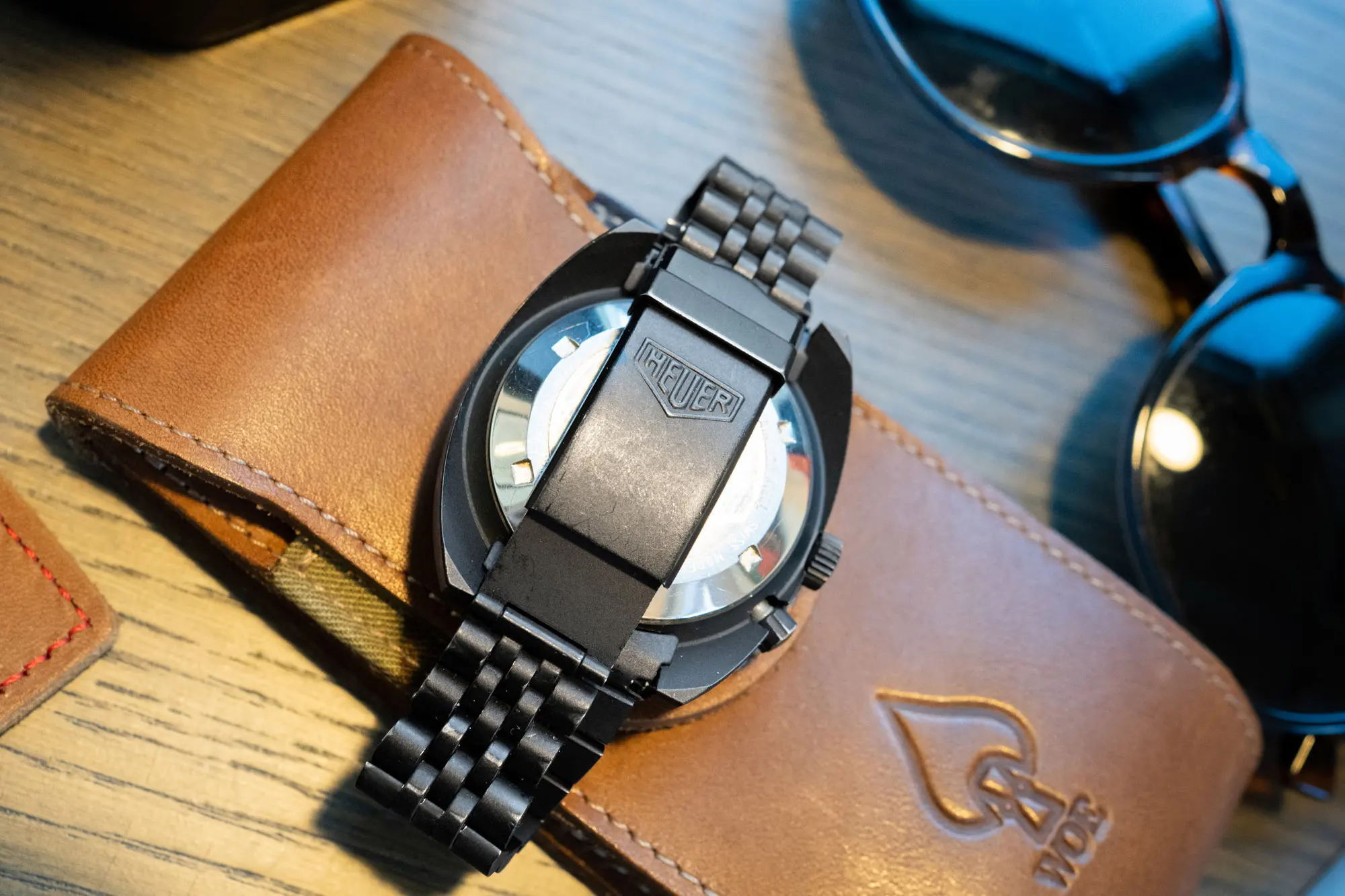
Its PVD case, still wearing its coating with a fidelity that defies its age, gives the Regatta a presence that the silver-cased version does not quite replicate. In my opinion, black tool watches from this era tend to carry a particular gravity. Against the matching jubilee-style bracelet it presents a complete object – cohesive, considered, and entirely in line with what Heuer was doing in this period best.
The dial is the heart of it all. Large, color-coded countdown sectors in the characteristic Regatta configuration dominate the upper register, their purpose immediately legible even to someone who encounters the watch for the first time. This is not decoration but a functional instrument designed to be read quickly by someone who has better things to do than squint at a dial. Below, the overall dial layout reflects the same priority, function first, always, with enough visual intelligence to stay out of the way.
Final Thoughts
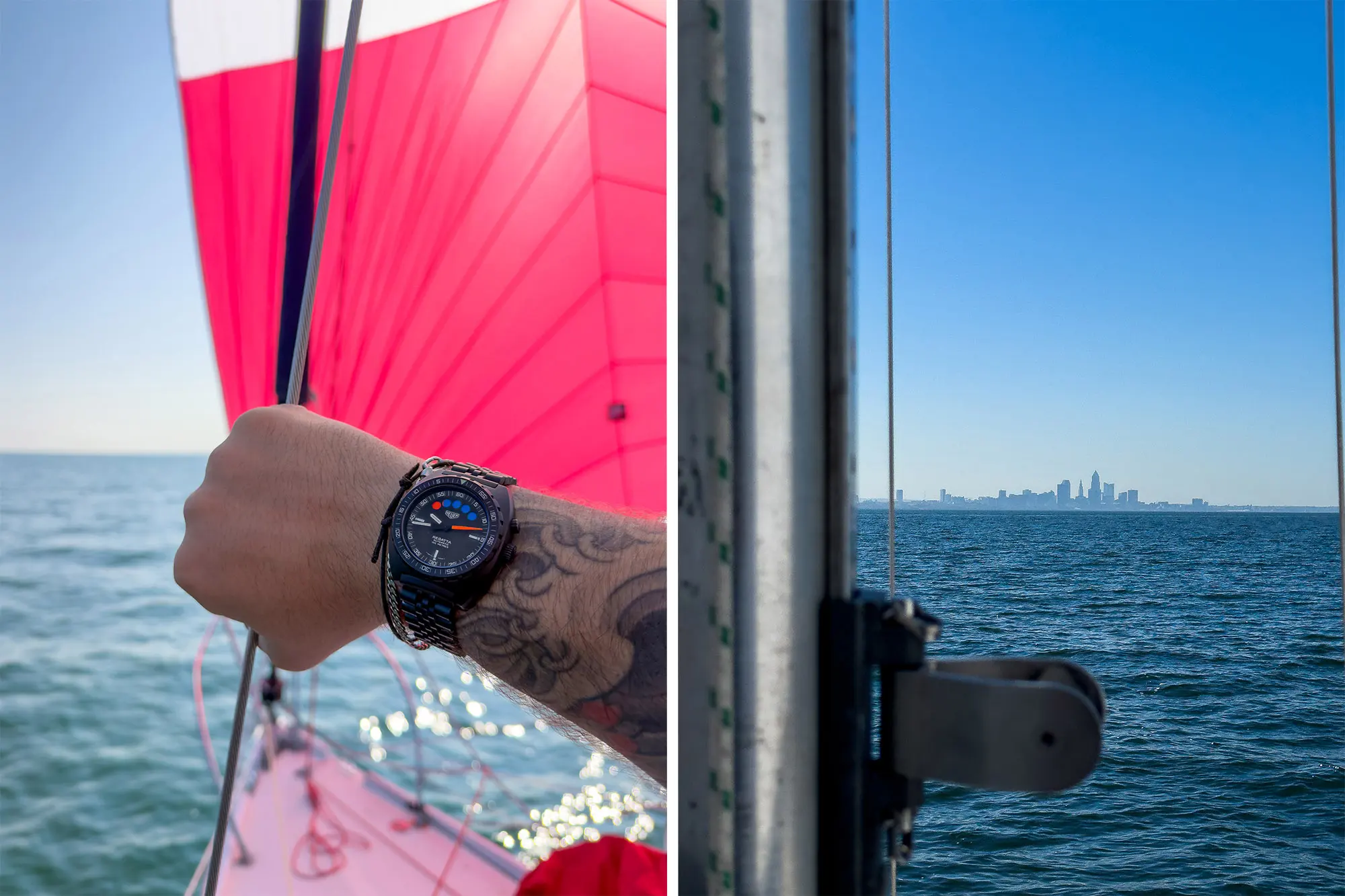
Watches are meant to be used. This is obviously one of the more overused sentiments in the tool watch enthusiasm sphere, yet it has to be said. It is a simple idea that the industry occasionally loses sight of in the purist of heritage narratives, display case aesthetics, and the comfortable fiction that certain watches are too precious to be used in the environments they are being marketed as built for. The Heuer Regatta was built for open waters, for hectic race starts, for the conditions that make a dress watch nervous and a tool watch feel at home.
It had been waiting for the right trip, perhaps more patiently than I was. Luckily, Lake Erie was patient enough to wait with us. The best tool watches are not always defined by whether they perform the task they are built for. Sometimes they are defined by finally being somewhere they belong.

Leave a Reply