
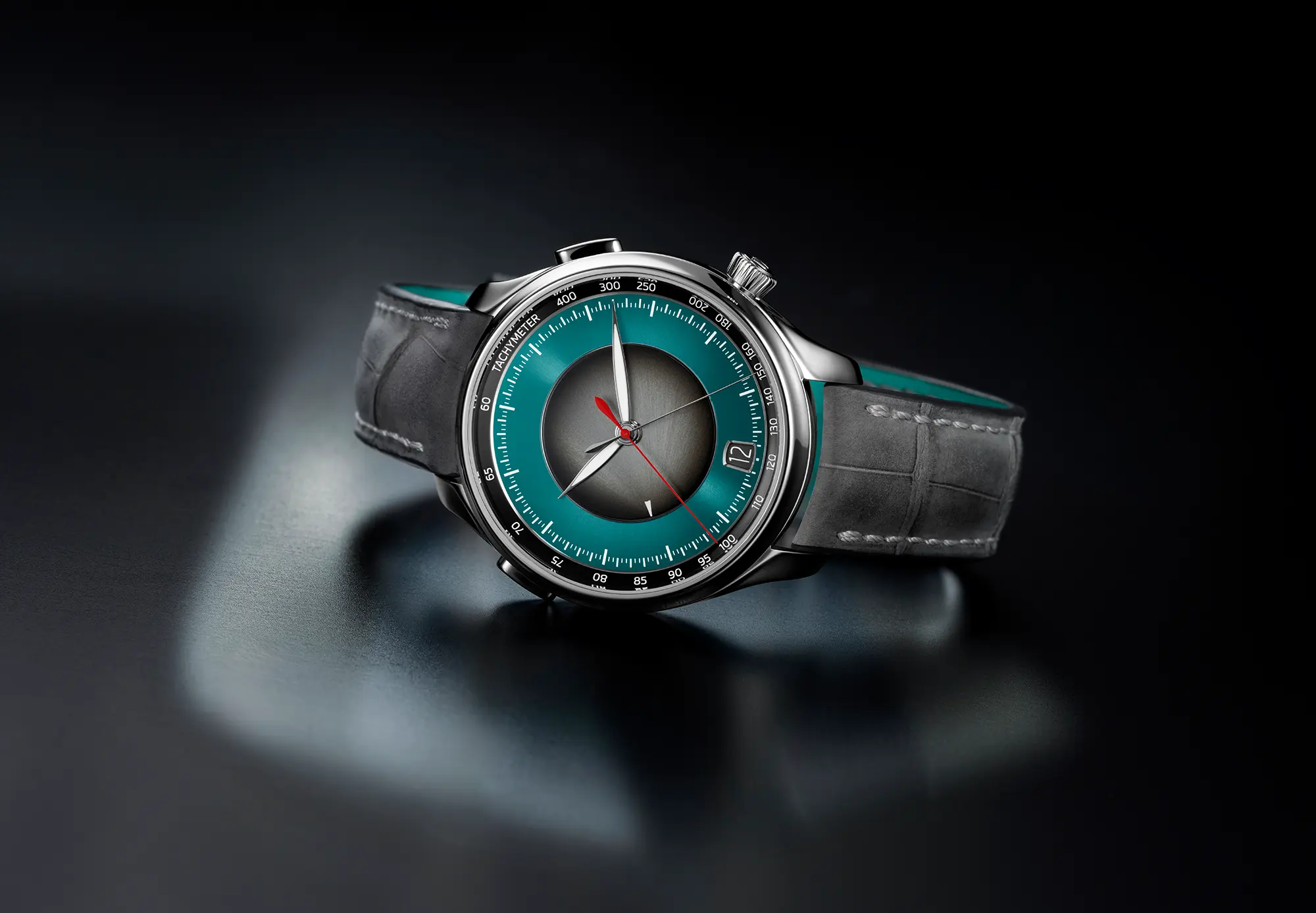
The world welcomes a new centrally mounted chronograph today with the release of the Endeavour Flyback Chronograph Dual Time Date from H. Moser and their partners at Agenhor. The watch represents a new vision of the Endeavour wrapped in a familiar package, and might be one of the most unusual chronographs executions to come from the brand. The world needs more centrally mounted chronographs, and while this might not be the second coming of the EZM1 that I’d like to see, it’s still a welcome addition to the club. Further, this Endeavour has a character all its own that feels almost at odds with itself, resulting in what will likely be a polarizing design.
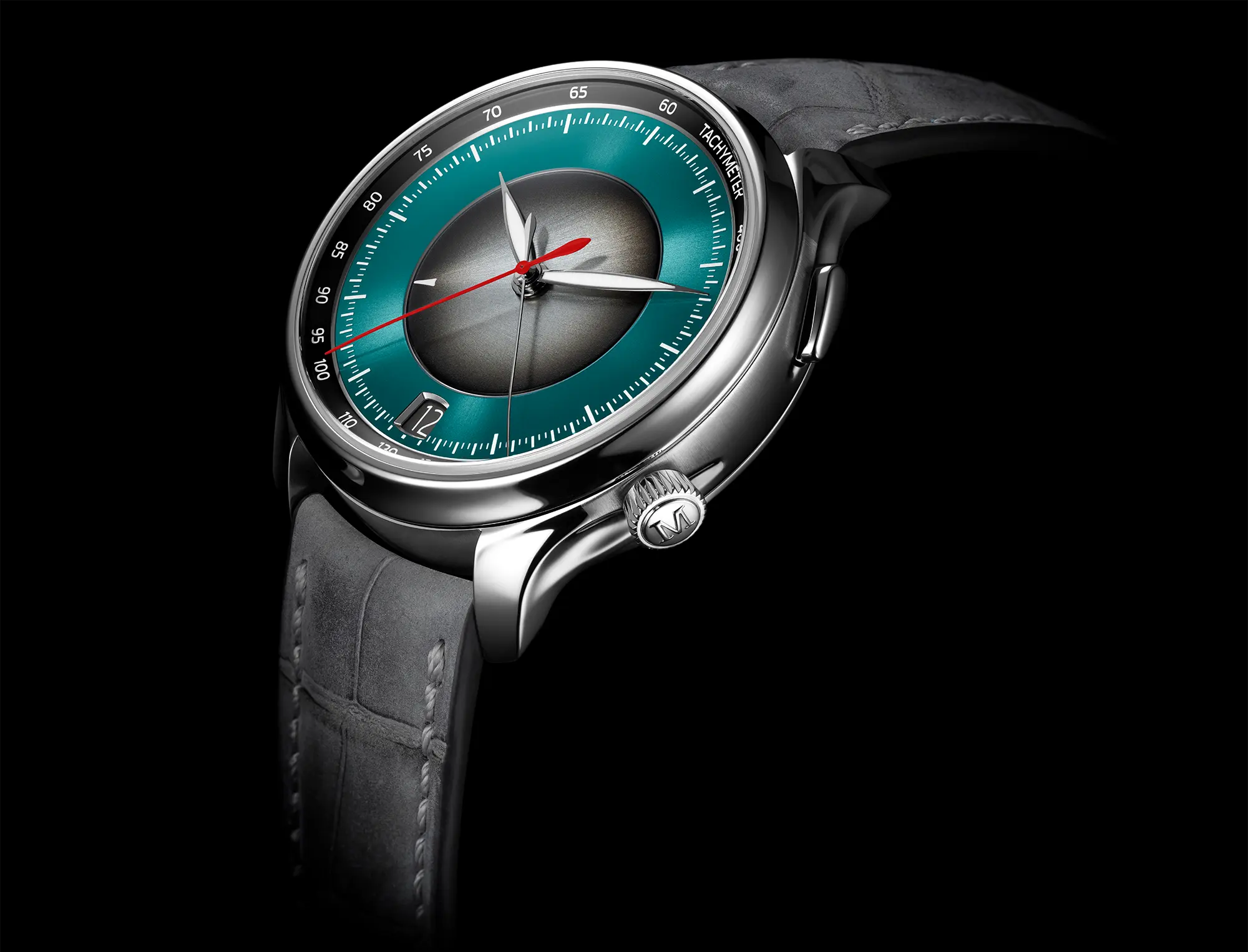
The beauty of a centrally mounted chronograph is the reduction of the complication to its most practical form, allowing the timing hands to use the full perimeter of the dial to track elapsed time without the need for sub-dials. These watches can bring a clarity to the act of timing up to 60 minutes when handled correctly, which generally means visually separating the timing hands from the main set of hands at a glance through size, shape, or color. What you lose in functionality by dropping an hour totalizer, you gain in real world practicality.
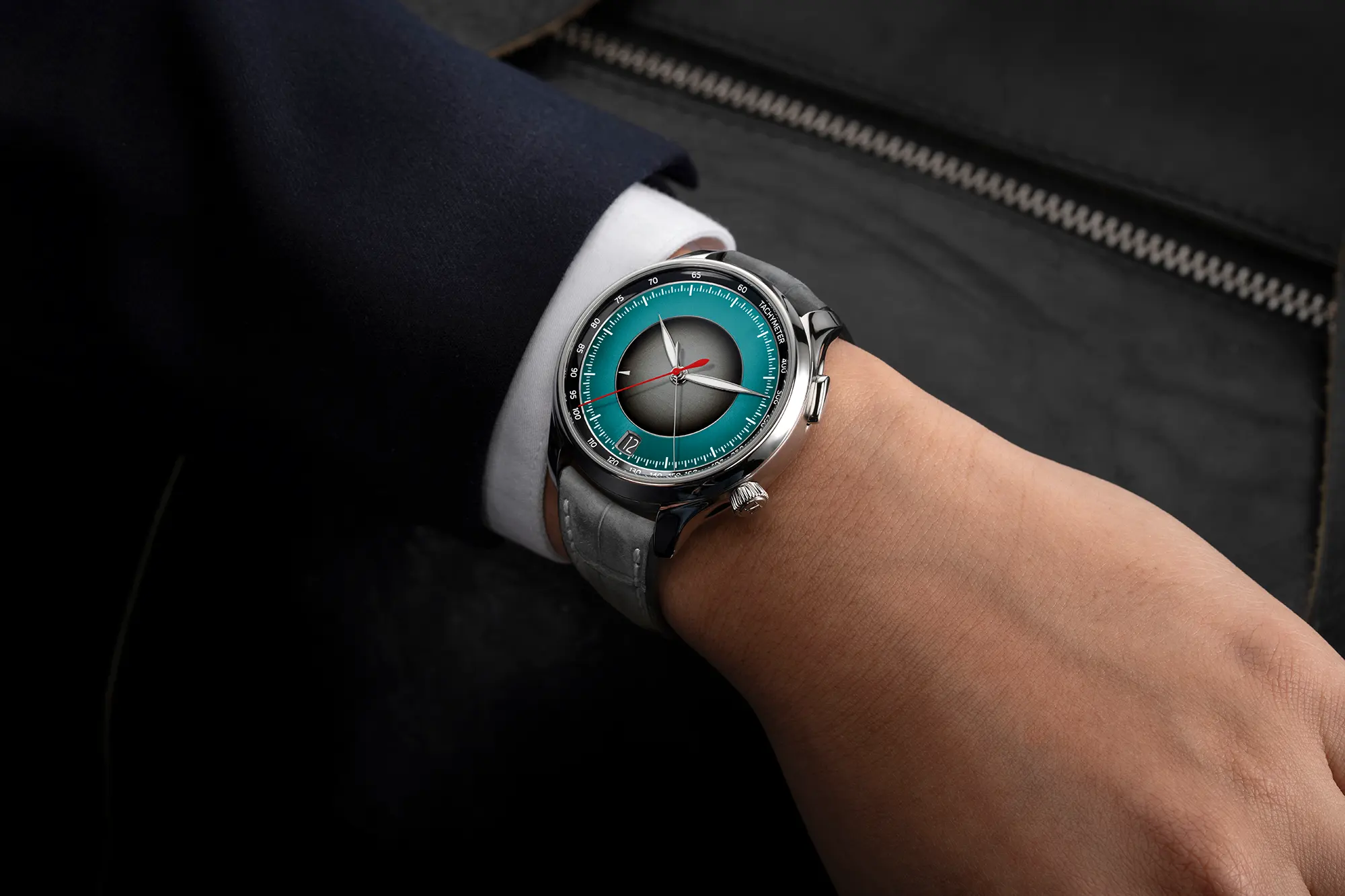
With the Endeavour Flyback Chronograph Dual Time Date, H. Moser has delivered on exactly that (not for the first time), with a set of timing hands that join an hour and minute hand at the central hand stack. These hands will track time when prompted, and even offer flyback functionality to boot. A rotating disc at the center of the dial features a small pointer, representing a second time zone, while a date aperture resides at the bottom of the dial. All good stuff, but taking a step back a problem presents itself: the only numerals represented anywhere on the watch are that of a tachymeter framing a chapter ring indexed to the minutes and seconds.
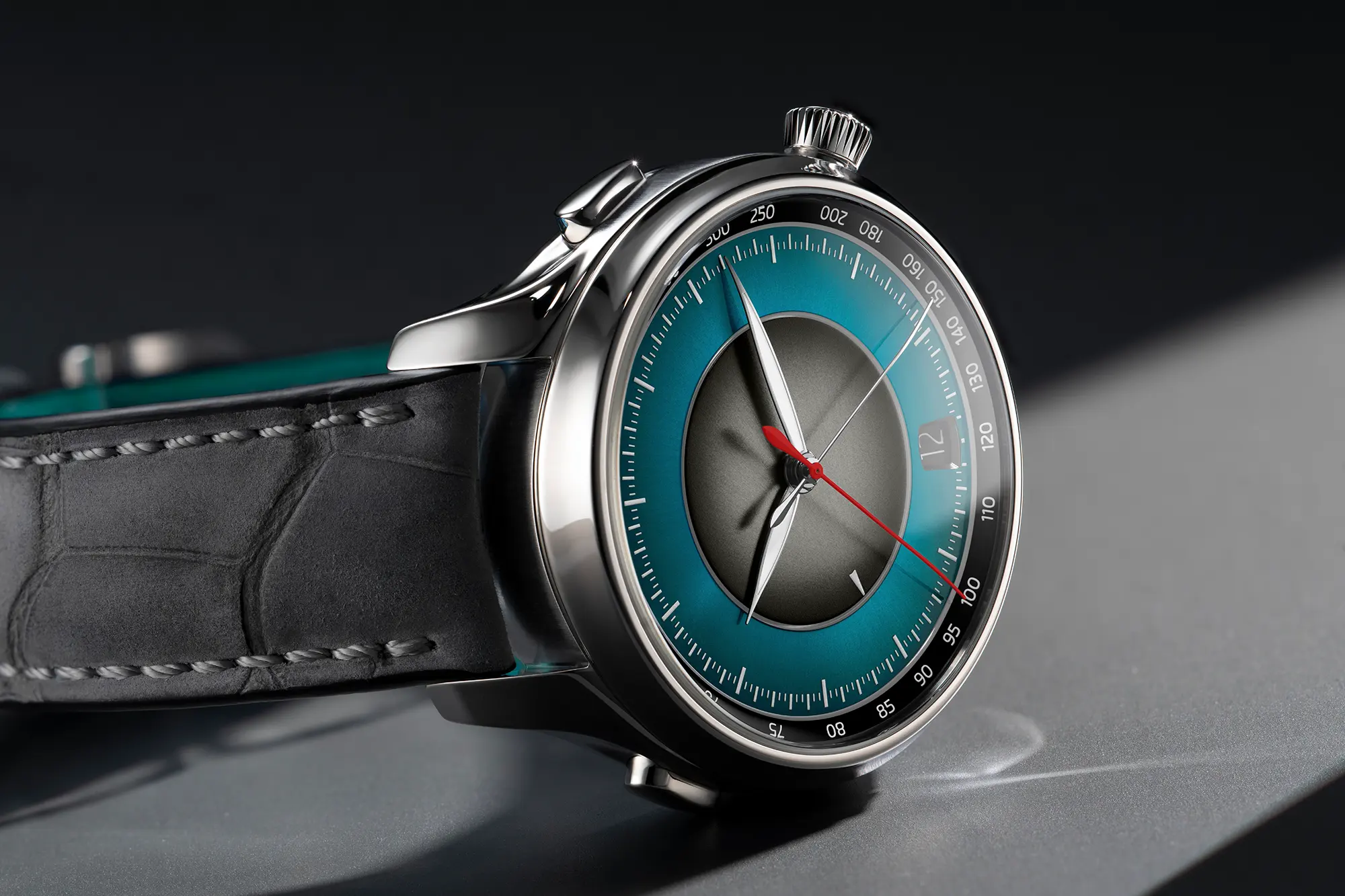
The chapter ring is a useful tool with this complication set, and focuses attention on the timing aspects of the watch over the time keeping legibility. Not a terrible tradeoff. The decision to prioritize the tachymeter, on the other hand, feels slightly strange. Especially given the stripped down distillation of everything else going on. The tachy isn’t exactly a practical index even in watches that aren’t attempting such a clean presentation as this. Meanwhile, the 24 hour indication has no am/pm differentiation, let alone a 24 hour scale to read against. As such, it would likely best serve as an am/pm indication in itself for the local time being displayed.
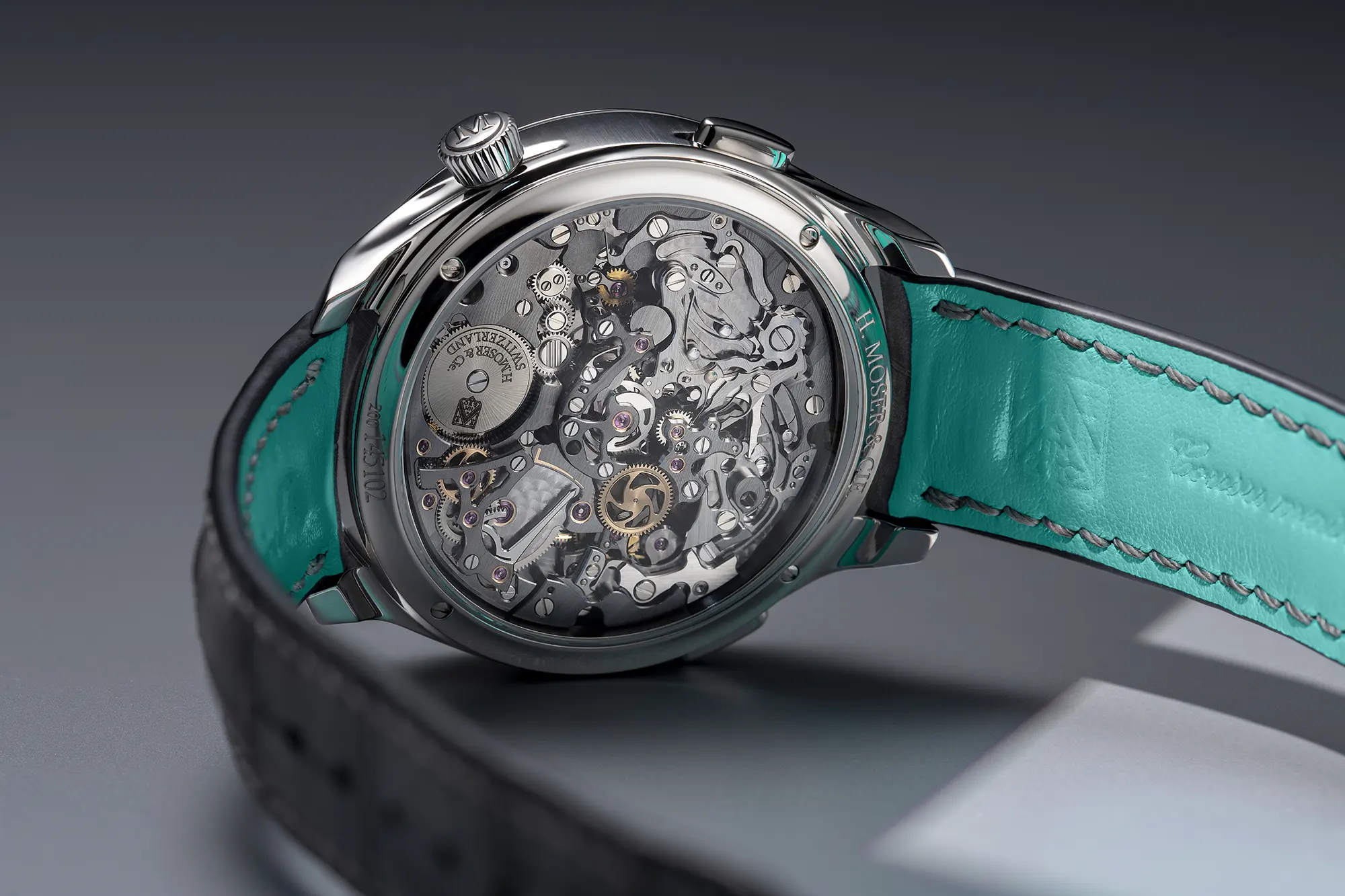
Setting all that aside, the end result is still strangely compelling. The blue and black dial pieces come together handsomely, with a dash of red thrown in for good measure. Everything sits within a 42mm steel case that houses a handwound caliber HMC 730 developed with H. Moser by Agenhor. The expansive movement fills the viewing window around back with a signature Agenhor style with blackened bridges and gold accent gears. It’s a great looking watch all around, and the use of a steel case without a bracelet resulting in a price of $74,400. H. Moser