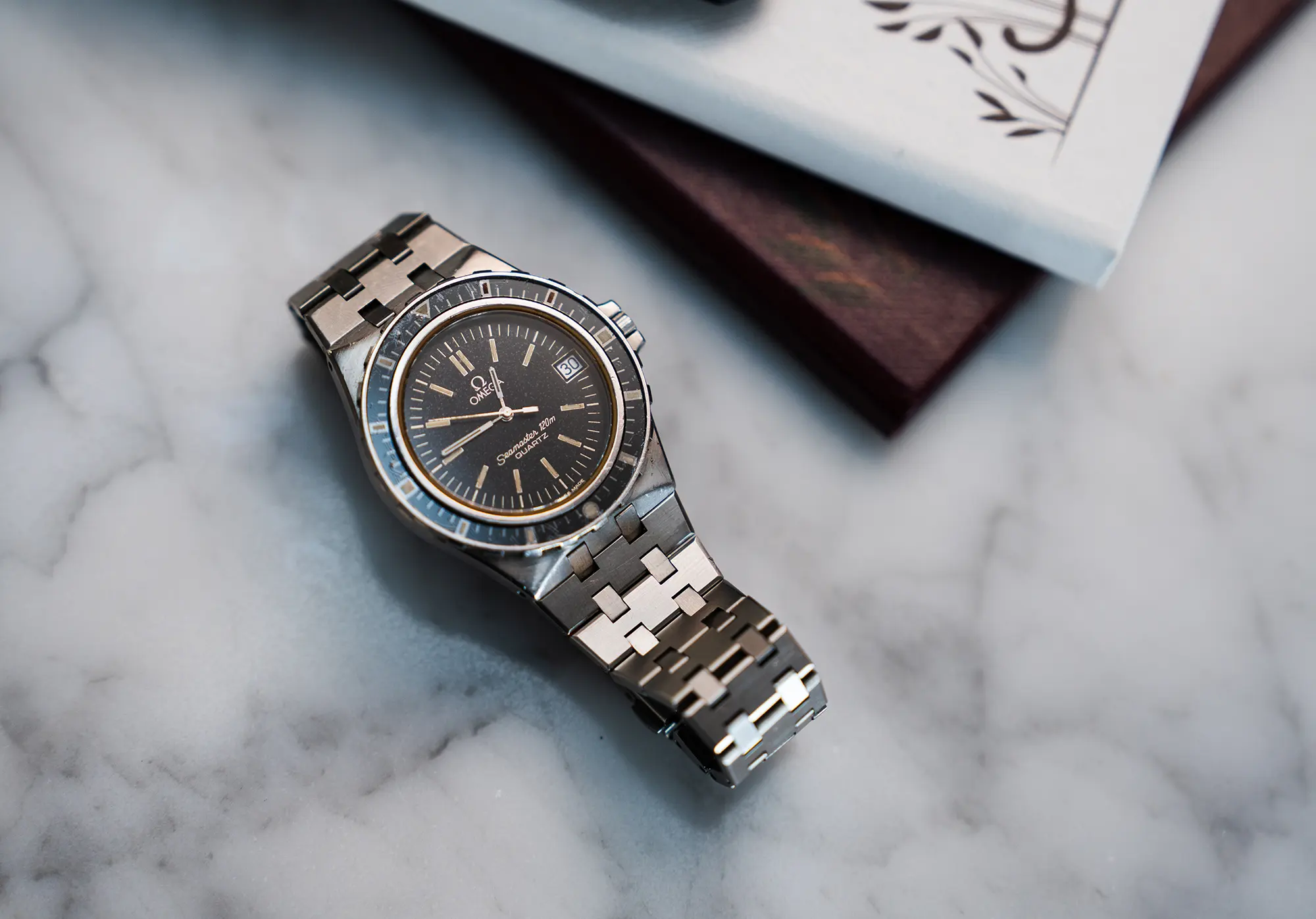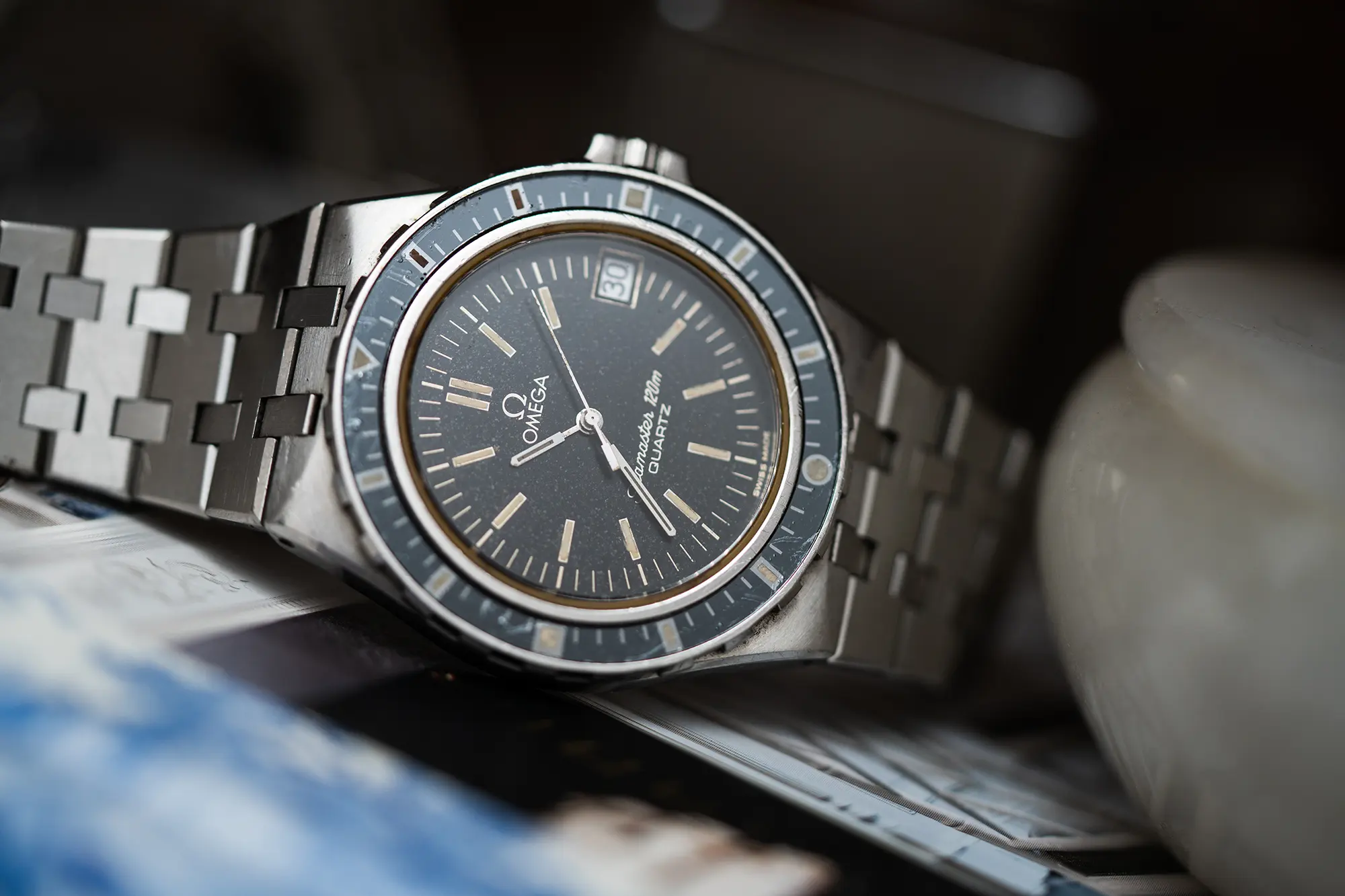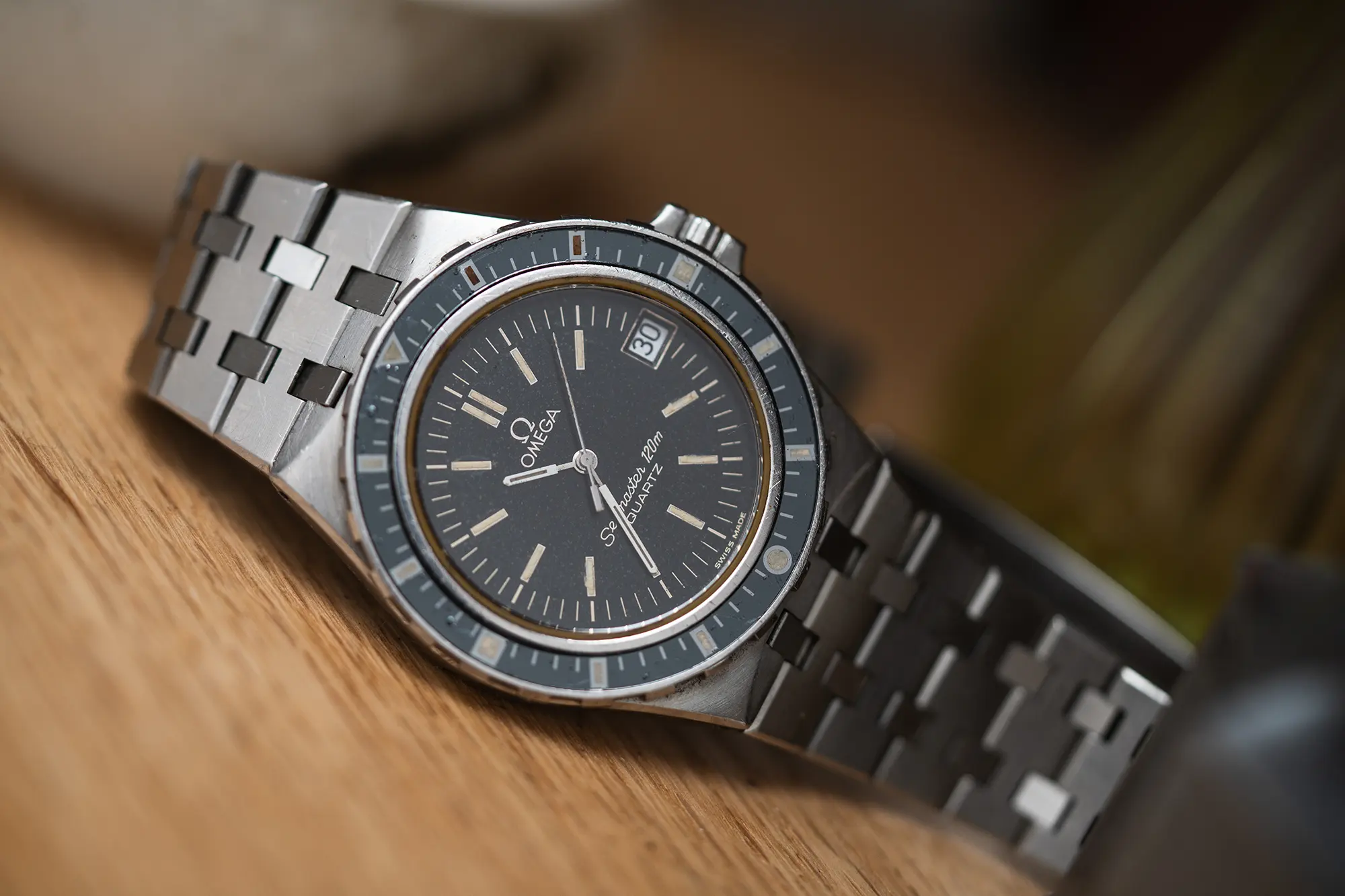
In 1980, Omega released the Seamaster 120, a refined take on the collection that was meant to accomplish two things: bring an air of luxury to the Seamaster; and formally reconnect the name with actual diving. Those two goals may seem diametrically opposed on the surface, but Omega would manage to do just that with the watch. A luxury oriented tool watch is a funny thing, but the concept had a lot of momentum coming out of the 1970s. Omega was well positioned to take advantage, and for a brief stretch of the 1980s, put forth their own vision of a luxury diver, or Plongeur de Luxe.
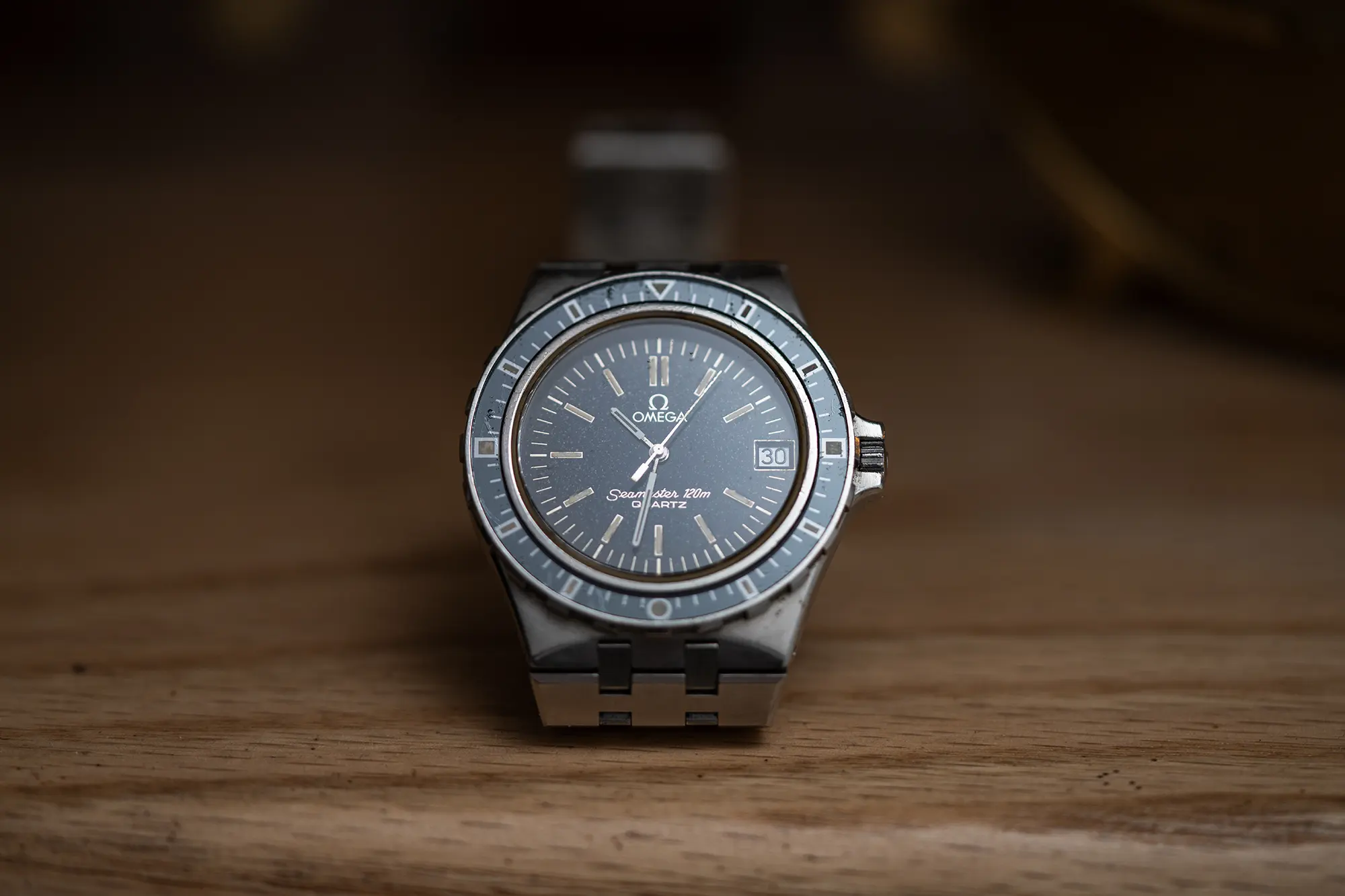
Omega has a prolific history of making great dive watches, and the same was true in 1980. The Seamaster name, however, didn’t quite have the focus that it once did thanks to its broad usage. Honestly, you could say the same today. With the Seamaster 120, a simple vision was brought to life that capitalized on the quartz trend taking hold of the industry, set within a familiar framework of a design that had been evolving through the previous decade. The result was a watch that felt on point for the era, and ready for primetime on the wrist of newly minted Omega spokesperson, Jacques Mayol just in time for a record breaking free dive.
The Seamaster 120 label would also see broad usage in some similarly revelatory references, from the Calypso and Recife, to the Alveoles, and while the name would live on to appear in additional generations, the design of this watch (much like those mentioned above) was short lived. Viewed today, it feels like a development direction that was ahead of its time, but in reality it served to bridge the Seamaster into a modern era. Influences from this reference can still be found today in Omega’s existing Seamaster collection, and there are some surprisingly innovative features to be found here.
Seamaster History
The Seamaster name was first used in 1948, introduced around the Olympic games taking place in London of that year. Omega had been the official timekeeper of the games since 1932, though the second world war meant that the London games was only the brand’s third appearance. I bring this up to point out that, even though we might think of the Seamaster as a watch that got its big start in 1957 with the Seamaster 300, the superior water-resistance themes it was built on first appeared with the name in 1948.
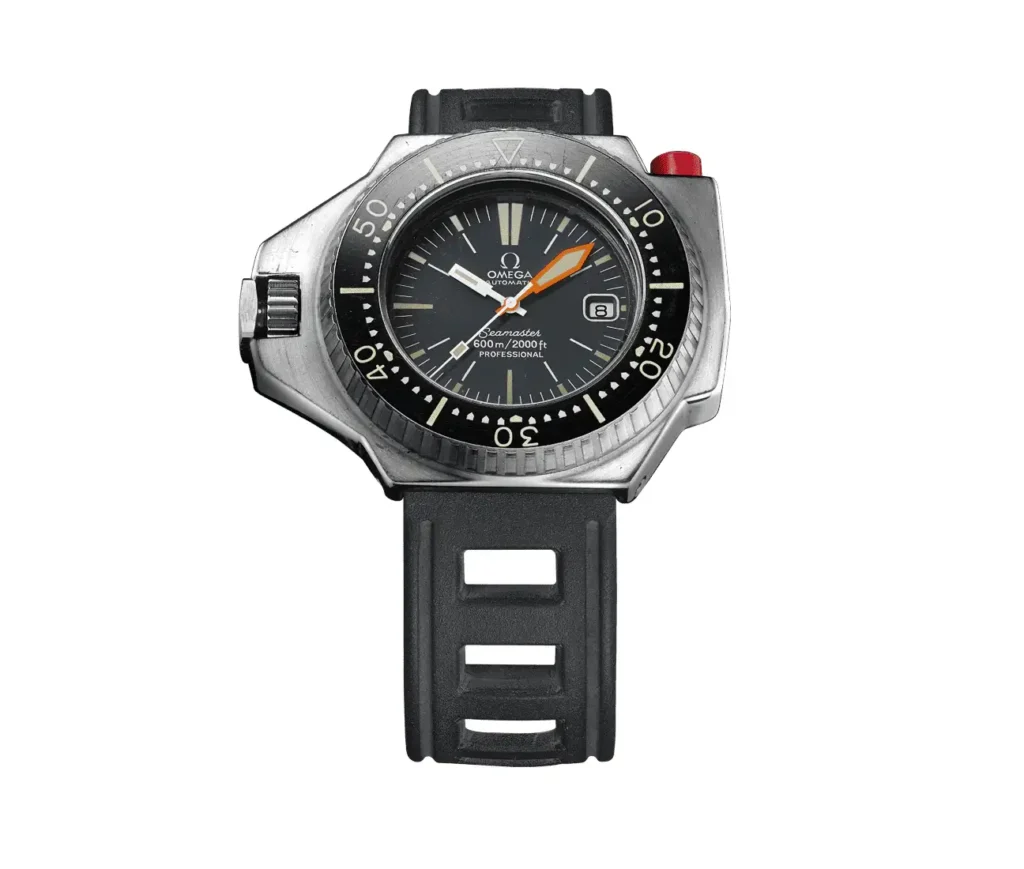
From the 1960s to the 1970s, the Seamaster name would appear on all manner of references, and didn’t necessarily denote water-resistance. From the demure 166.0002 to the iconic 166.077, aka the mighty PloProf. The delta between these two perfectly illustrates the sometimes strained nature of Seamaster identity. Obviously, there existed plenty of delineation within the family but to the general consumer, the word itself may not have carried the same weight as something like the Submariner, which retained a sharp focus throughout its evolution.
To my eye, Omega was never a brand to let a tight naming convention get in the way of a good idea. There exists a truly staggering array of surprising designs to be found within the Speedmaster, Constellation, and Seamaster families. Designs we wouldn’t have today were Omega to have ever exercised a strict discipline of methodical evolution. Similarly, the Seamaster 120 saw a range of expressions, each of which brought new ideas to life. Some moved forward, many others did not.
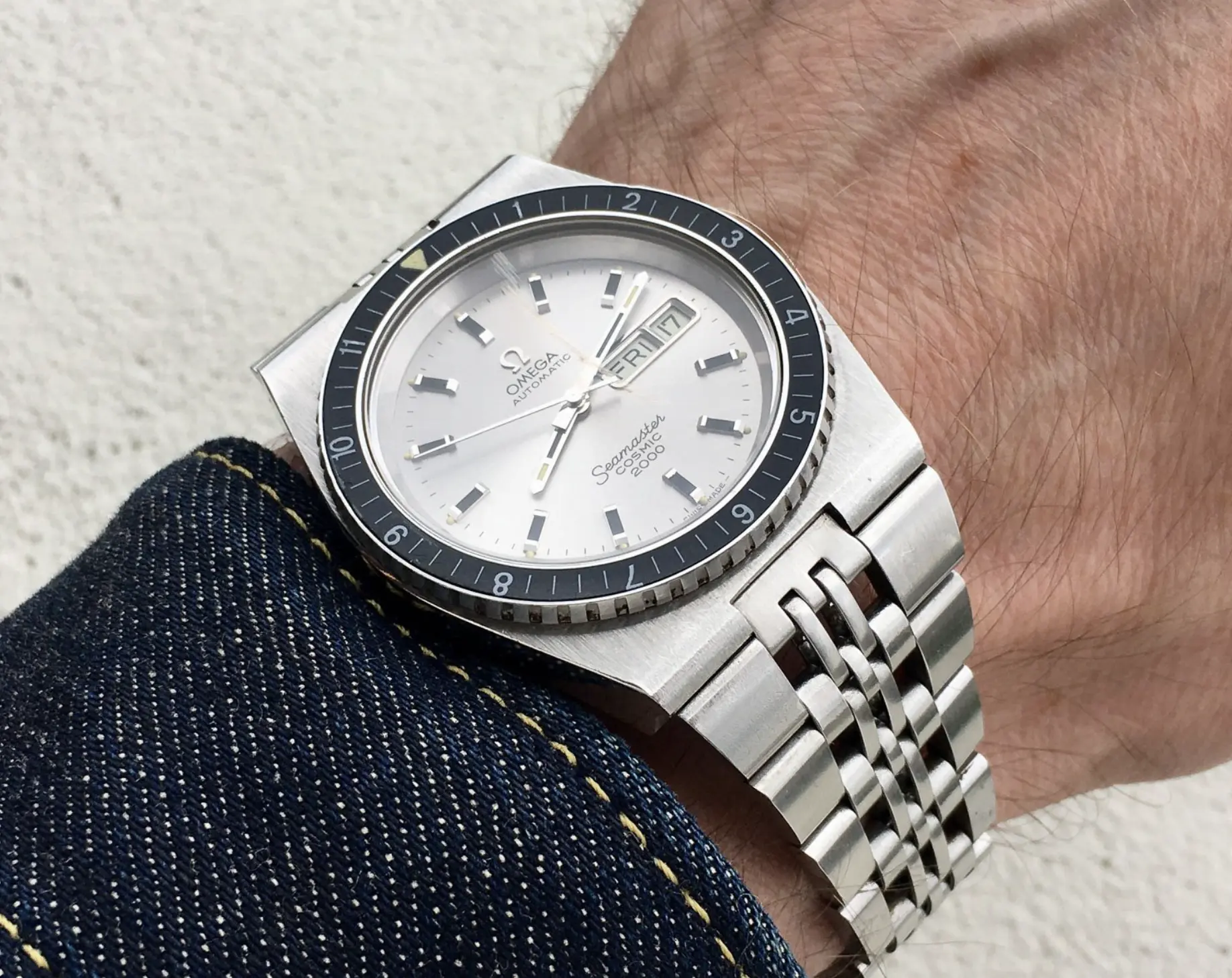
There is one specific watch from the mid 1970s that I’d like to point out here, and that is the Seamaster Cosmic 2000 ref. ST 366.0830. There are some design cues with this watch that carry through to some of the designs we find in the following decade, including the Plongeur de Luxe seen here. From the intricate integrated bracelet, to the thin bezel, and even the shape of the hands and hour markers to some degree.
There is another watch that may immediately come to mind when viewing the Plongeur de Luxe, which is the Audemars Piguet Royal Oak, which was of course first introduced in 1972. The inspiration is there, no doubt, but Omega certainly had their own iterations of similar designs that pre-date the Royal Oak.
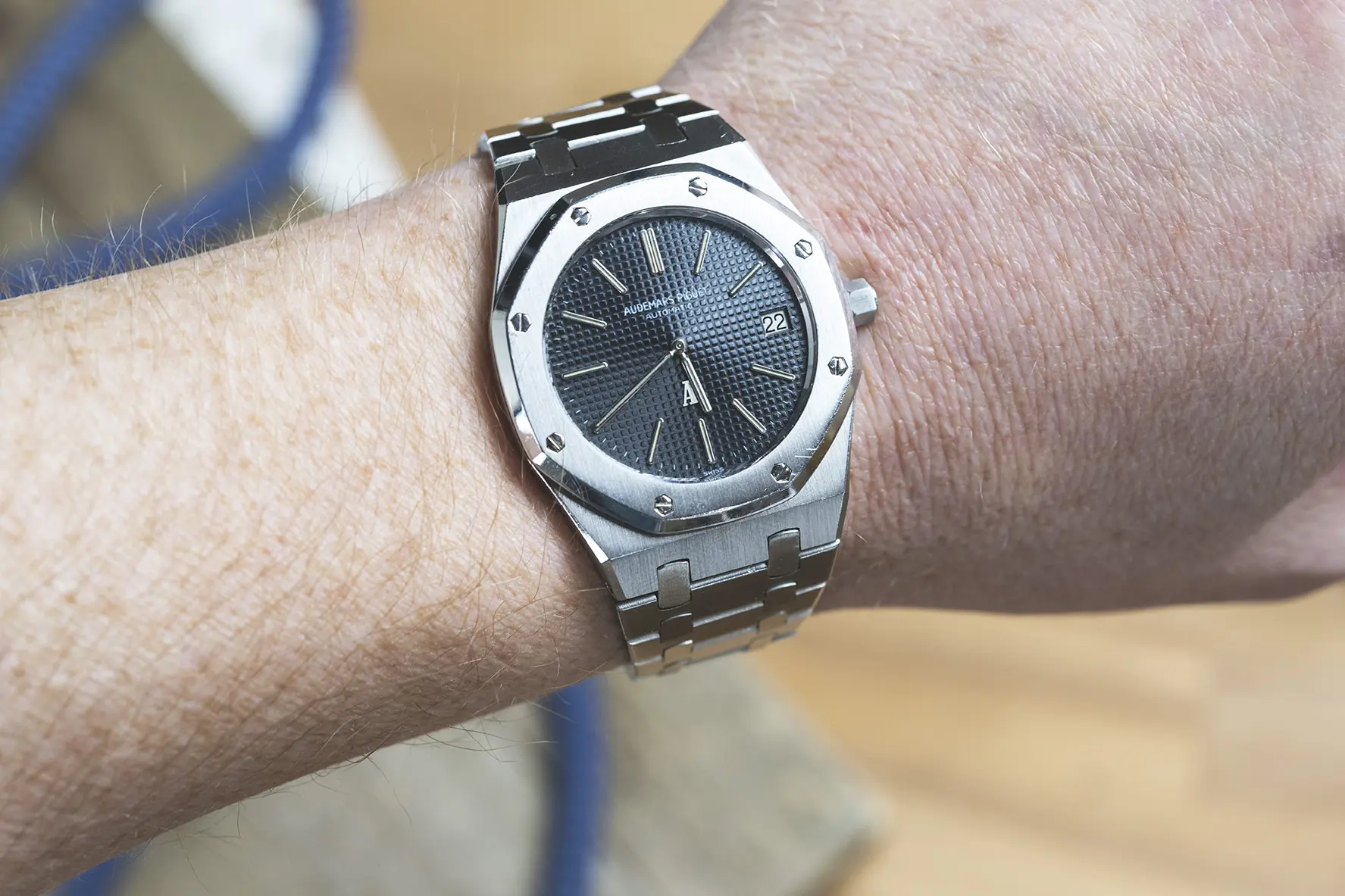
The Royal Oak may have taken awhile to catch on, but when it did, the industry took notice. By the end of the ‘70s, The luxury sport watch was a full blown genre unto itself, with the integrated bracelet serving as a defining feature. Omega, having plenty of their own iterations of similar designs, fully embraced the emerging trend with the Plongeur de Luxe. The difference was the Omega took the approach with a watch being positioned not just as a sport watch, but overtly as a dive watch.
Lots of watches have taken inspiration from the Royal Oak over the years, and very few are able to match the feel on the wrist. This comes down to the impossible-to-replicate Gay Frères, and the ultra-thin Jaeger-LeCoultre Cal. 920 allowing for a total thickness of just over 7mm. It’s not just the numbers, though – it’s all of the little details that come together to make for an exceptional experience. The Plongeur de Luxe may not boast the same level of fit and finish as the AP, but it gets very close to capturing the magic of that experience. More on that later.
The Jacques Mayol Connection
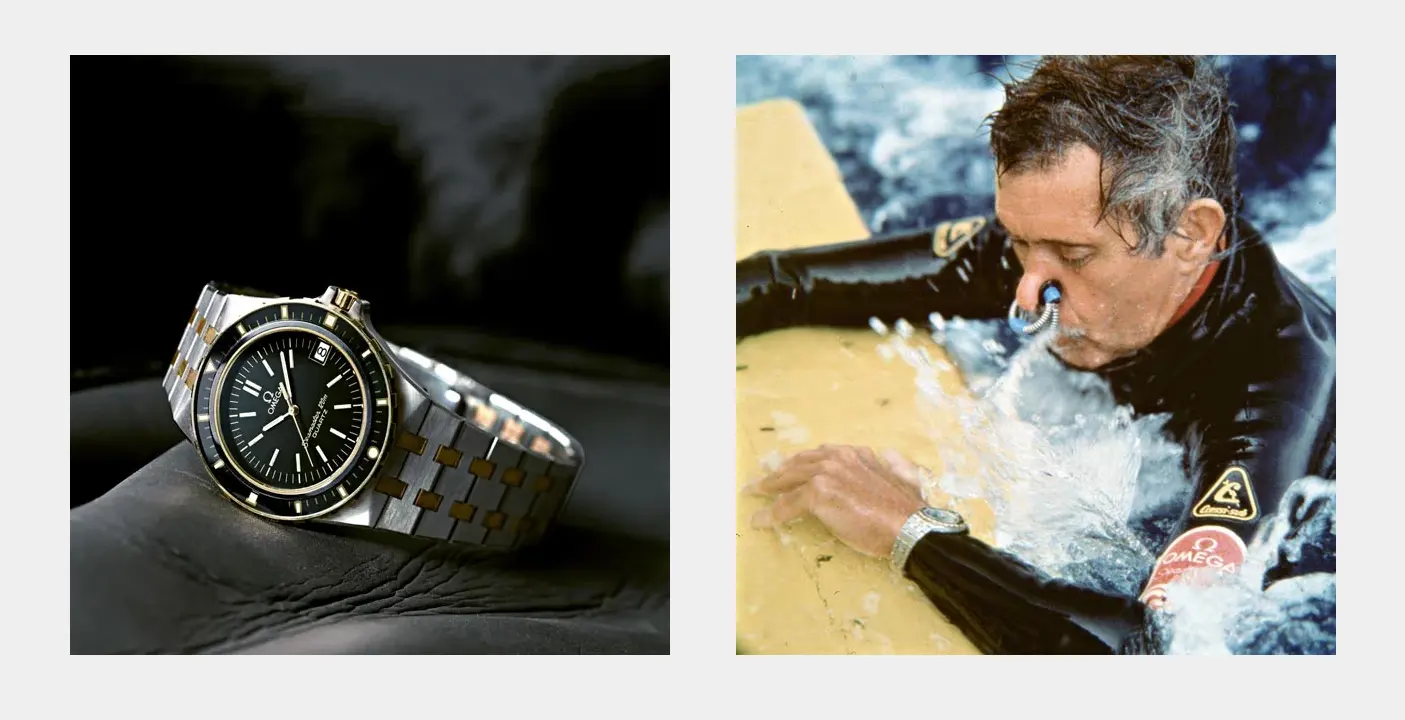
The year is 1980, you’ve got a new svelte diver on the market, how do you get the word out? Well, if you’re Omega, the answer is obvious: stick it on the wrist of famous French free diver Jacques Mayol. Mayol was the first man to break the 100 meter barrier in “no limit” (NLT) free diving in 1976 at the age of 49. In 1981, he would move that record to 101 meters, and did so with a Seamaster 120 Plongeur de Luxe on his wrist. Two years later, at the age of 56, Mayol would make his final deep dive and push the record to 105 meters.
This stretch would forever link Jacques Mayol to the Seamaster 120, and Omega would honor the connection in future releases dedicated to the man and his accomplishments. The most recent being the Seamaster APNEA released in 2003, two years after Mayol’s death.
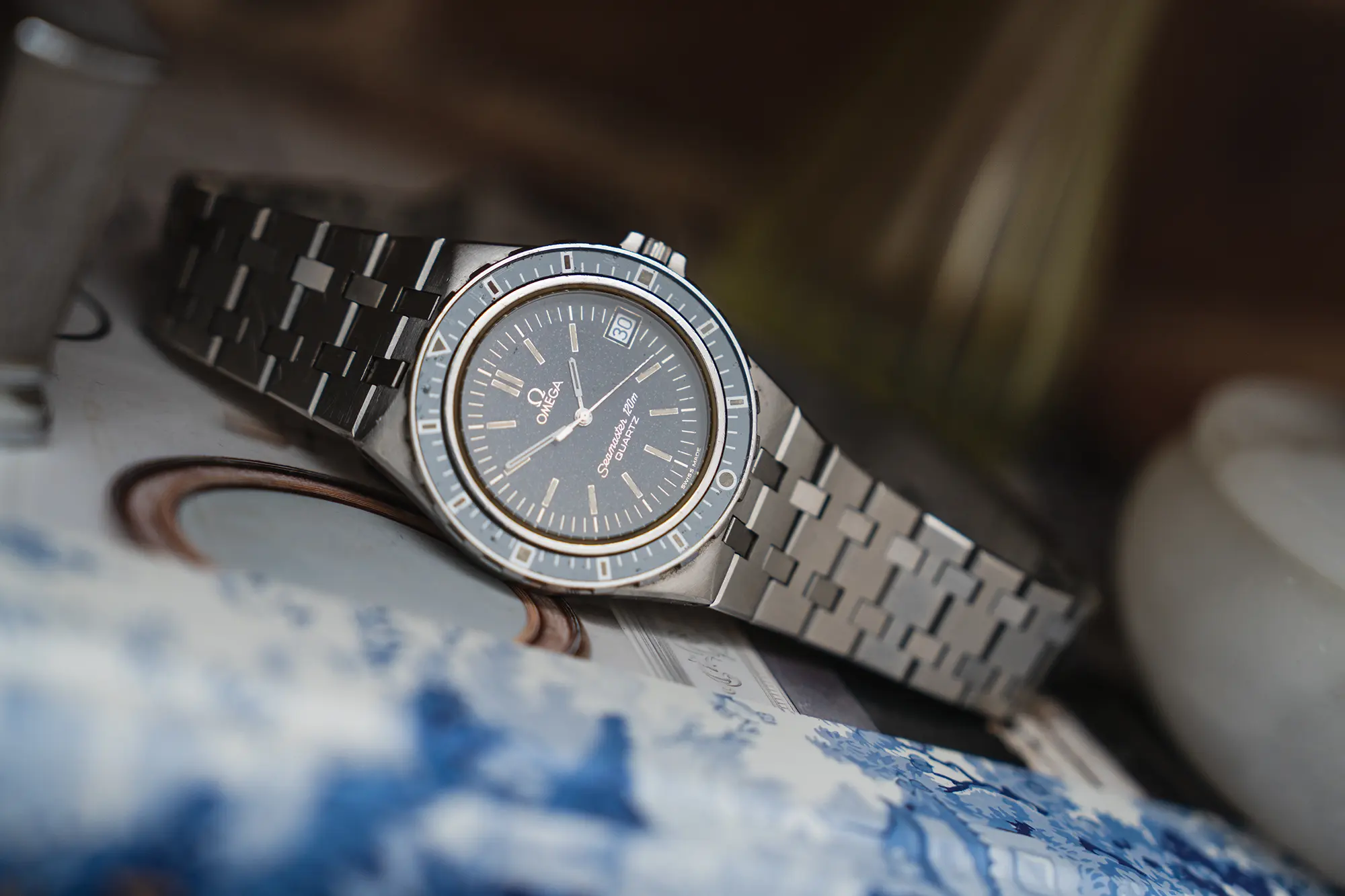
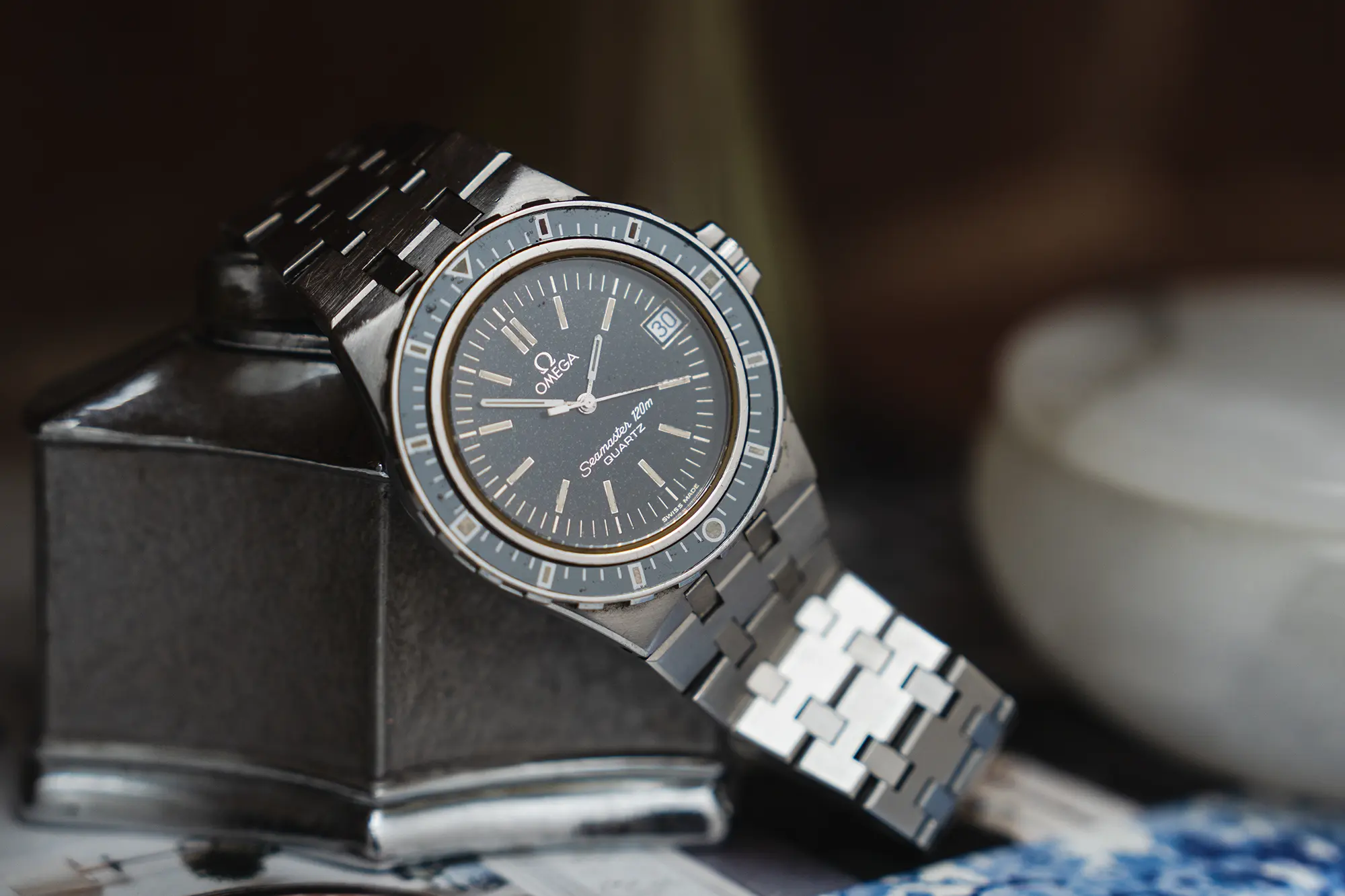
The Seamaster 120 Plongeur de Luxe ST 396.0900
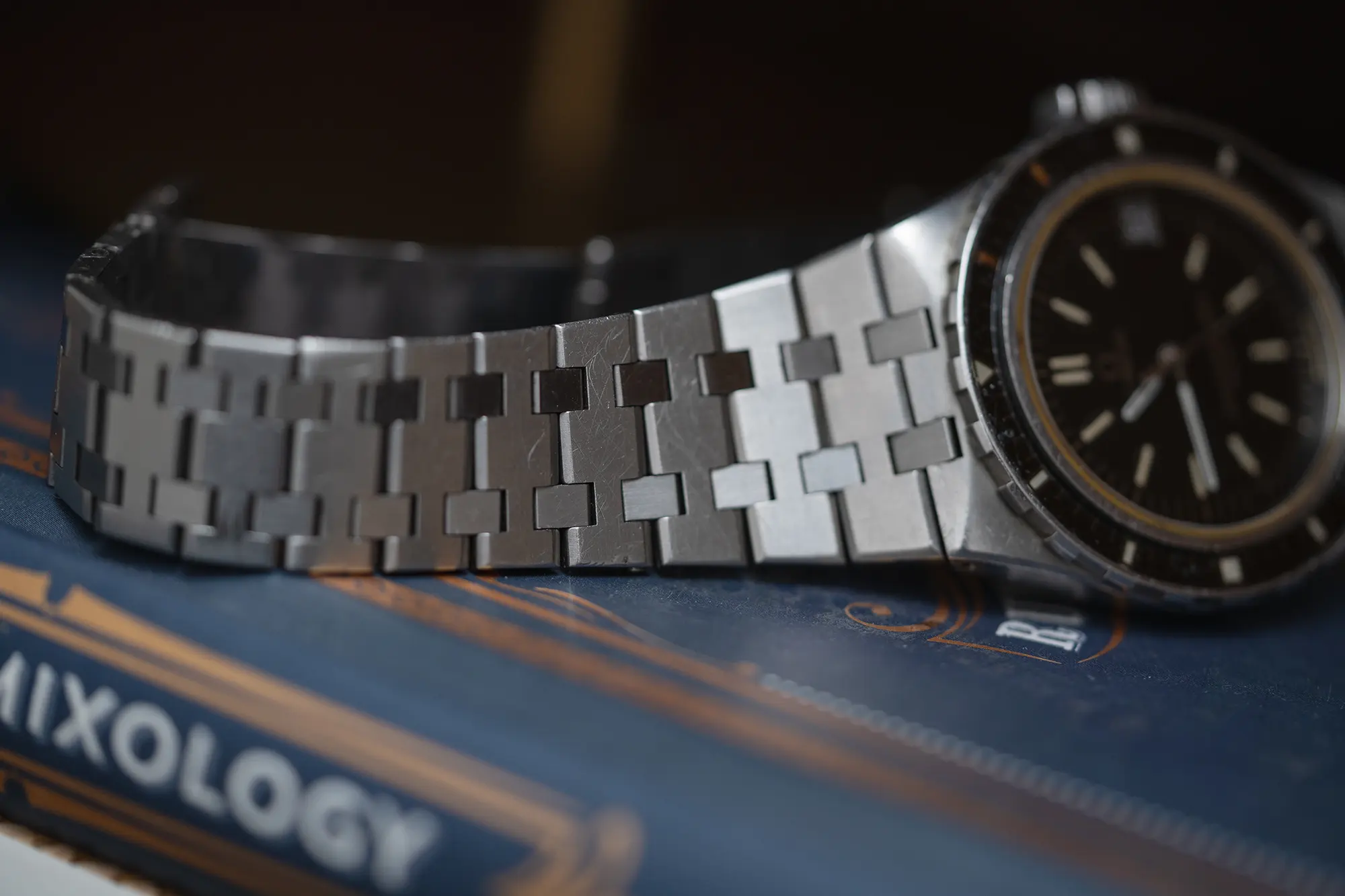
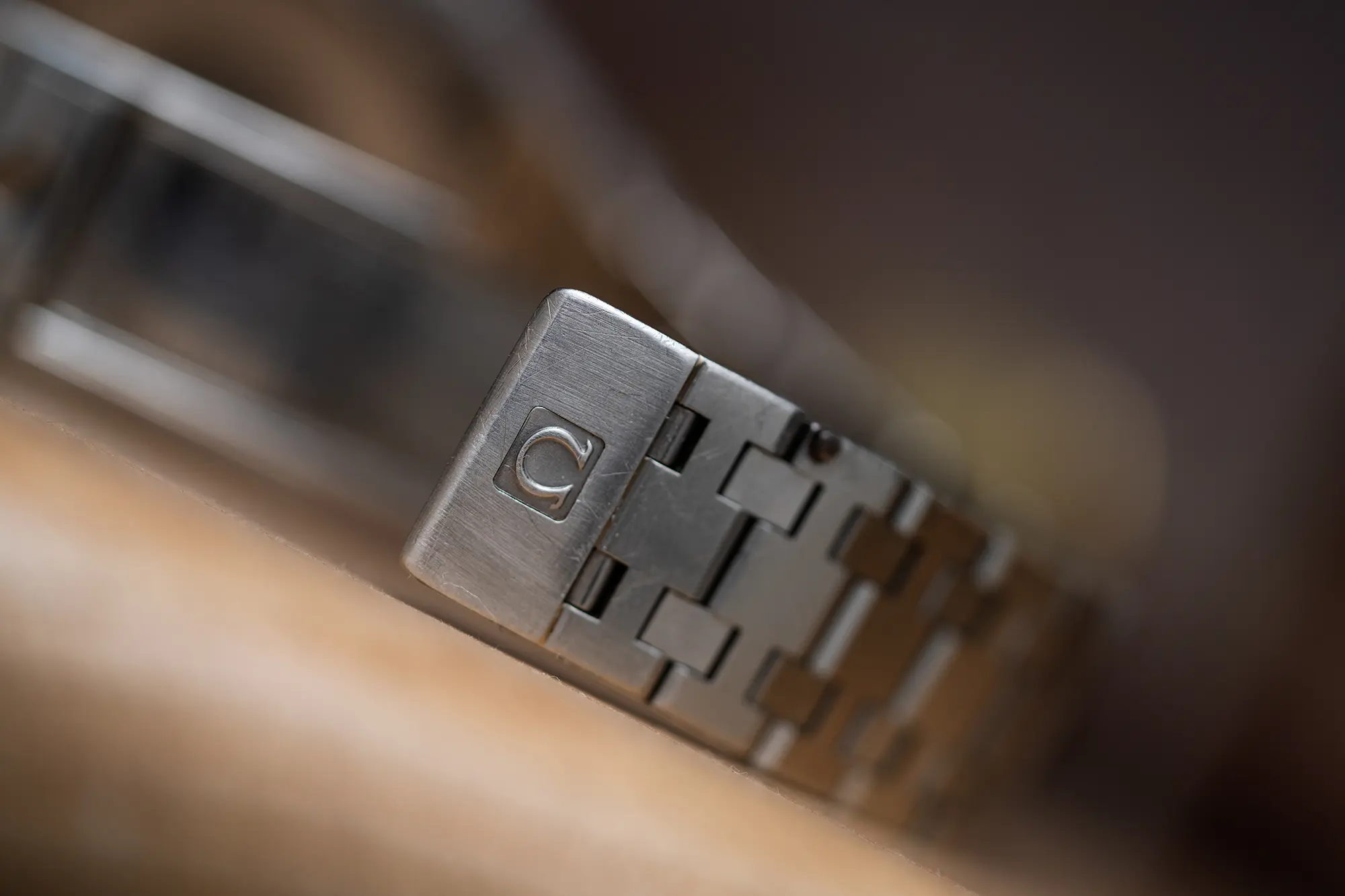
The Plongeur de Luxe is a pretty special watch, and not just for its connection to Jacques Mayol, as cool as that is. Much of that is owed to Omega taking a holistic approach to the package as a whole. Yes, the integrated bracelet design and structure is referential to the Royal Oak, but I think Omega has a leg to stand on given their track record in a similar ballpark. Additionally, this bracelet has one of the coolest clasp designs of the era, and one I’m shocked doesn’t exist today.
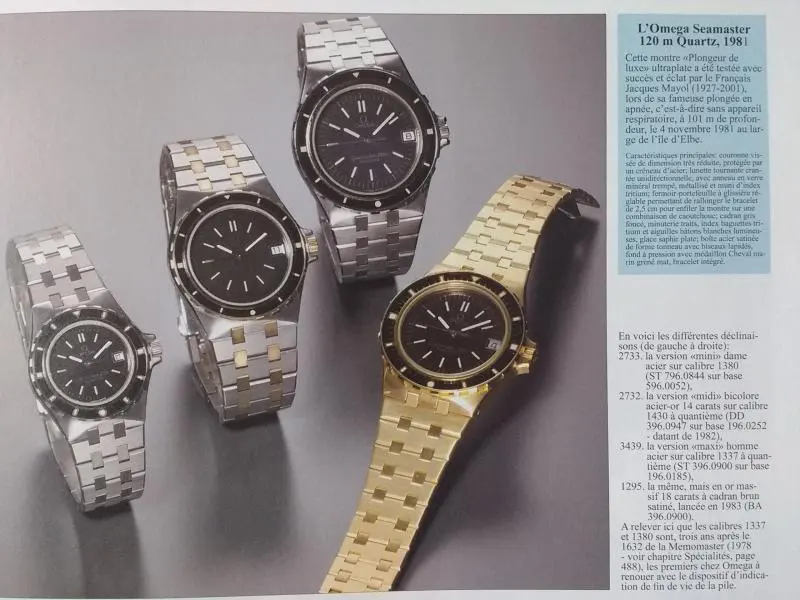
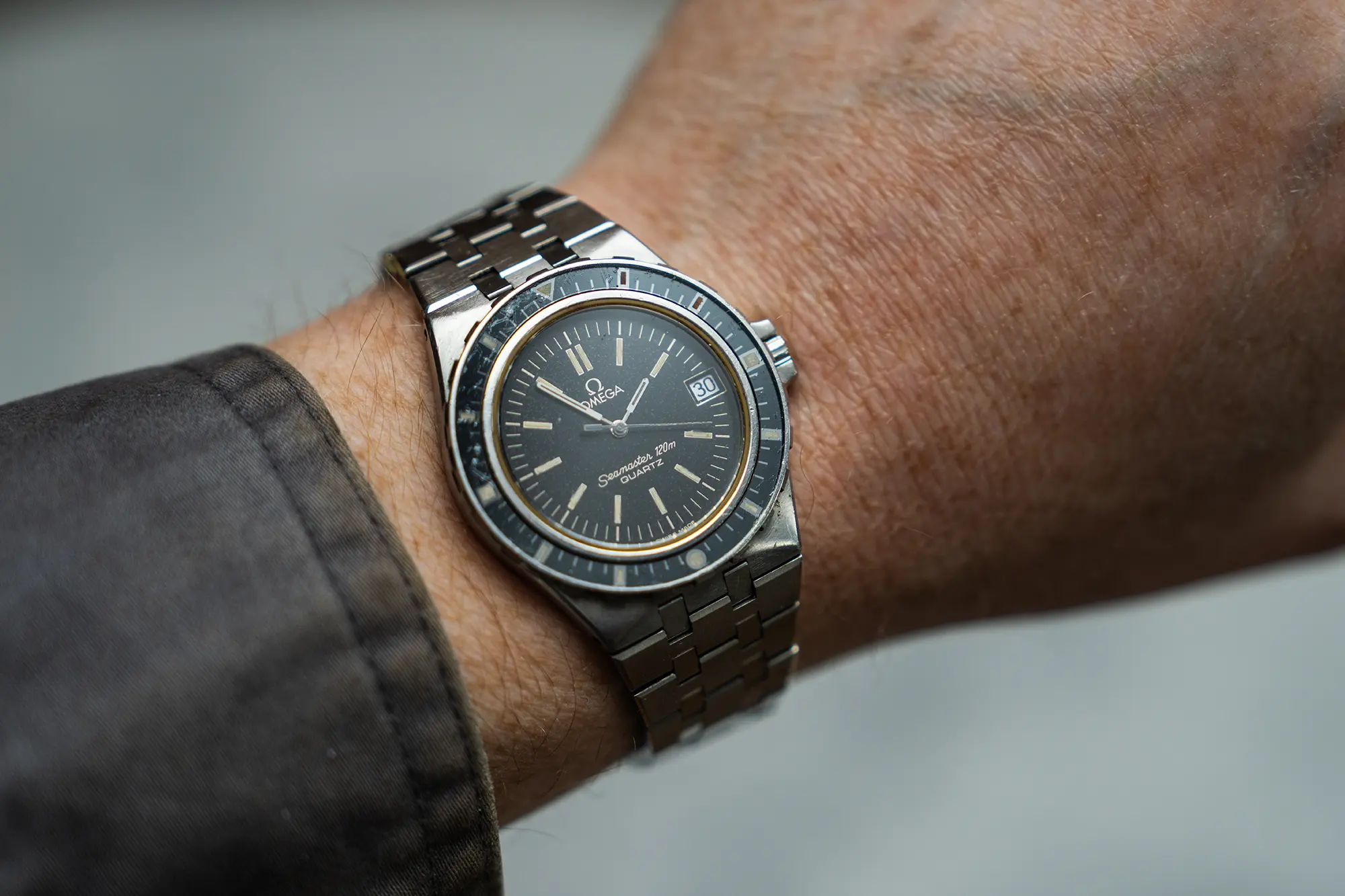
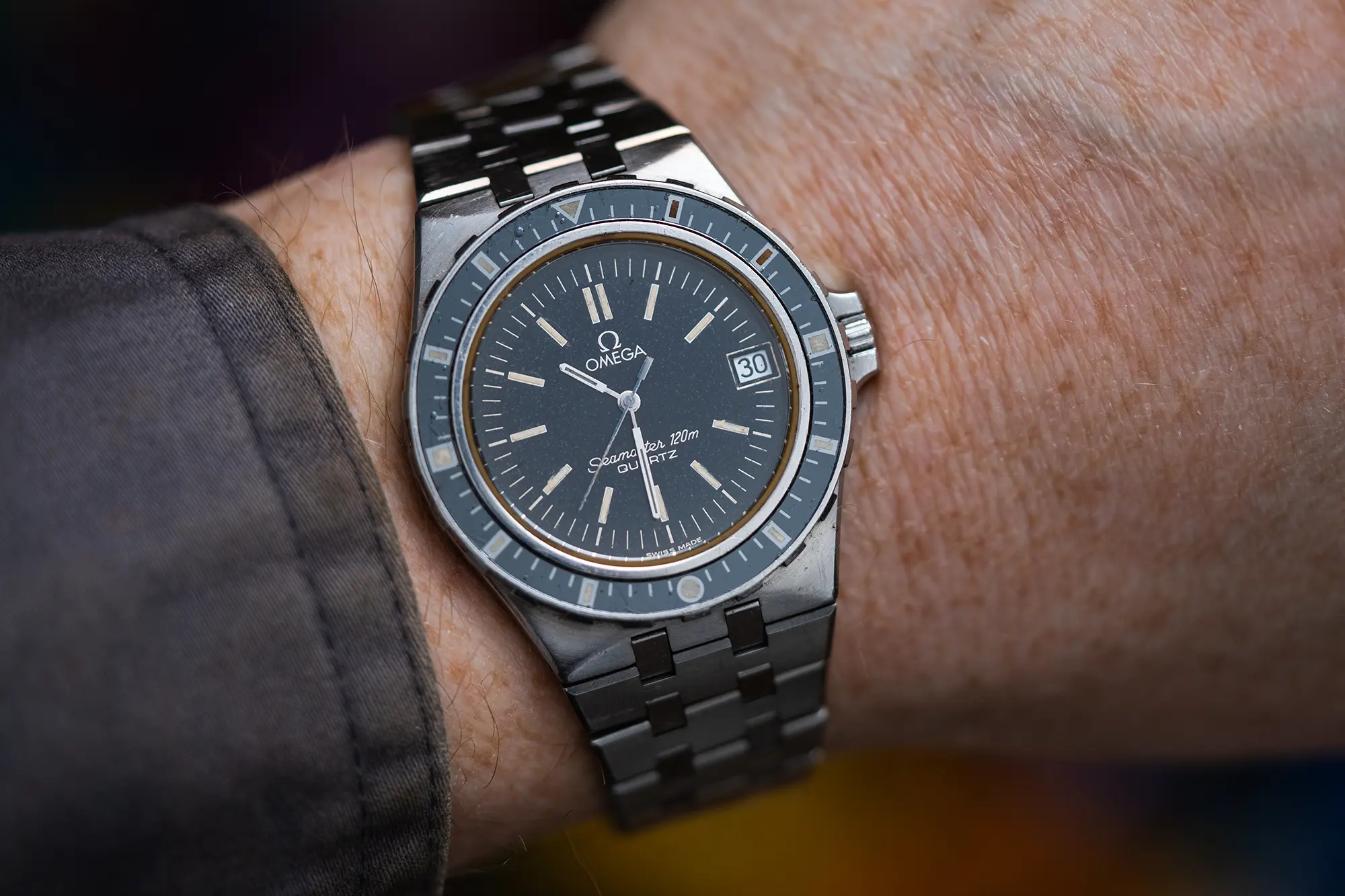
With that, let’s get into the watch itself. This reference was offered in both steel and gold configurations, as well as a mix of the two. The case measures 37.5mm at the bezel, and 40mm on the dot including the crown. Total thickness is a mere 7.7mm thanks to the quartz caliber 1337 and the snap in caseback. The length of the case is 41mm, and the bracelet has a smooth fall off that drapes naturally around the wrist. The bracelet tapers from 24mm at the case, to 16mm at the clasp.
Every part of the design feels organic, lending to the experience as a whole. The proportions work in harmony rather than fighting against each other, which can often be the case when it comes to such fine margins. It wears, well, a lot like a 5402 Royal Oak, which is a very, very good thing. The use of a quartz movement wouldn’t have been a drawback in 1980, in fact the Royal Oak itself welcomed a quartz movement the same year. Omega’s 1337 caliber was robust (well, in some ways), though would be phased out of production by the later half of the decade. It does come with its own set of quirks.
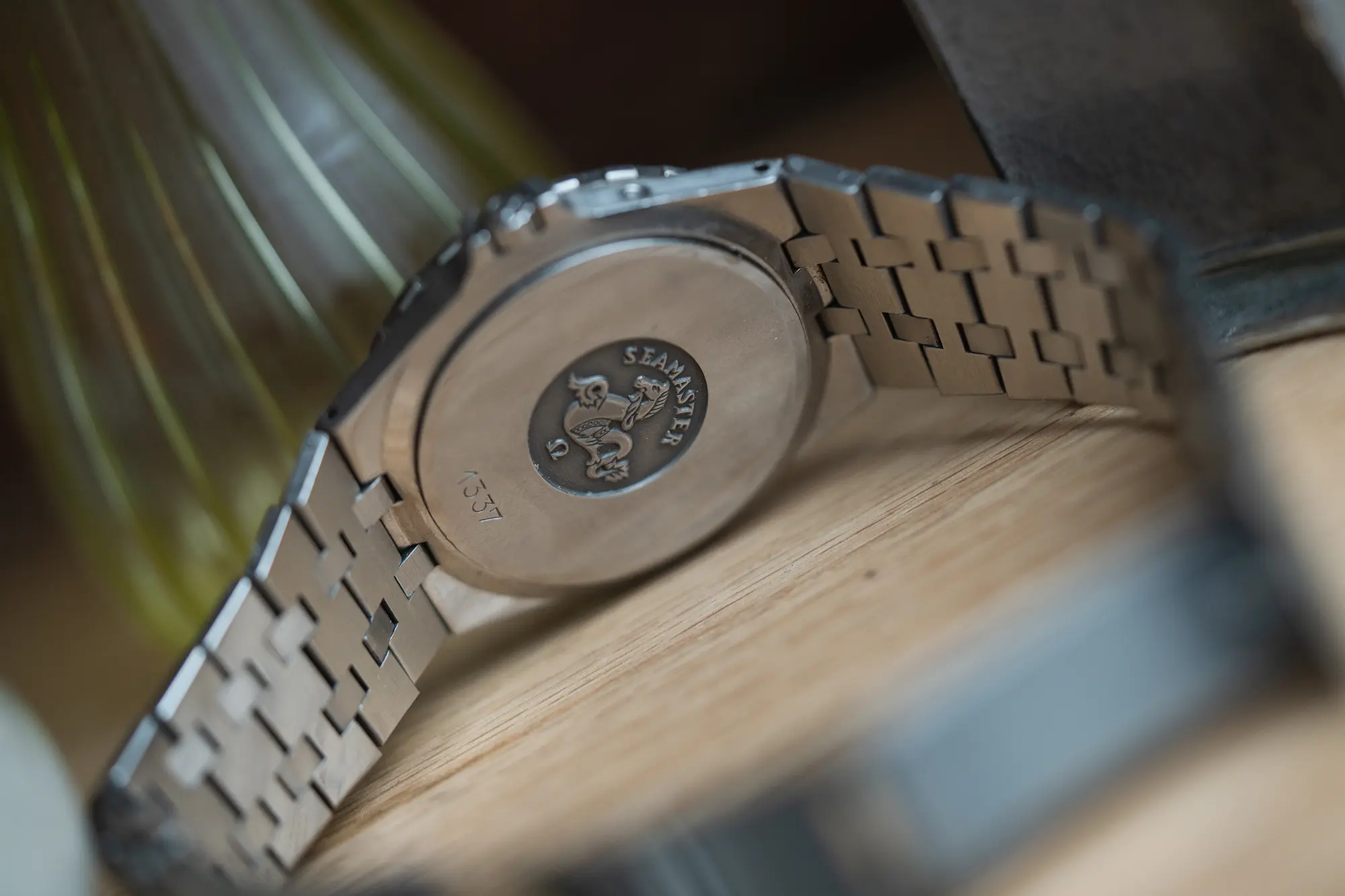
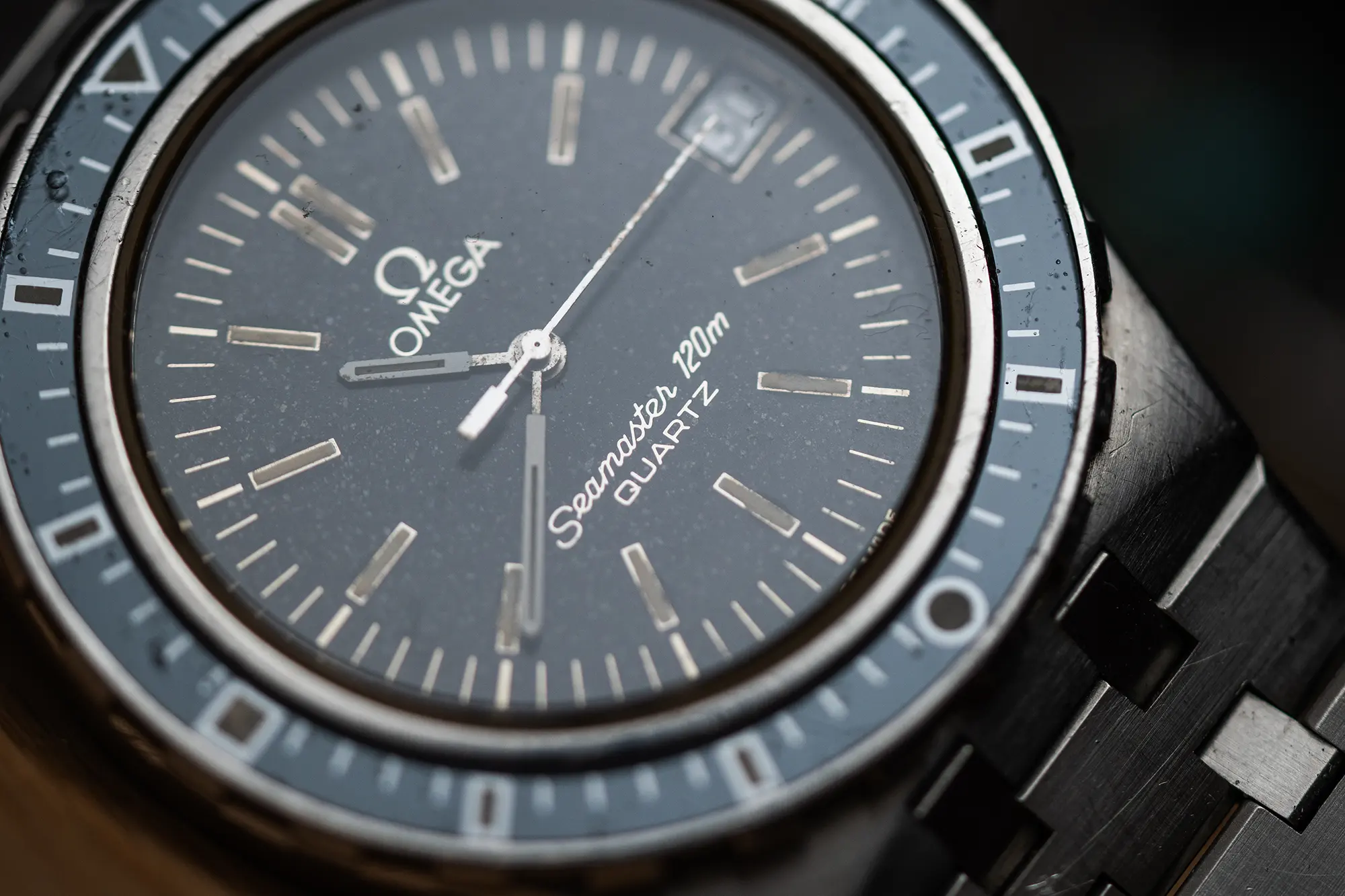
The crown pulls out just a single stop, and doing so adjusts the hour hand in one hour increments forward and back. Setting the minute is a bit trickier, and requires the use of a pusher set into the case above the crown. The pusher must be pressed for five seconds, then released before being immediately pressed again to rapidly advance the seconds (and minute) hand. Thankfully, being a quartz movement this kind of adjustment would rarely be needed. Instead, changing the hour on the go was a breeze.
There’s a quiet confidence to the dial design of this watch. There are no oversized markers or hume plots of lume. The minute hand isn’t enormous. Save for the date, there aren’t any numerals on this watch at all. Thin hands track time against long bar hour indices, with a full chapter ring tracking the minutes at the perimeter. It doesn’t immediately read as a dive watch design as a result, but taken as a whole it feels perfectly serviceable, even if I can’t read the dial from a mile away. It’s doing less with more.
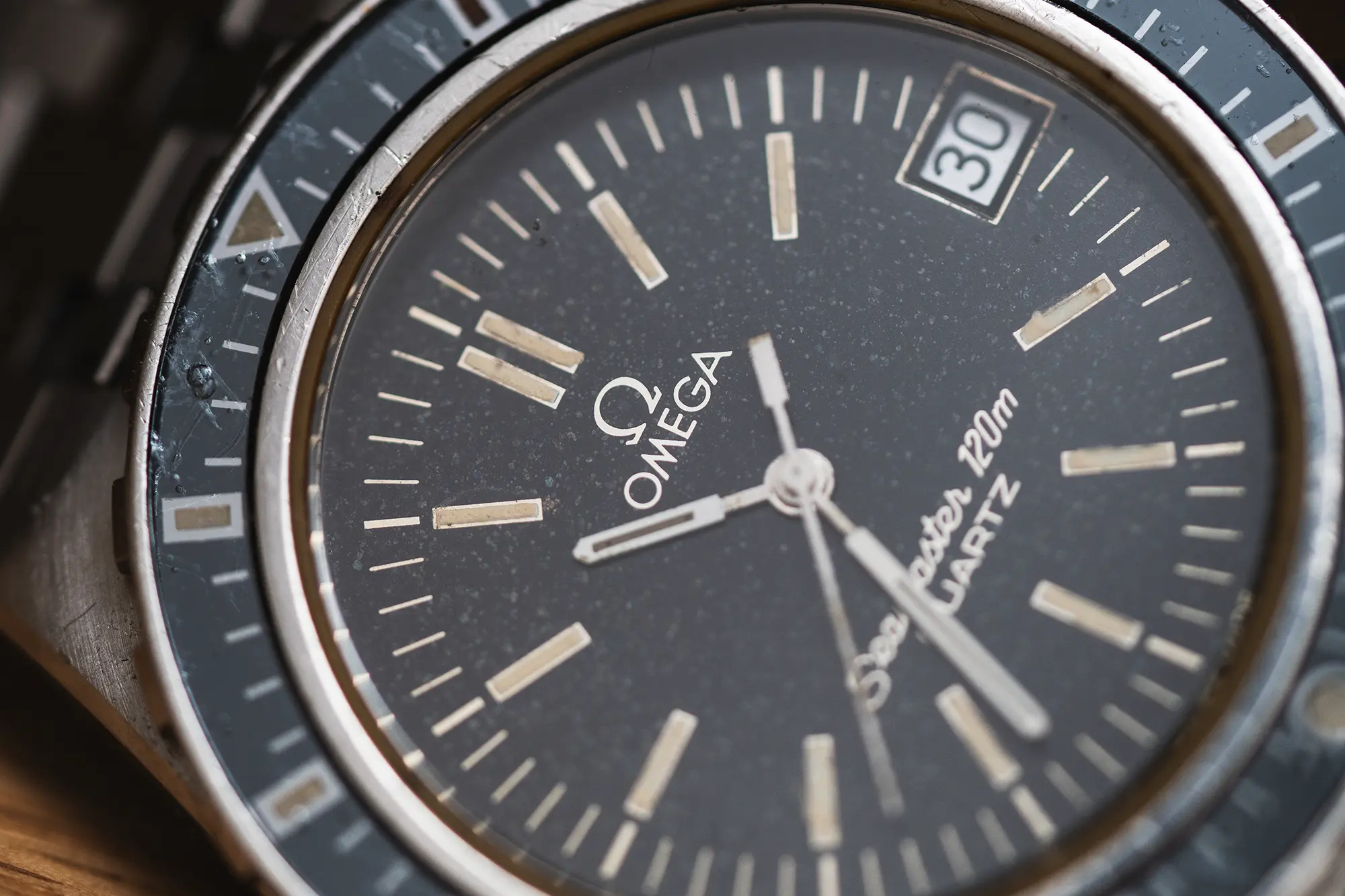
The presence of a dial does give the watch’s diver aspirations away, however. But again, there are no numbers present. Instead, different shapes mark the regions. A triangle on one end is offset by a circle on the other, with blocks at the corners. It’s a bit unusual, and brings a welcome element of personality. In total it’s a sharp design that doesn’t resort to gimmicks for attention.
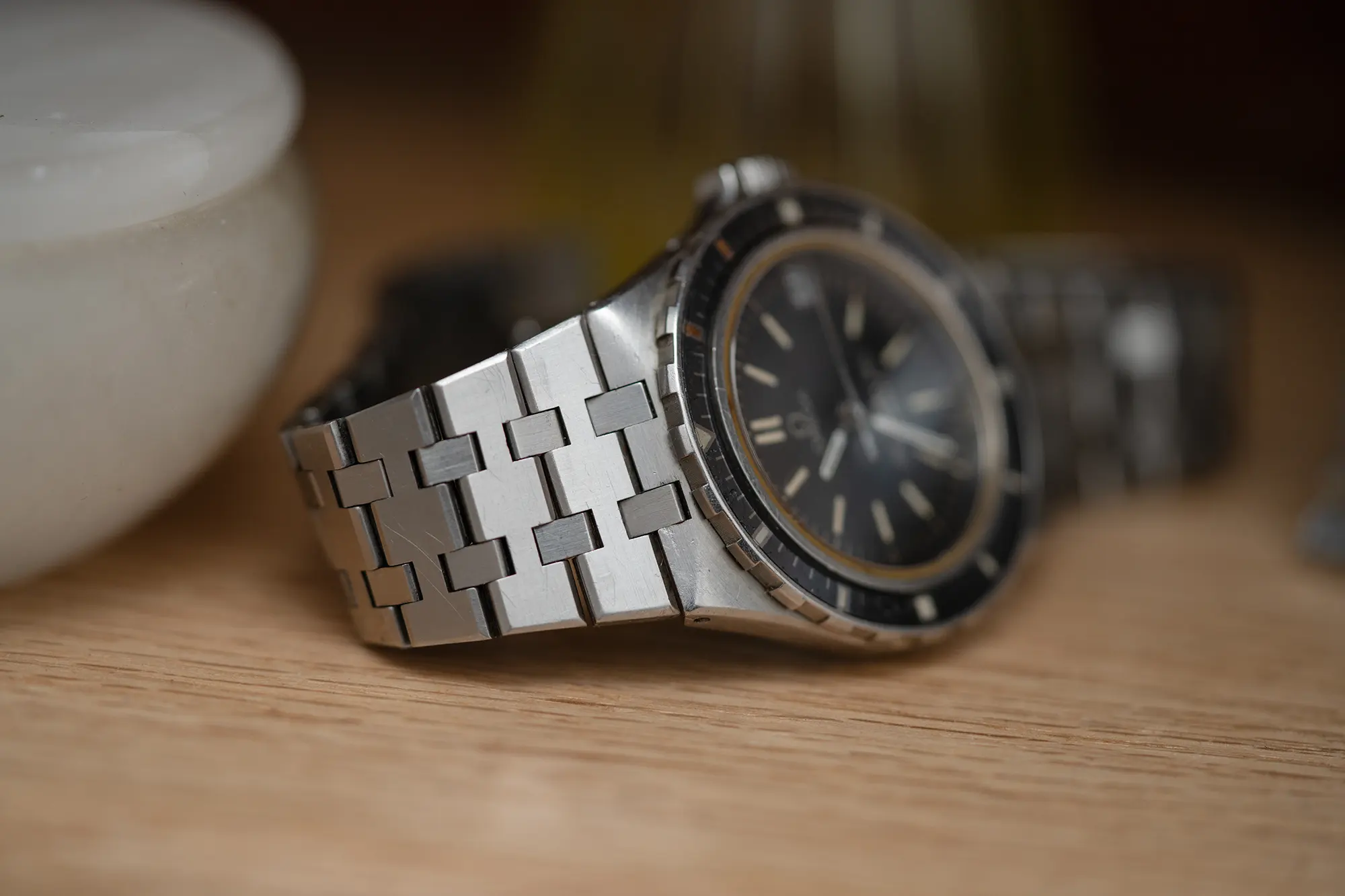
This is not a design present in Omega’s current catalog, but its influence can still be felt. Most notably in the shape of the case as it meets the bracelet, which features a crest that creates an angle without needing a slope or lug. The same shape can be found on the newest generation of the Planet Ocean. This isn’t the only Omega to use such a design from this era (looking at you Constellation Manhattan). Holding this design from 1980 next to the current Planet Ocean is a bit like comparing a sledgehammer to a scalpel in terms of feel, and I think if a new generation of buyers got to experience this Plongeur de Luxe they might find it equally as compelling for very different reasons.
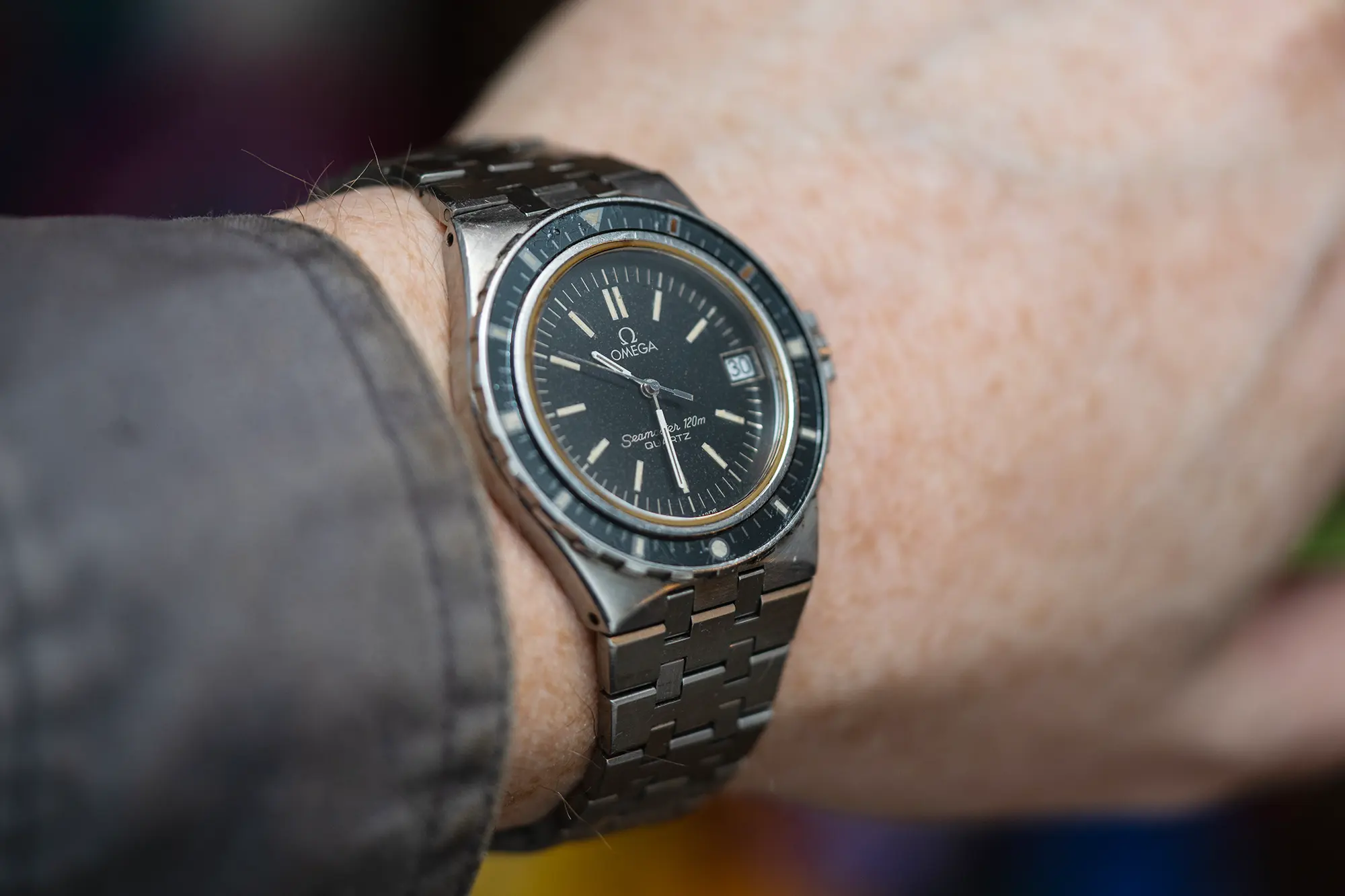
I see a place for watches like this in today’s landscape, but they really don’t exist. The packaging is almost shocking if your only perspective for comparison is modern divers under $10k. Or any diver watch, really. The luxurious, slim dive watch concept never really took off in the way it did for a more all-purpose tool watch concept, and I think that’s a shame.
Further, the clasp on this watch truly deserves a modern iteration. The clasp consists of a sliding portion that can be extended on the fly, but it isn’t a separate mechanism. You can see it in action right here on Instagram. It feels a little like a tang buckle situation, in that you can take the watch off and simply let out the clasp to a different hole. It’s slim, easy to use, and consists of very few moving parts. In an era where customers are more demanding of quick adjustment mechanisms on their bracelets, this feels like an incredibly elegant solution.
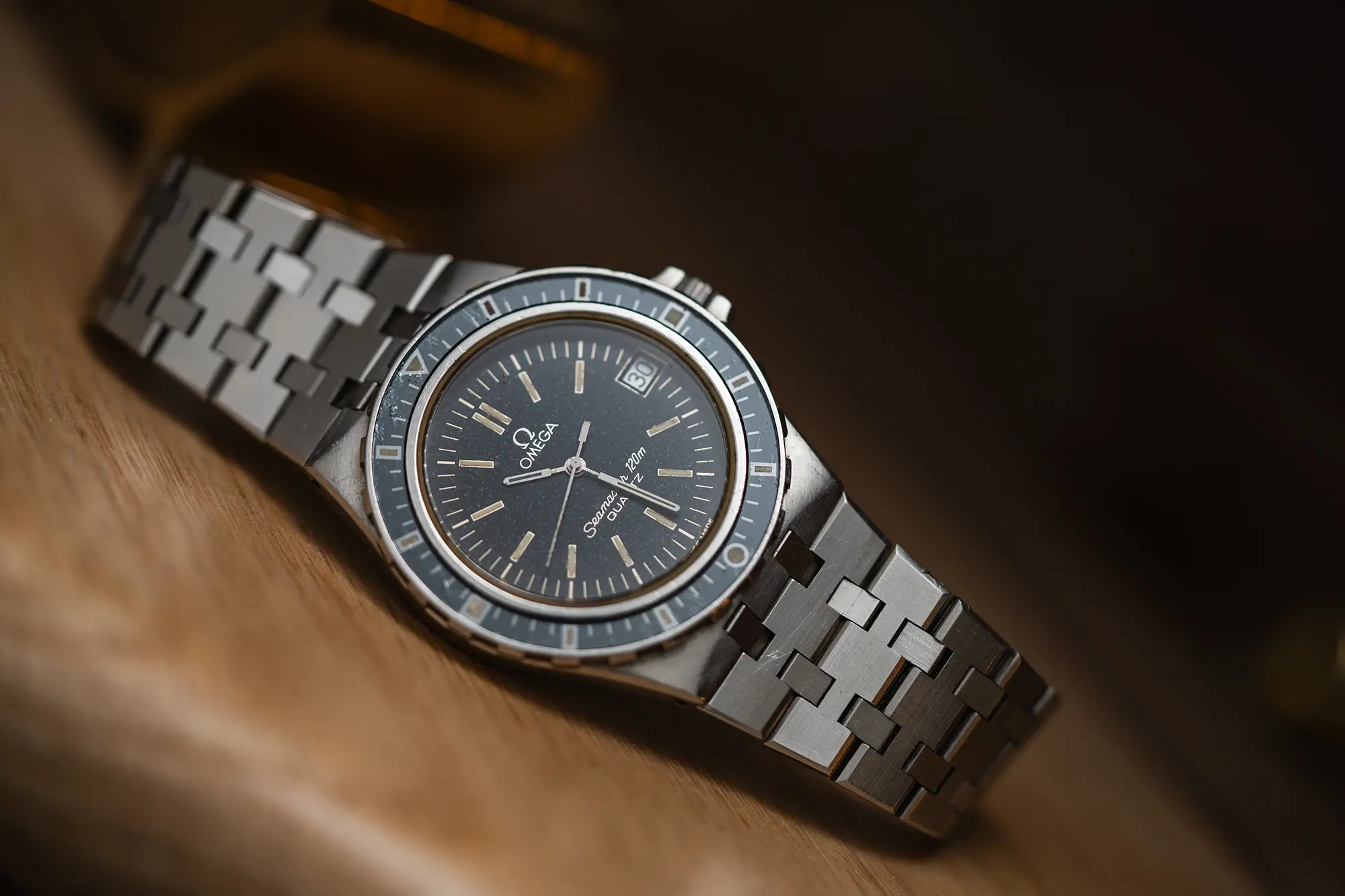
The Plongeur de Luxe is a rare-ish watch to come by these days. It wasn’t in production for many years, and some parts of the movement, as well as the bezel insert, weren’t known for their longevity. The caliber did see duty in plenty of watches, and replacements can be found, though the bezel insert will require a request made through Omega. As a result, pricing hovers in the $2,500 to $3,500 range.
Overall, this is a special watch that has a quality you just don’t see in many modern watches. There are ideas being expressed here that feel unusual, but strangely cohesive at the same time. It’s just one pebble in the mosaic that is Omega creativity in the 20th century, and while it might get lost in the larger backdrop, it’s not forgotten. Omega