
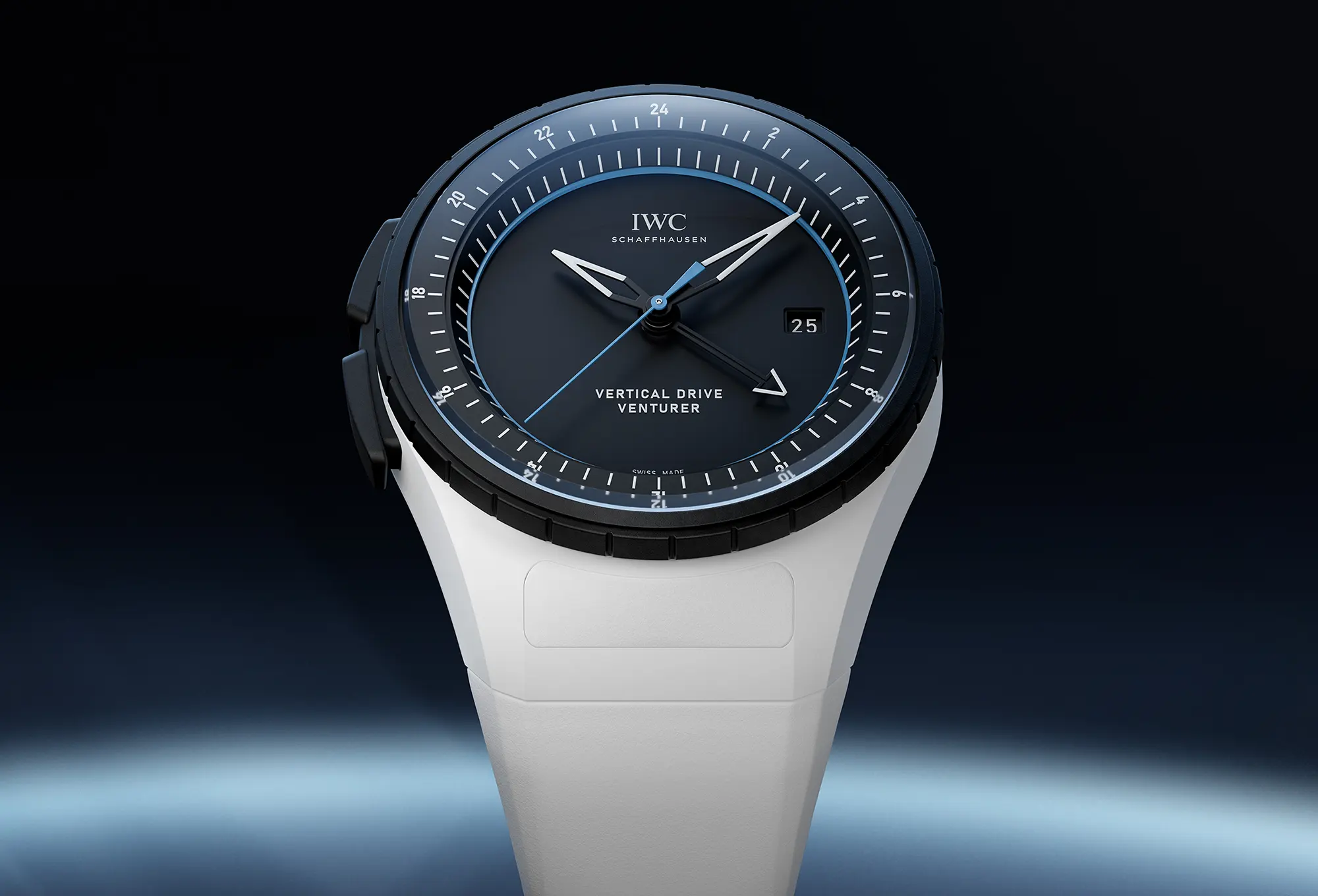
IWC is introducing a different kind of Pilot’s watch this week with the Venturer Vertical Drive done in collaboration with their partners at VAST. The watch takes a clean and conceptual approach to the genre, and features a crownless case that instead uses a system within the bezel to wind and set the movement. The inspiration comes from the next generation of space habitats being built by Vast, who is set to launch the world’s first commercial space station, Haven-1, in 2027. Even if you aren’t thinking of working a trip to low earth orbit into your travel plans, this is one of IWC’s most interesting watches in years.

Human space travel is having its biggest moment since 1972 after the success of Artemis II earlier this month, with eyes on the next phases of our return not only to the moon, but beyond. A number of private entities comprise a full landscape of those looking to leverage new and old rocket technology to get humans in space, and one of them is Vast, a US based outfit with plans to build a modular space station for private astronauts and government missions alike. Vast has a partnership with SpaceX to use their rockets, and successfully completed a test for the Haven-Demo’s orbital capacity in late 2025.
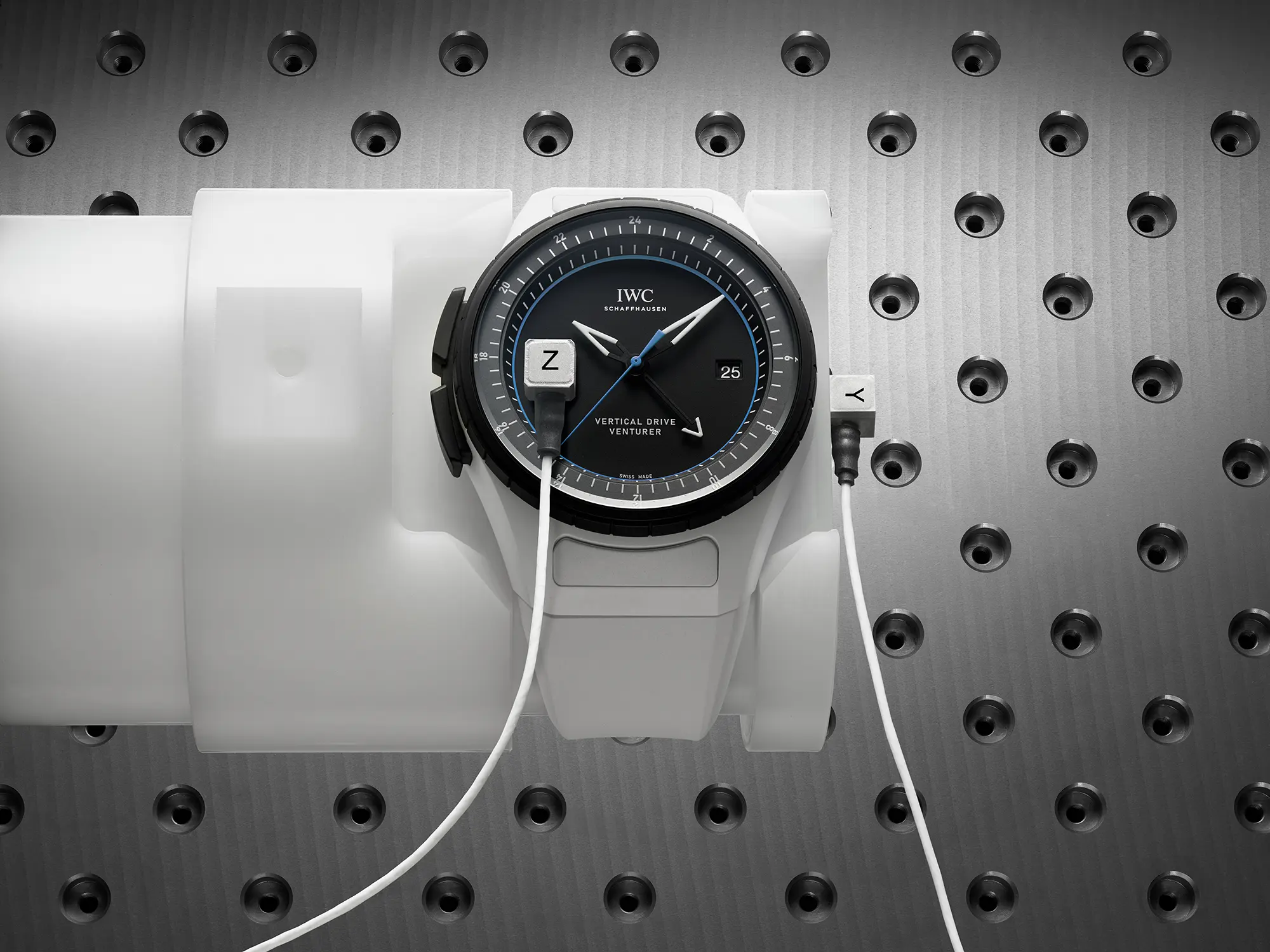
IWC entered a formal partnership with Vast in 2025, and will serve as the official timekeeper for Vast’s Haven-1 commercial space station. This role serves as the inspiration for creating the Venturer Vertical Drive watch, and IWC’s take on a watch meant to be used in space. Along with using a mixture of their most exotic materials with both zirconium oxide ceramic and Ceratanium making an appearance, the watch also boasts a unique mechanism for winding and setting through the bezel, forgoing the use of a crown altogether.
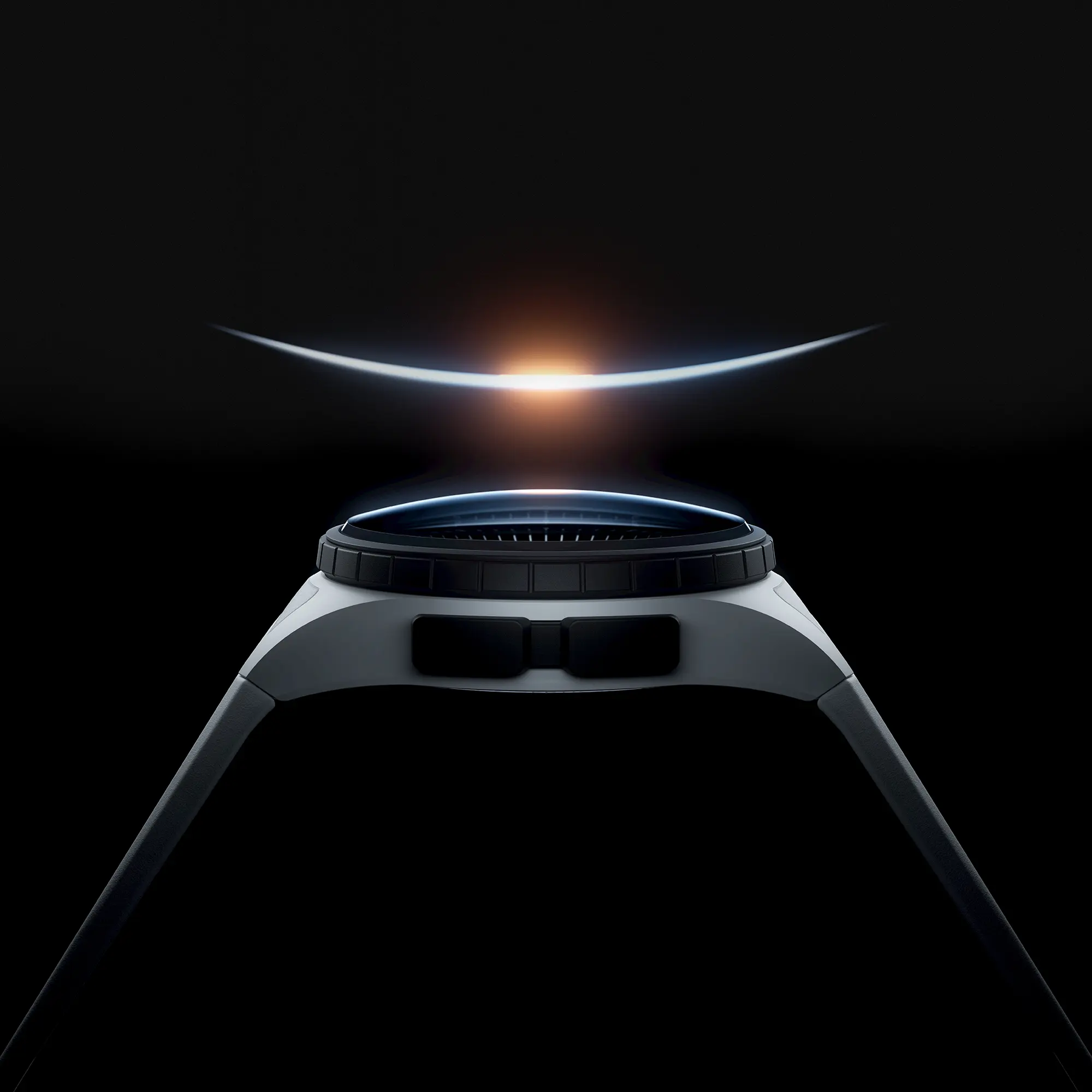
Bezel control systems are nothing new, of course, though they are rarely seen. IWC takes a unique approach with their system, which uses rocker switches along the nine o’clock side of the case to ‘program’ the bezel system. The goal was to create a system that could be used while wearing (potentially bulky) gloves. Whether or not that ends up being a reality, the result as presented is also perfectly usable with regular hands, right here on earth.
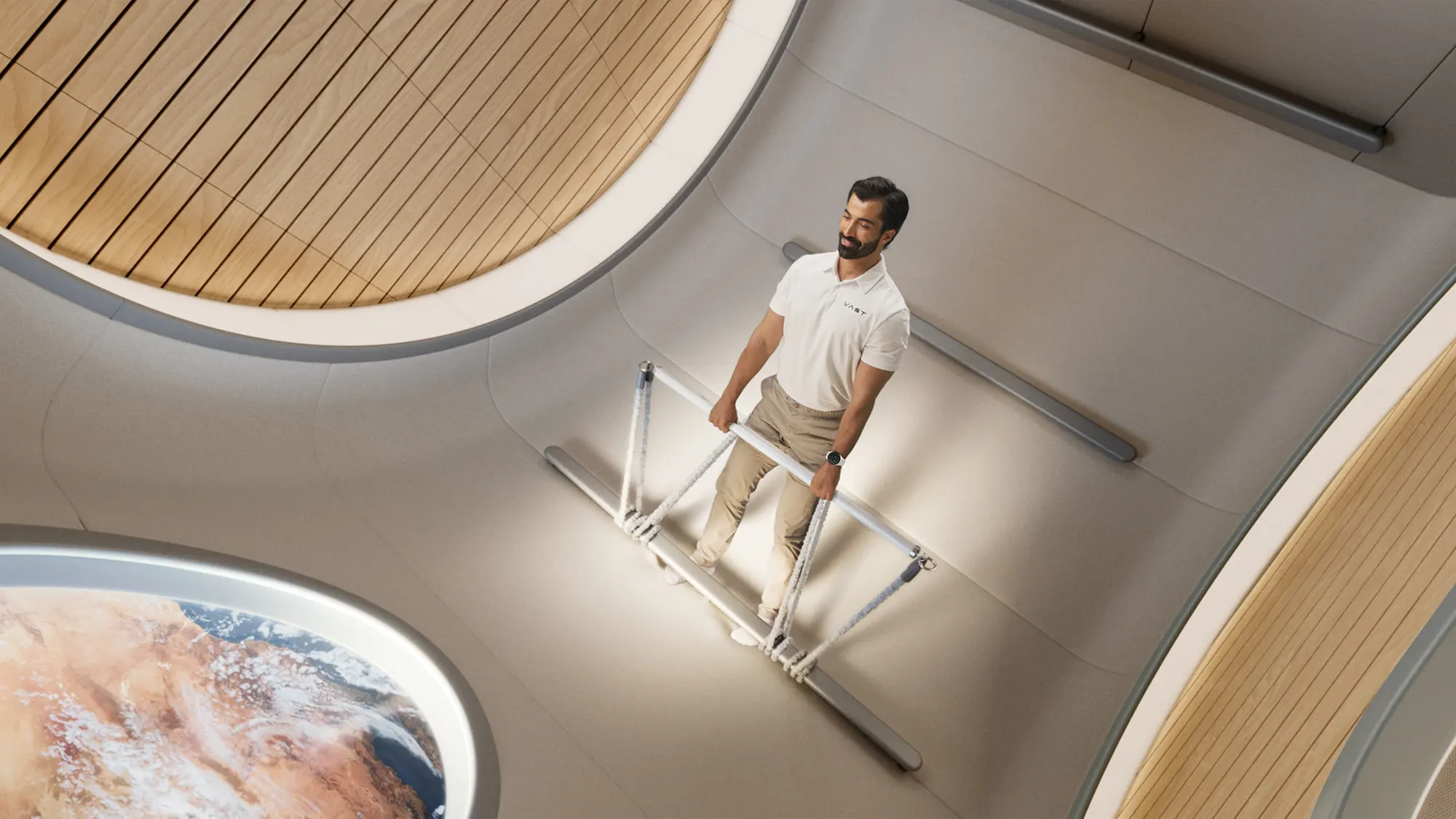
The watch itself is relatively simple and straightforward, which is by design. The dial itself is minimal, with a matte black base serving to create a high point of contrast with the outline of the hands, whose lume application is the only visible portion. A steeply raked rehaut leads to a 24 hour index set directly under the crystal, against which a 24 hour hand can track UCT. A date aperture sits at three o’clock, and feels slightly out of place within the design as a whole, but will be useful with the 24 hour hand.
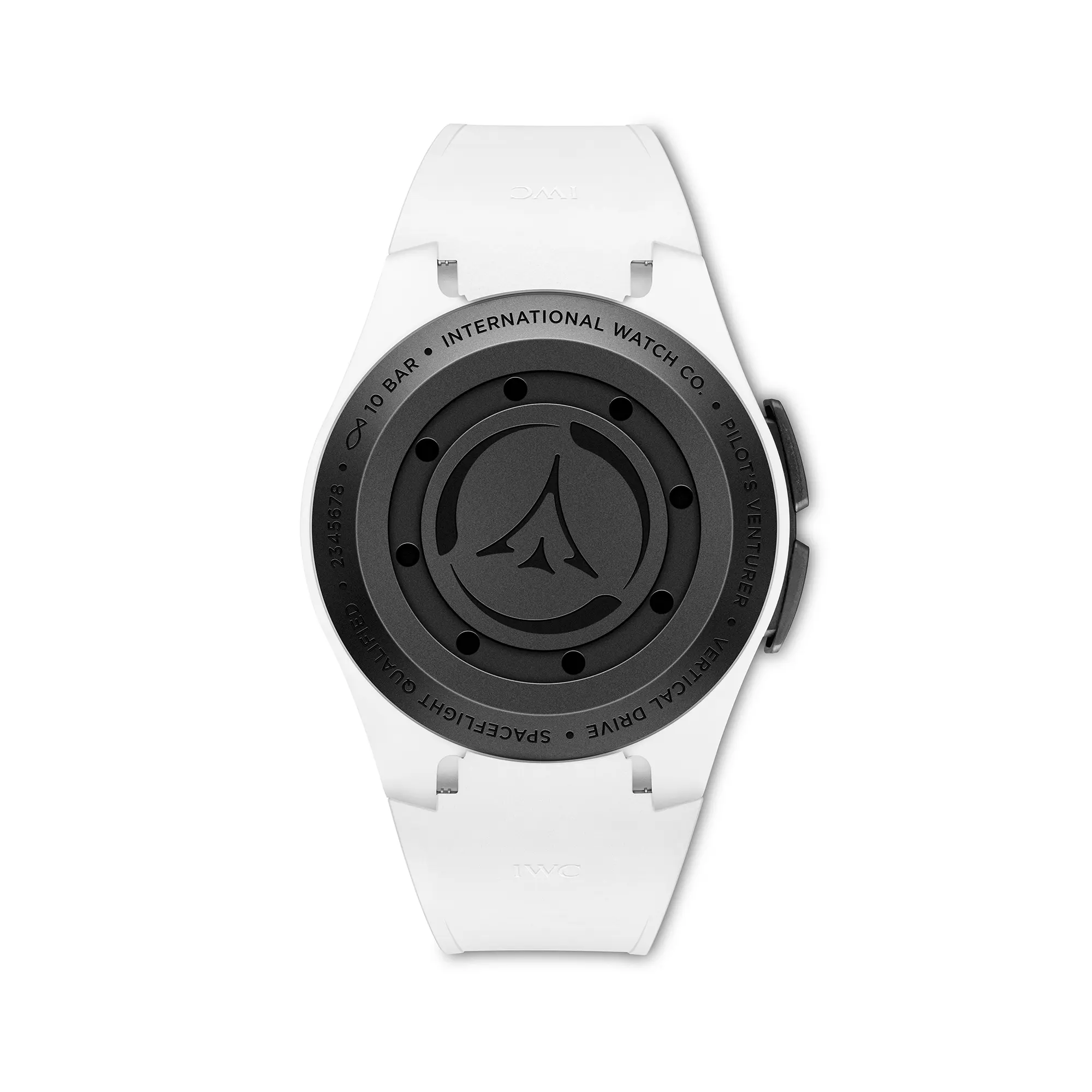
Inside sits IWC’s manufacture automatic caliber 32722, which has been newly developed for this watch, and features a GMT module with true ‘flyer’ style functionality. It also gets an impressive 120 hours of reserve on tap. The key here is the Vertical Drive, which translates the bezel’s action into usable energy for the movement via clutch system. There’s a harmony that must be achieved between the case components and the movement for this to work, which is a big part of what makes this watch so interesting.
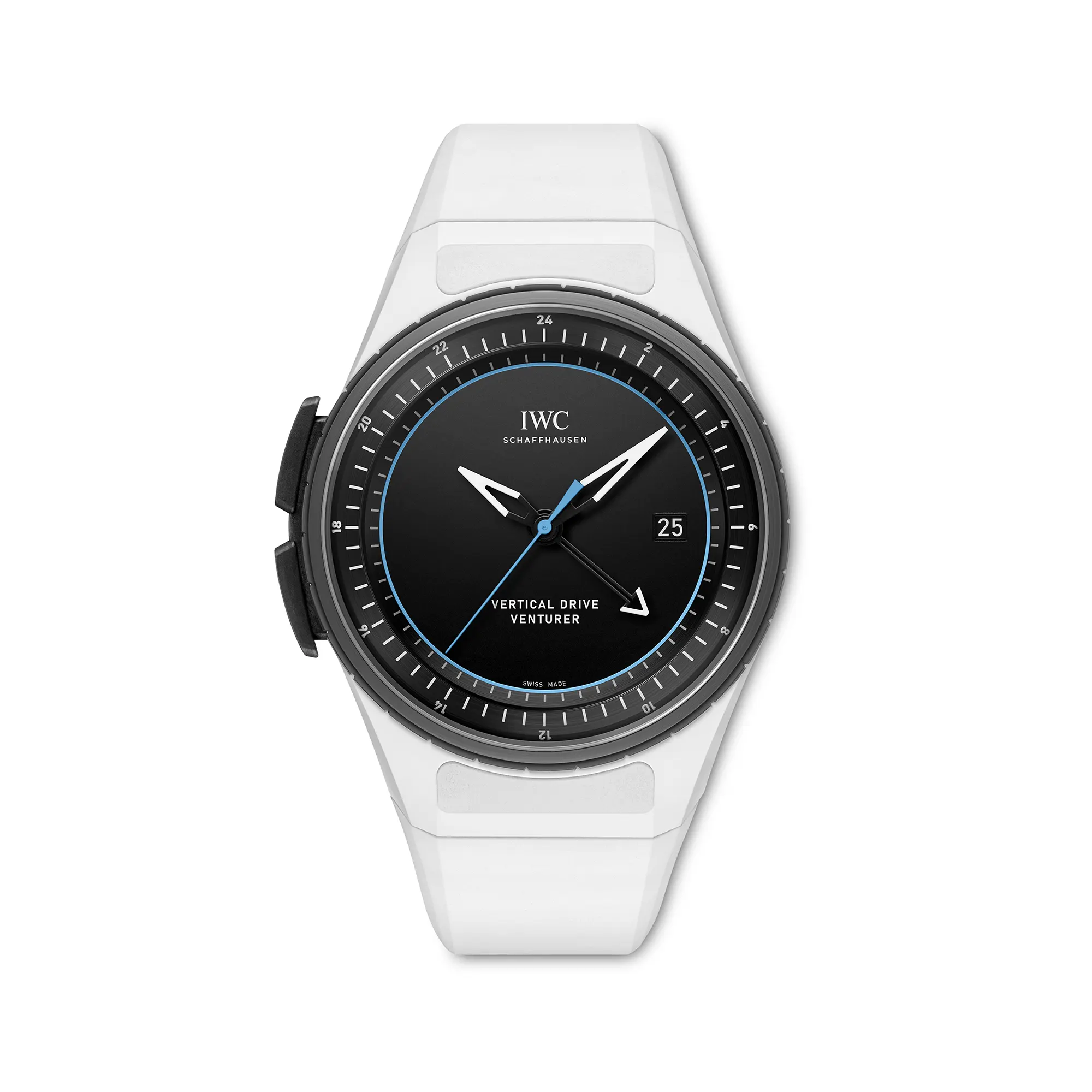
This is all set within a 44.3mm white ceramic case that uses a Ceratanium bezel and caseback. The watch is a hulking 16.7mm thick and gets an integrated white strap. The materials are all relatively lightweight, so the watch shouldn’t be too unwieldy in use, apart from the size itself. Visually, the watch feels unique and represents a new direction for IWC, building on some of the themes that began with the XPL Shock Absorber. The distinctive aesthetic works well, and is something that I’d like to see represented in more ways within the Pilot’s collection, perhaps at more accessible dimensions.
The Pilot’s Venturer Vertical Drive will be limited in production, though it is not a limited edition. The price is set at $28,200 with availability now. IWC