
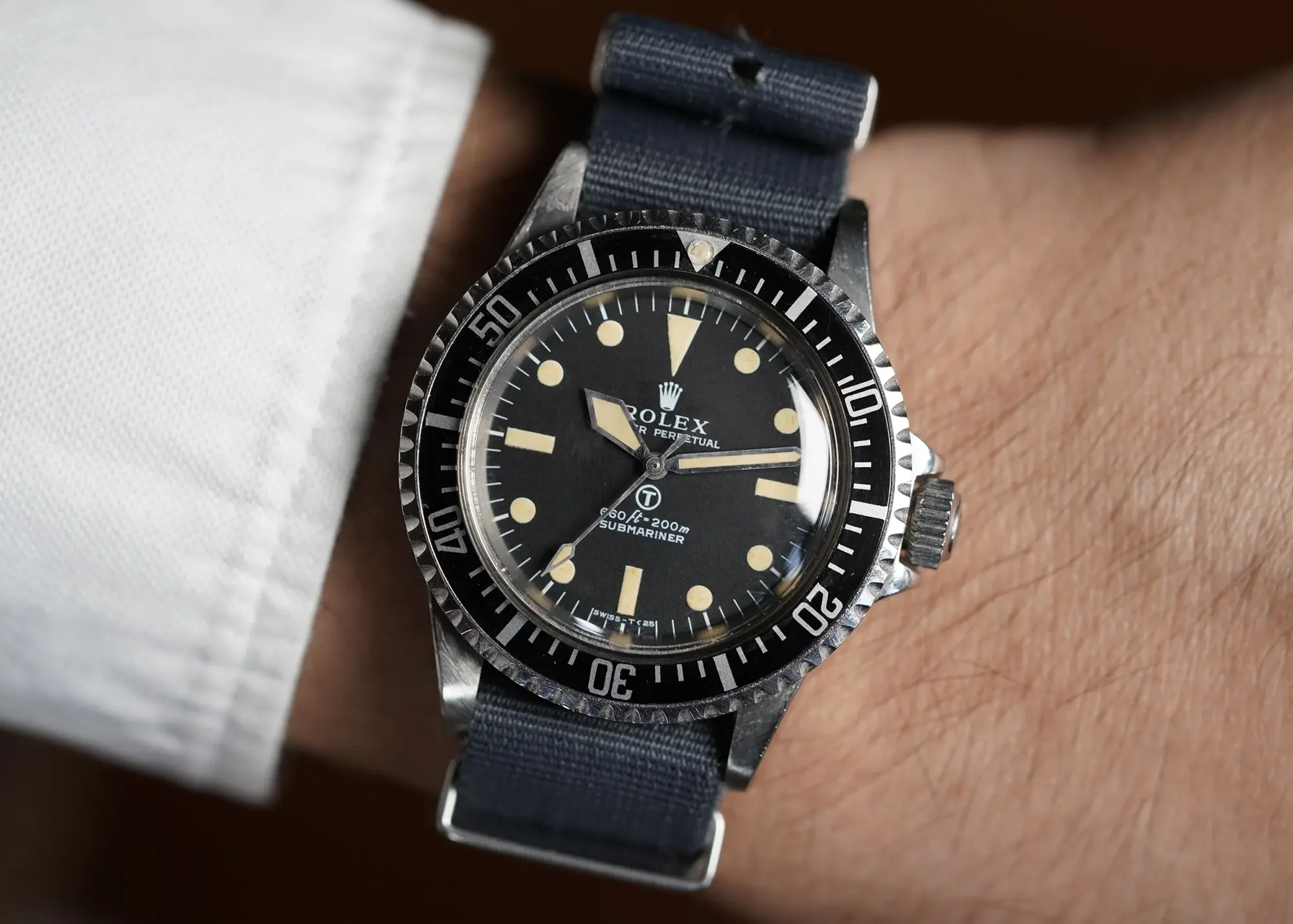
Through the 1970s, Rolex delivered around 1,200 Submariners to the British Ministry of Defense to be issued to Royal Navy divers, the Special Boat Service (SBS), and Special Air Service (SAS) personnel. These Military Submariners, or MilSub references 5513, 5517, and double-stamped 5513/5517, featured a few unique details that separated them from their commercialized counterparts, such as broadsword hands, fully indexed bezels, and a fixed lug bar. It’s a design that would set the template for military dive watches, and one that would be continued in the watch that would replace the Military Submariner for the MoD in 1980: the Cabot Watch Company (CWC) Royal Navy Diver Automatic.
While the Submariner has seen a fair bit of evolution since its time at use in the MoD, the CWC dive watch platform remains largely unchanged. In fact they are still issued to British military personnel today. This fact is a testament to the effectiveness of the concept, and while it might lack some of the cache of a Rolex, it more than makes up for it with decades of consistency and bona fide military use. CWC’s history with the military dates back to 1972 with the W10, and pilot chronograph designs, so when they got into the dive watch game, they had a fair bit of experience under their belt to draw upon.
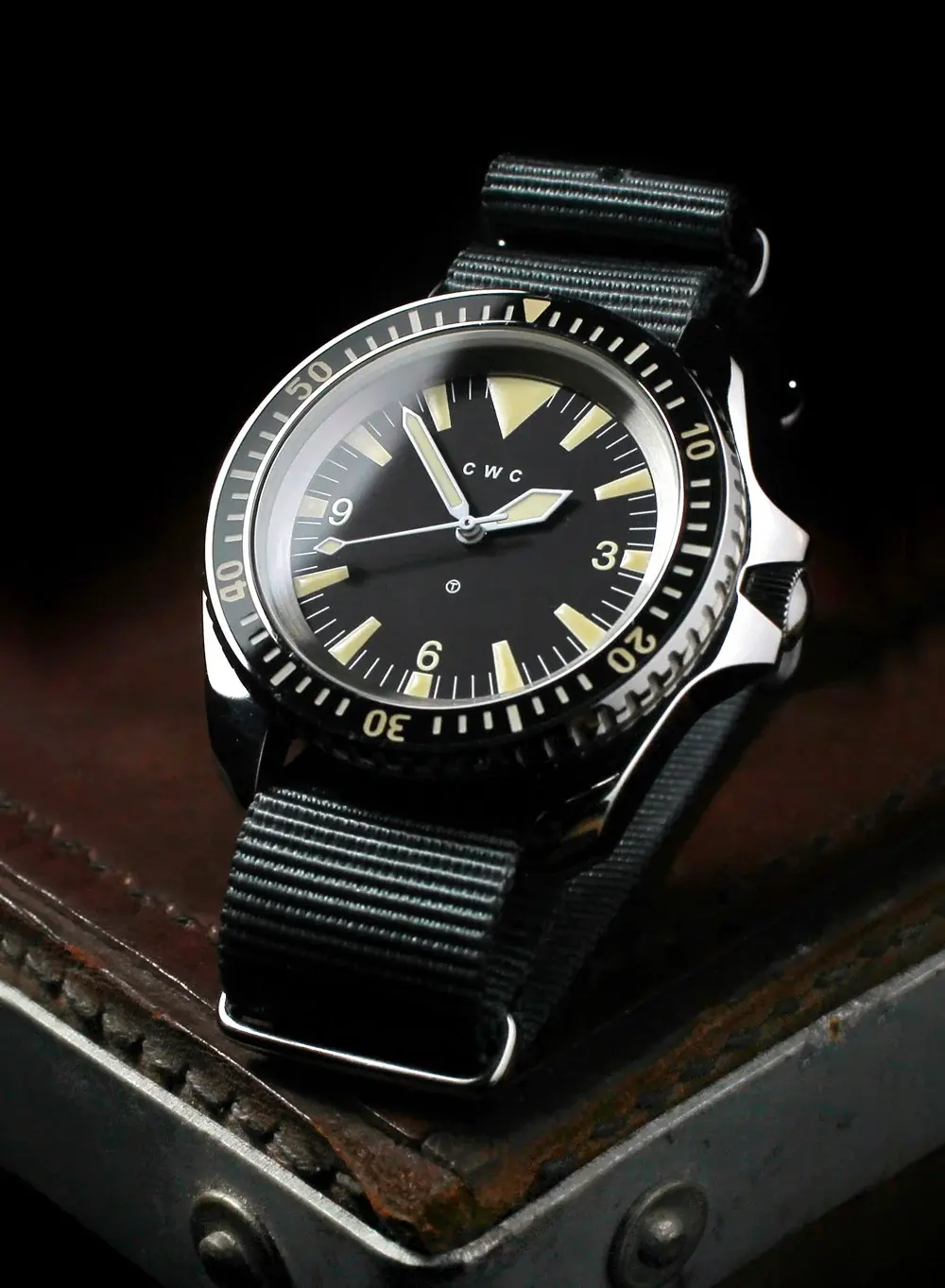
With the Royal Navy divers’ watch, CWC retained the fixed lug bar, as well as the general design concept seen in the Submariner, with broadsward hands, no date, a full indexed bezel, and used tritium to provide visibility in low light situations. There were, however, a few notable differences that imbue the design with character all its own to this day. The small details may have been picked up on, but the broader design feels distinctive, and it doesn’t look like a Submariner as a result, which has served the watch well in the intervening years.
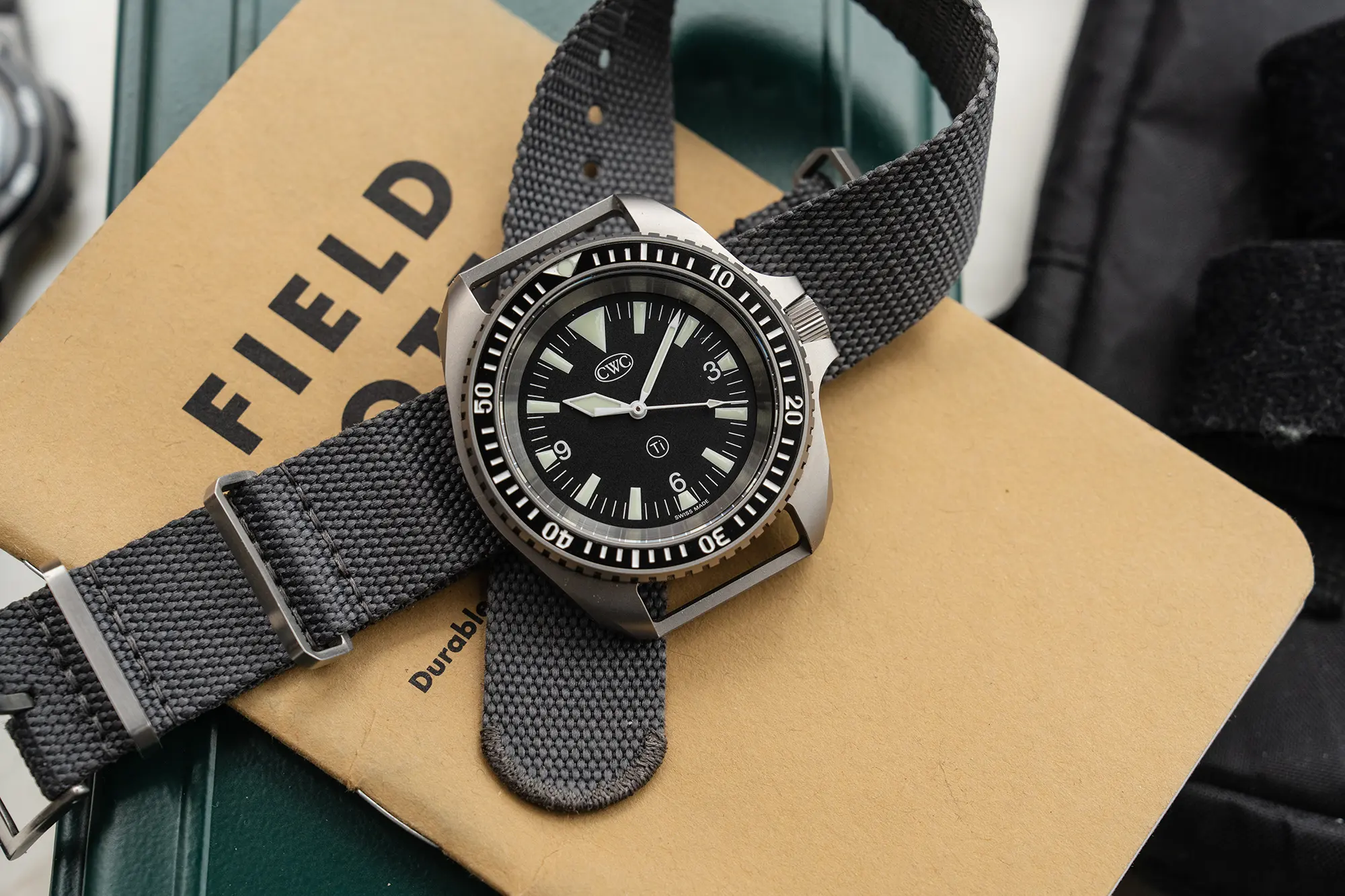
First and foremost, the case used by CWC was much wider with a deeply cut bevel in the wide lug design. The crown guards are robust, and are incorporated into the design of the case in a more organic manner. Additionally, the dial itself stood apart thanks to the use of numerals at the cardinal positions, complimenting the large bar like hour markers. It’s a general design that holds up well, and its influence can be felt in the broader landscape of tool and dive watches on the market today.
CWC’s general dive watch design has welcomed a variety of configurations over the years, and most recently, has seen the addition of a titanium 300 meter diver that recalls the original design with aplomb. This is the Ti300 Titanium 5 Quartz Divers Watch.
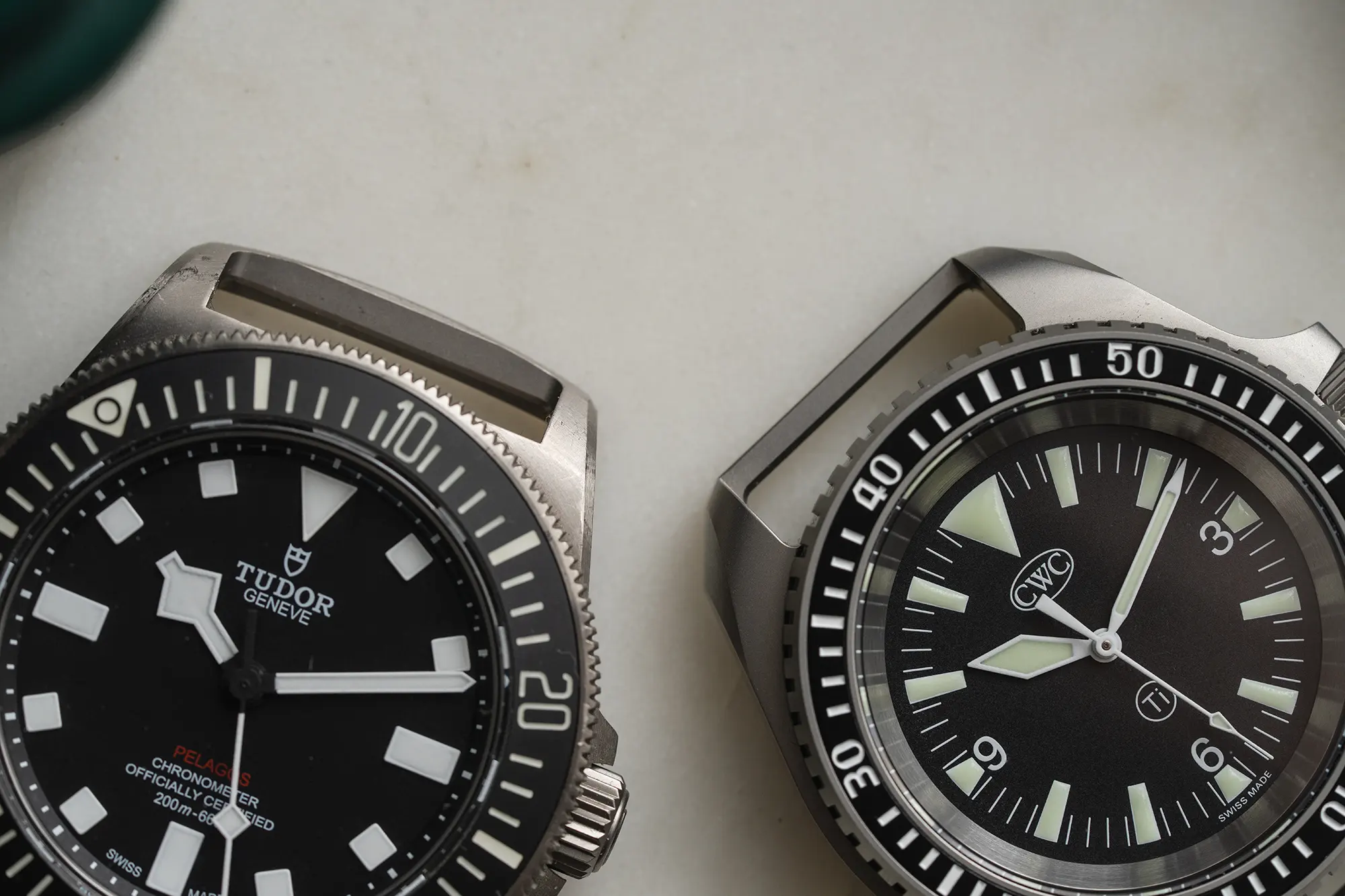
The CWC diver is historic in its own way, but it’s also a refreshing design and platform as seen against many of its modern dive watch contemporaries. It feels decidedly old-school in a way that’s difficult to nail down, from the proportions to the style of the numerals to the color of the lume… it’s different. There is only one other watch on the market that occupies similar territory, and that is the Tudor Pelagos FXD in black. Okay, so it’s not quite apples to apples, as there is a near $4,000 price delta between the two, but in terms of historic inspiration and relevance, these two watches are closer than you might imagine.
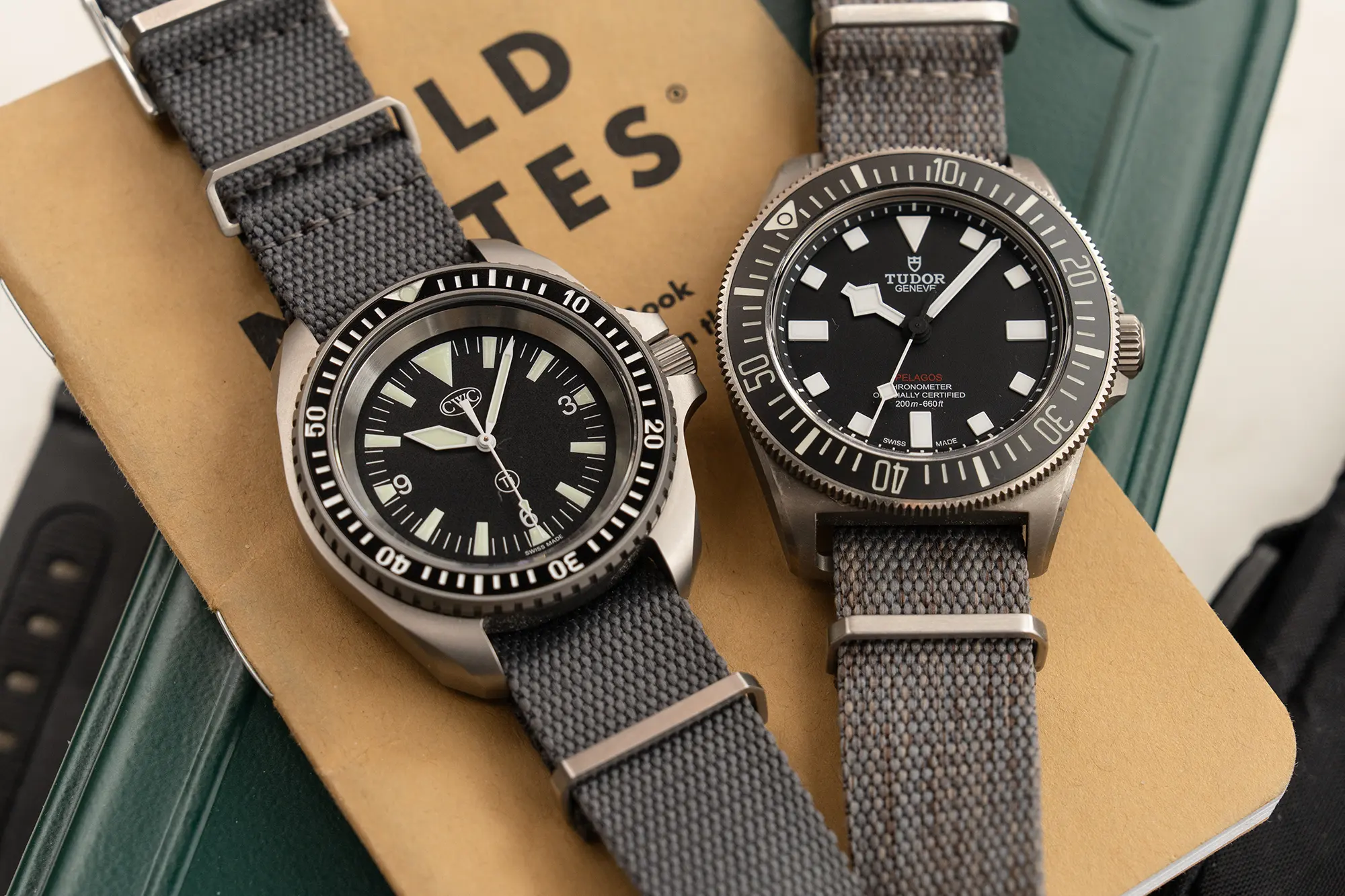
The Tudor Pelagos FXD is a modern vision of a watch indeed put to use by military personnel, from the US Navy of old, to the Marine Nationale of today. There is a military connection, though it’s not a clean throughline. The FXD is a watch that also boasts a fixed lug titanium case design, a fully indexed bezel, and a prominent hand set with legibility in mind. It is very much a modern incarnation of a theme set forth in the early ‘70s.
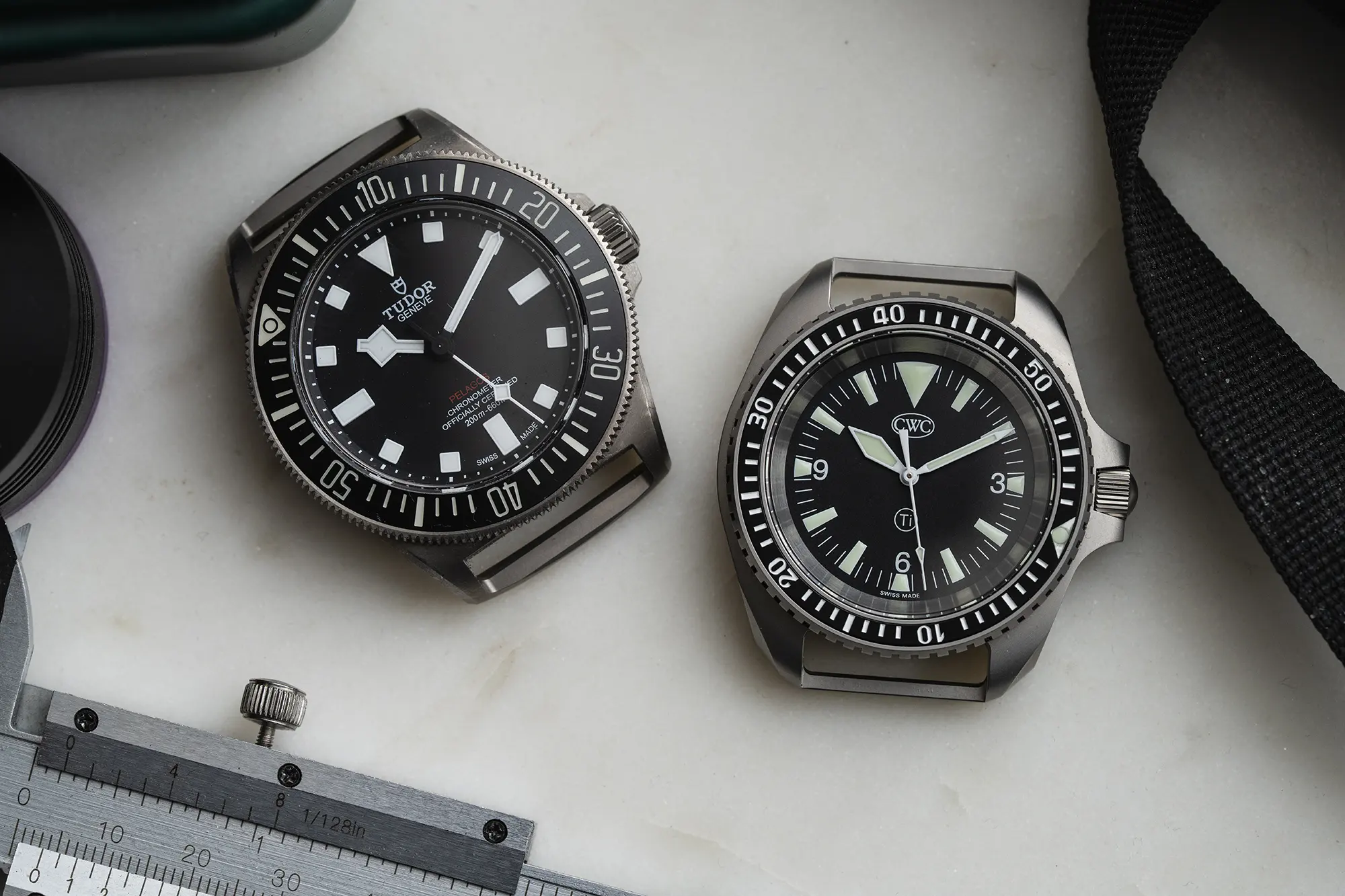
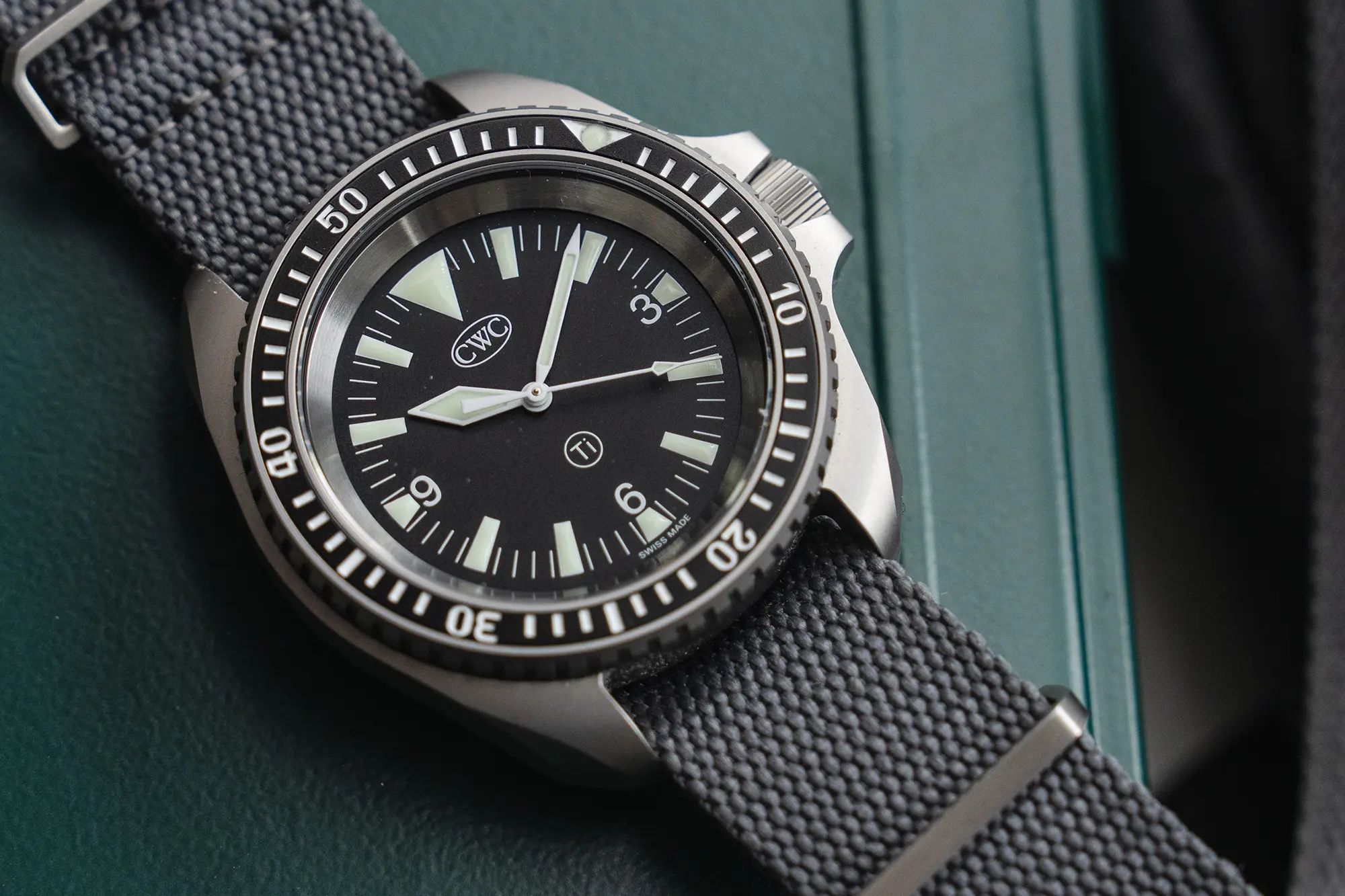
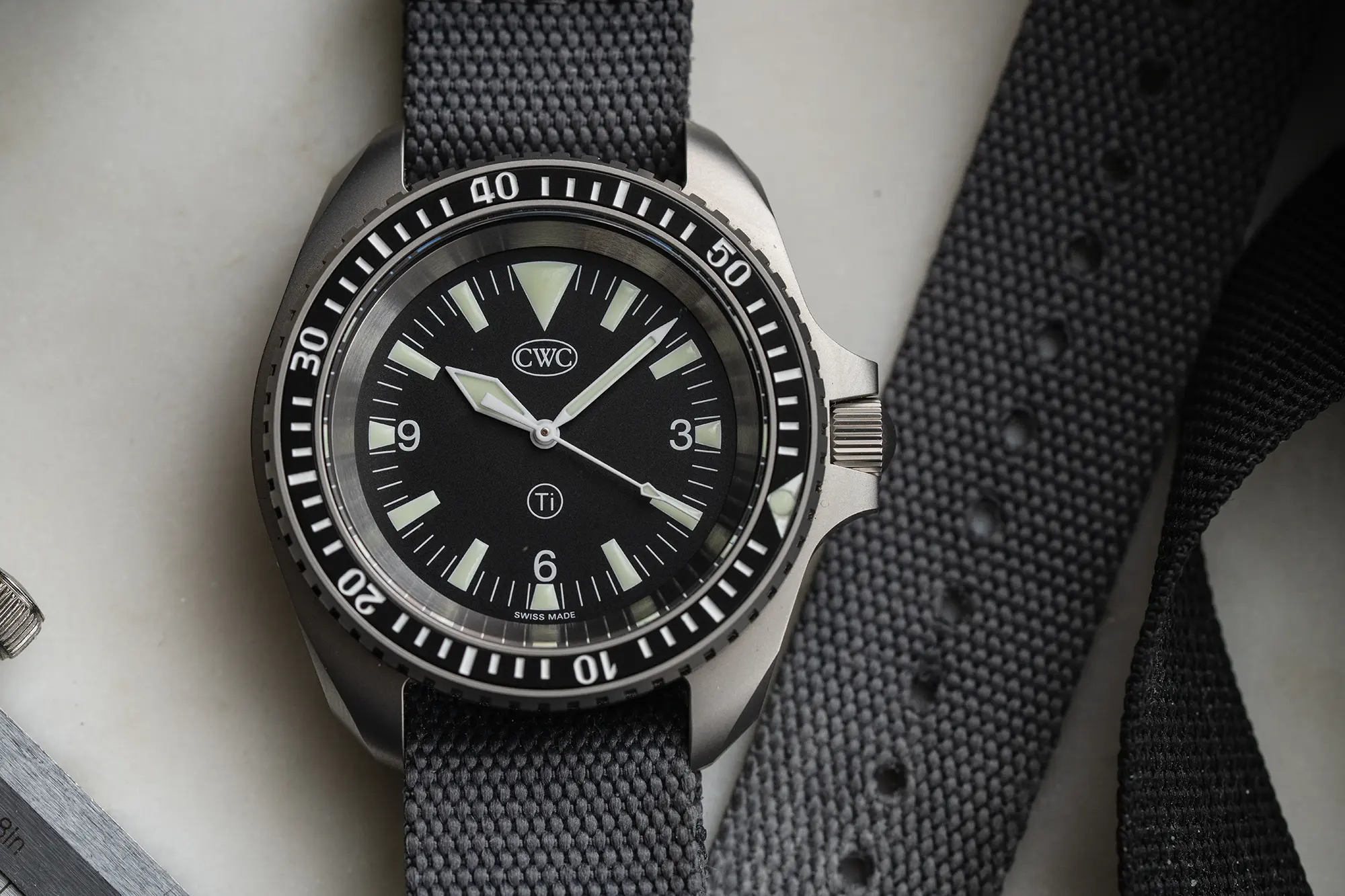
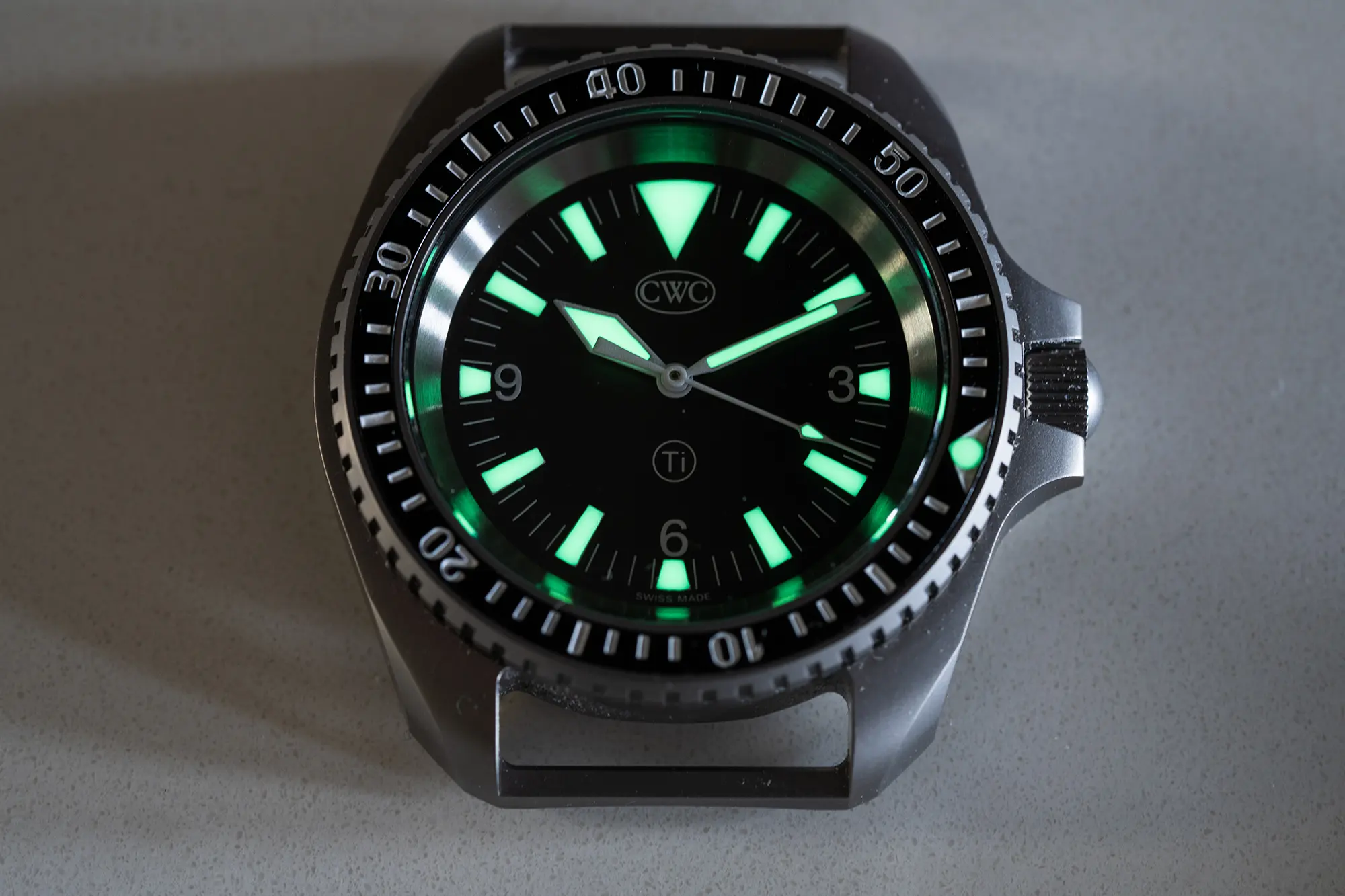
While the CWC picks up on the same theme, it’s more of an evolution of the original design rather than a modern interpretation. That works to CWC’s favor, and preserves a huge amount of character in the process. The dial sits far under the crystal with a steep rehaut framing the matte black dial. The pad printing is fit to tight tolerances, with the numbers nearly touching the hour markers, and the CWC logo wrapped tightly in its circular frame. It feels old-school and a touch unrefined as a result.
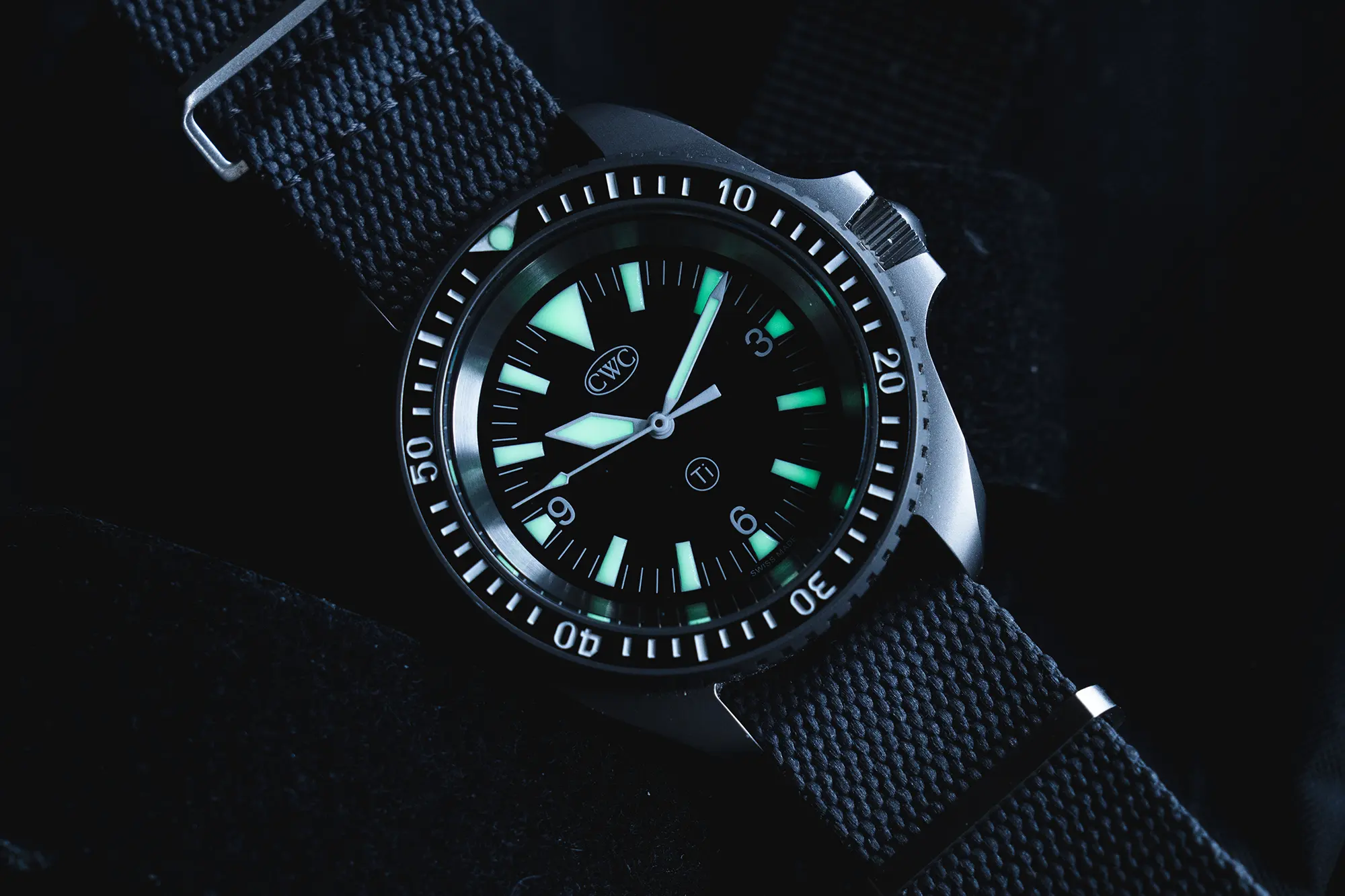
The Ti300 dial uses X1-C3 Super-LumiNova on the hands and dial markings, and in normal lighting conditions it has a green-ish tint rather than being flat white. The contrast is there, but it feels different and again, a bit old-school in nature, especially when viewed next to something like the FXD, which features a stark contrast in its dial. Of course, in the dark the lume is excellent, and reads unambiguously. It glows brighter than the Tudor, and lasts a bit longer to boot. Further, the bezel is not fully lumed, with only the pip appearing in the dark. The bezel of the FXD is fully lumed, which makes for a bit of an eyeful in attempting to discern what you’re looking at when the lights go out.
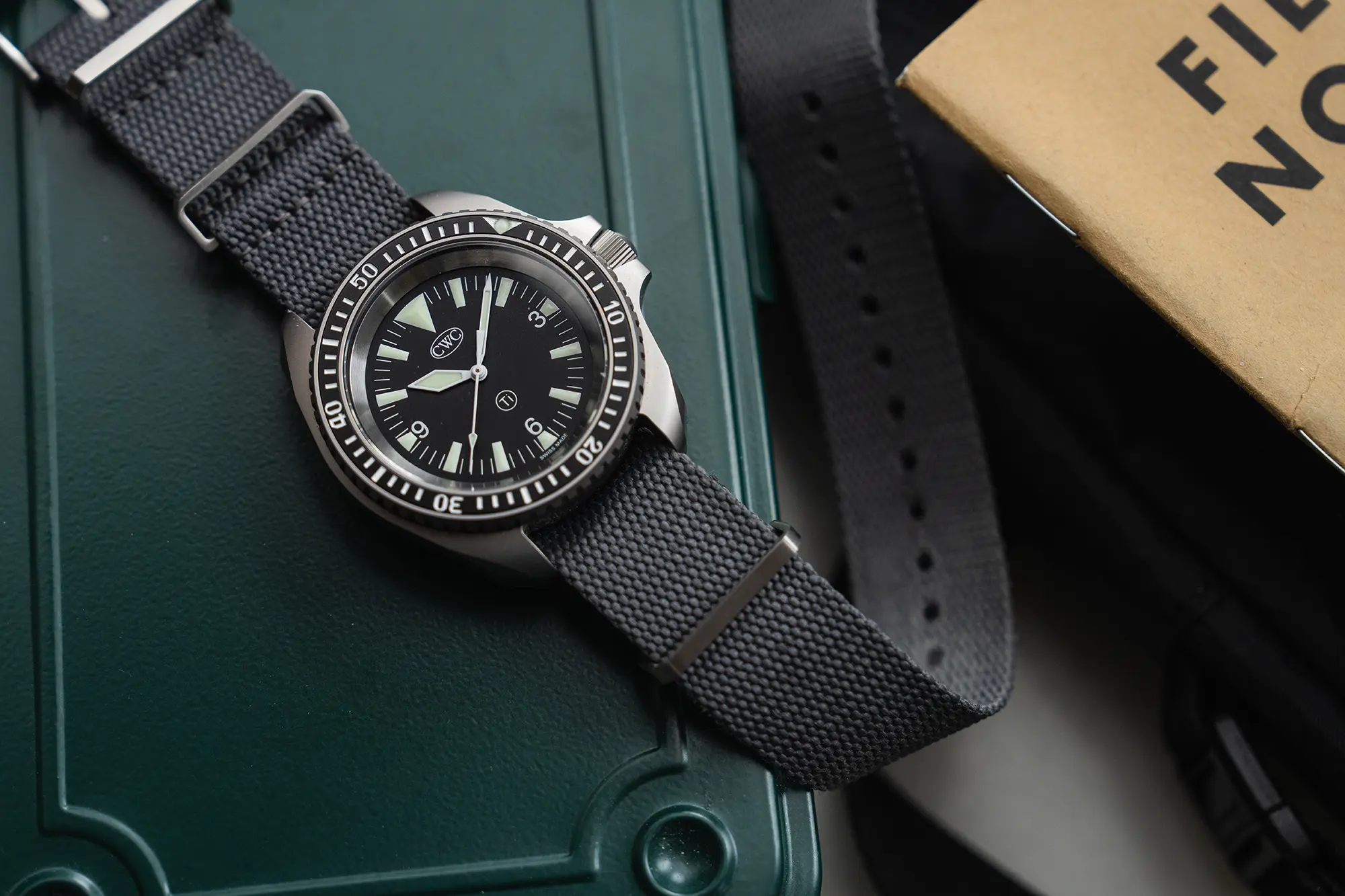
The bezel here is another peculiar element that stands out for its character. It is an ETB aluminum insert Type 92 used on the CWC 1992 RN and SBS watches and is unique to that year. It’s a 120 click ordeal that feels decent to use, if not buttery smooth by any stretch, but its appearance is what really draws me in. The manner and proportion with which the numbers and indexing are set into the material bring a vivid sense of depth and detail to the design, and doesn’t look like anything else out there. It makes for a perfect compliment to the no frills dial, with just enough in the way of interesting details to bring something special to the party.
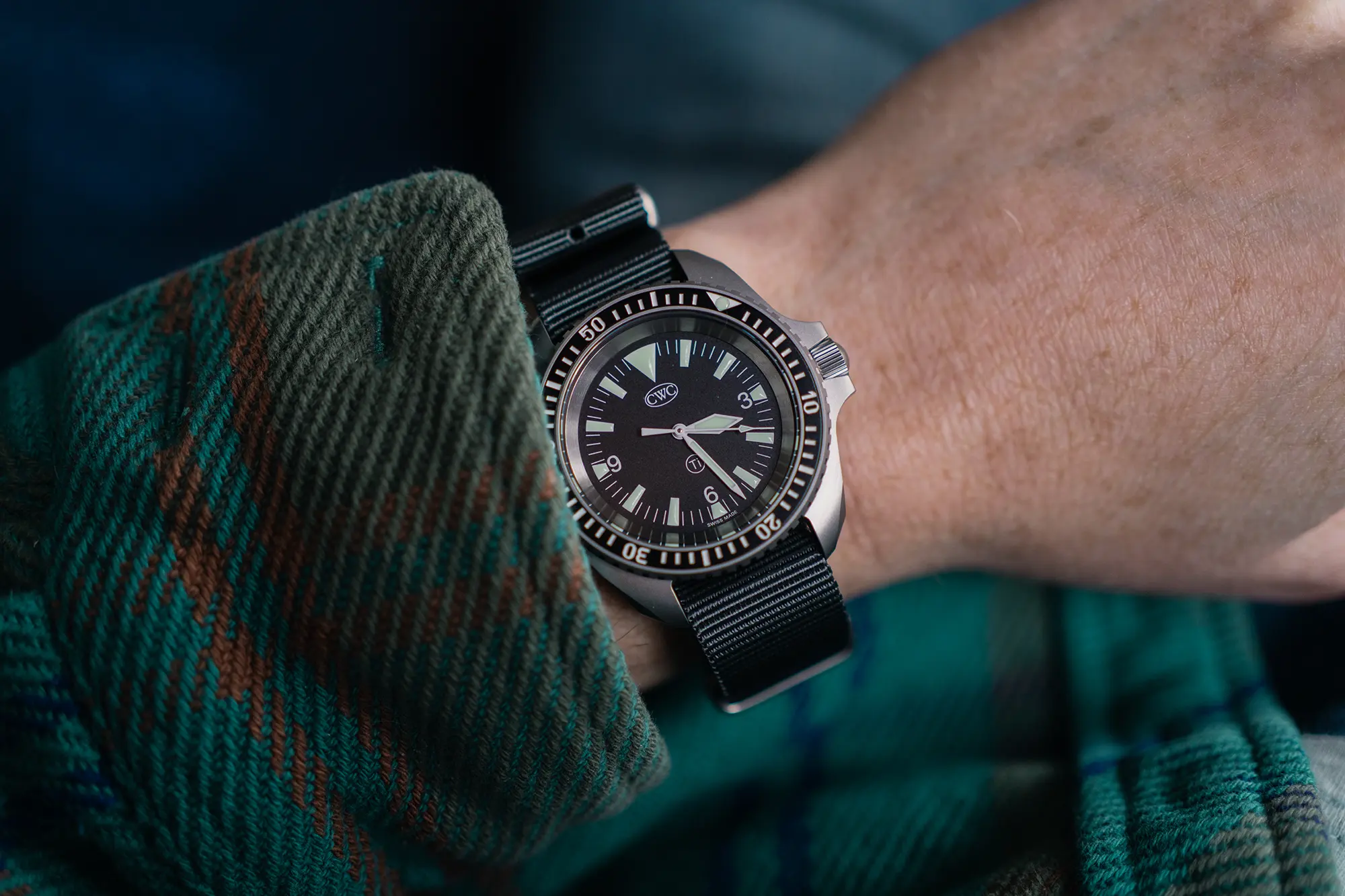
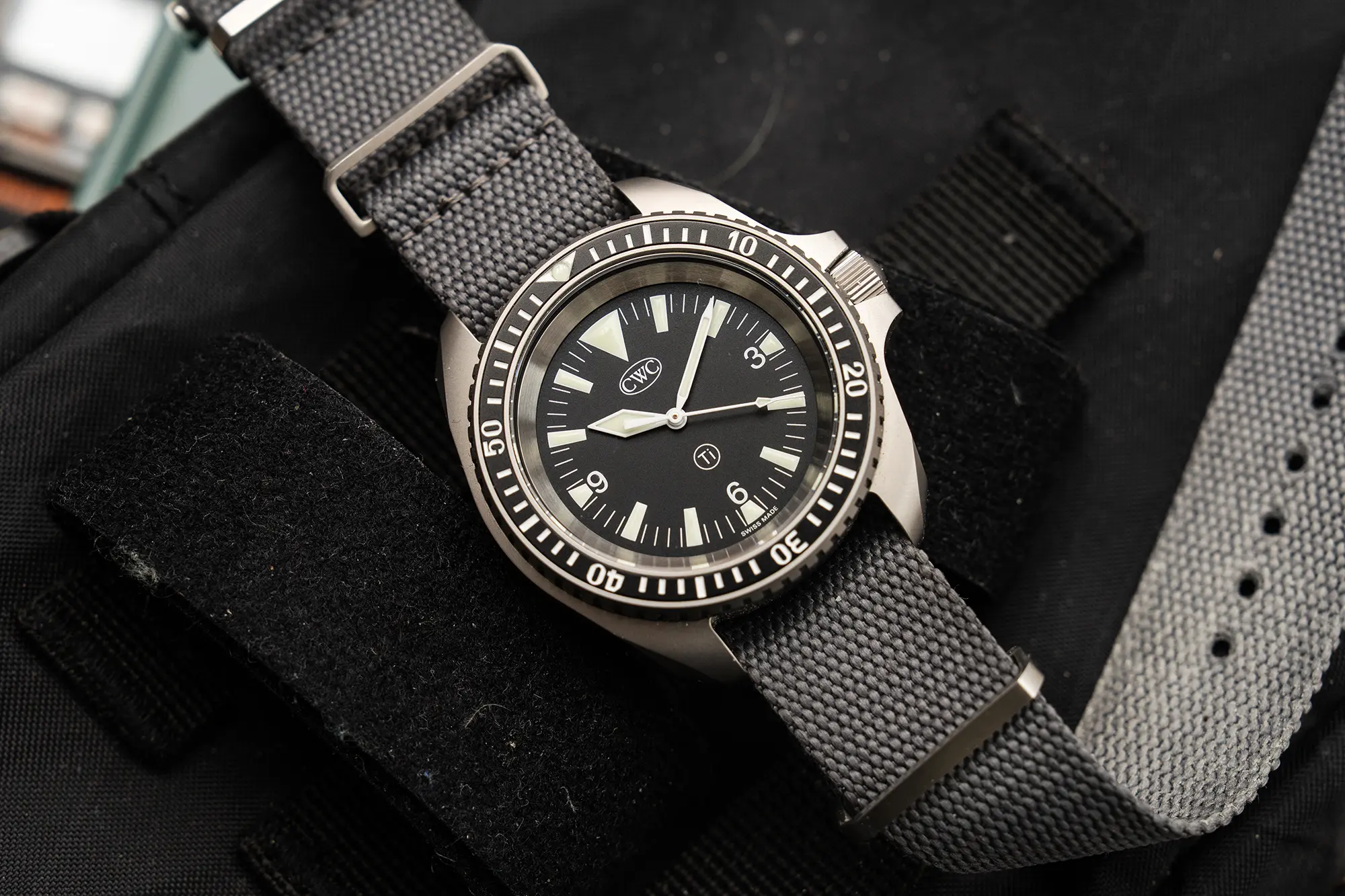
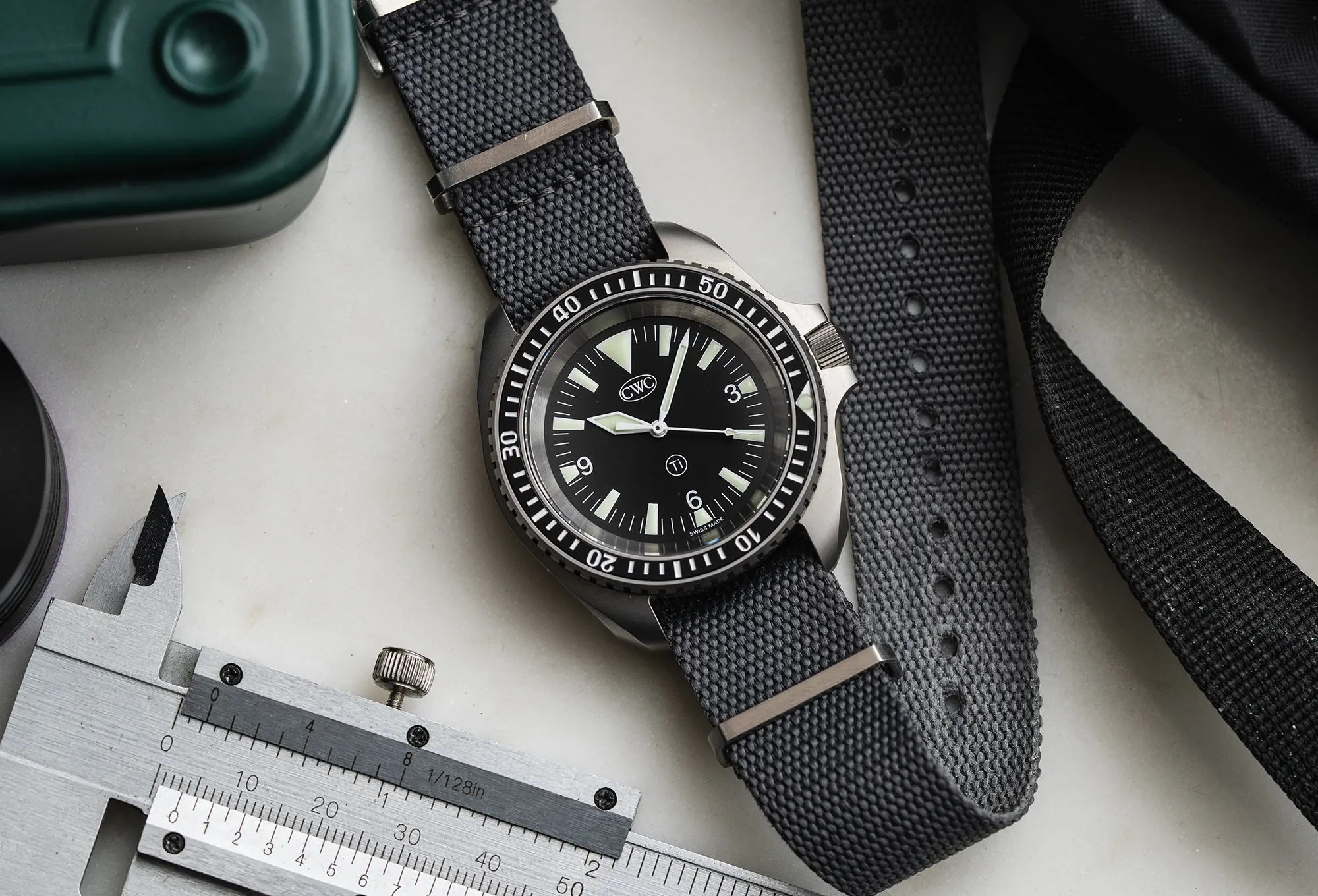
The case being used for the Ti300 will look familiar to fans of the genre, as its Monin stylings provide a distinctive framework to host the dial and bezel. The diameter is listed at 41.5mm, though from the bezel it clocks in just under 40mm. Thickness is held in check at 12mm on the dot and the lug to lug distance is a hair over 47mm. It’s a substantial case, but a comfortable one that’s made even more so when rendered in grade 5 titanium. Thanks to this, the watch head weighs a mere 48 grams (the FXD head weighs 72 grams, granted it houses an automatic movement), and for all intents and purposes, disappears on the wrist during normal wear.
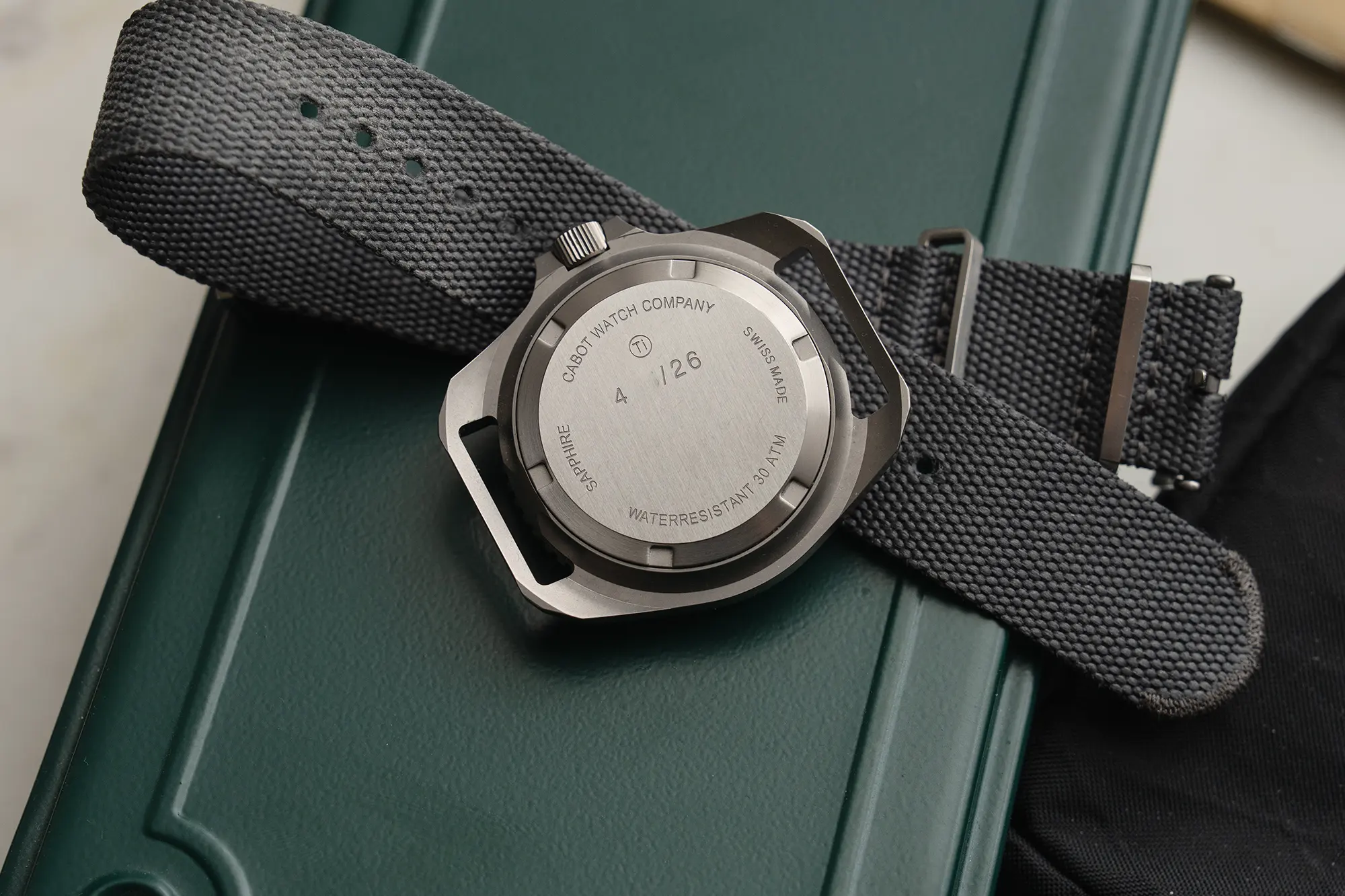
This brings us to the kicker, as the CWC is using a quartz powered high-torque ETA F06.402. This is a high accuracy quartz movement with thermo-compensation, and is rated +/- 10 seconds per year of accuracy with a battery that should last 94 months. This is one of the finest quartz movements in the ETA catalog, and there’s no shame in its use here. From a pure function standpoint, it makes a lot of sense, even if it comes at the expense of some enthusiast appeal. It also accounts for much of that price delta referenced above.
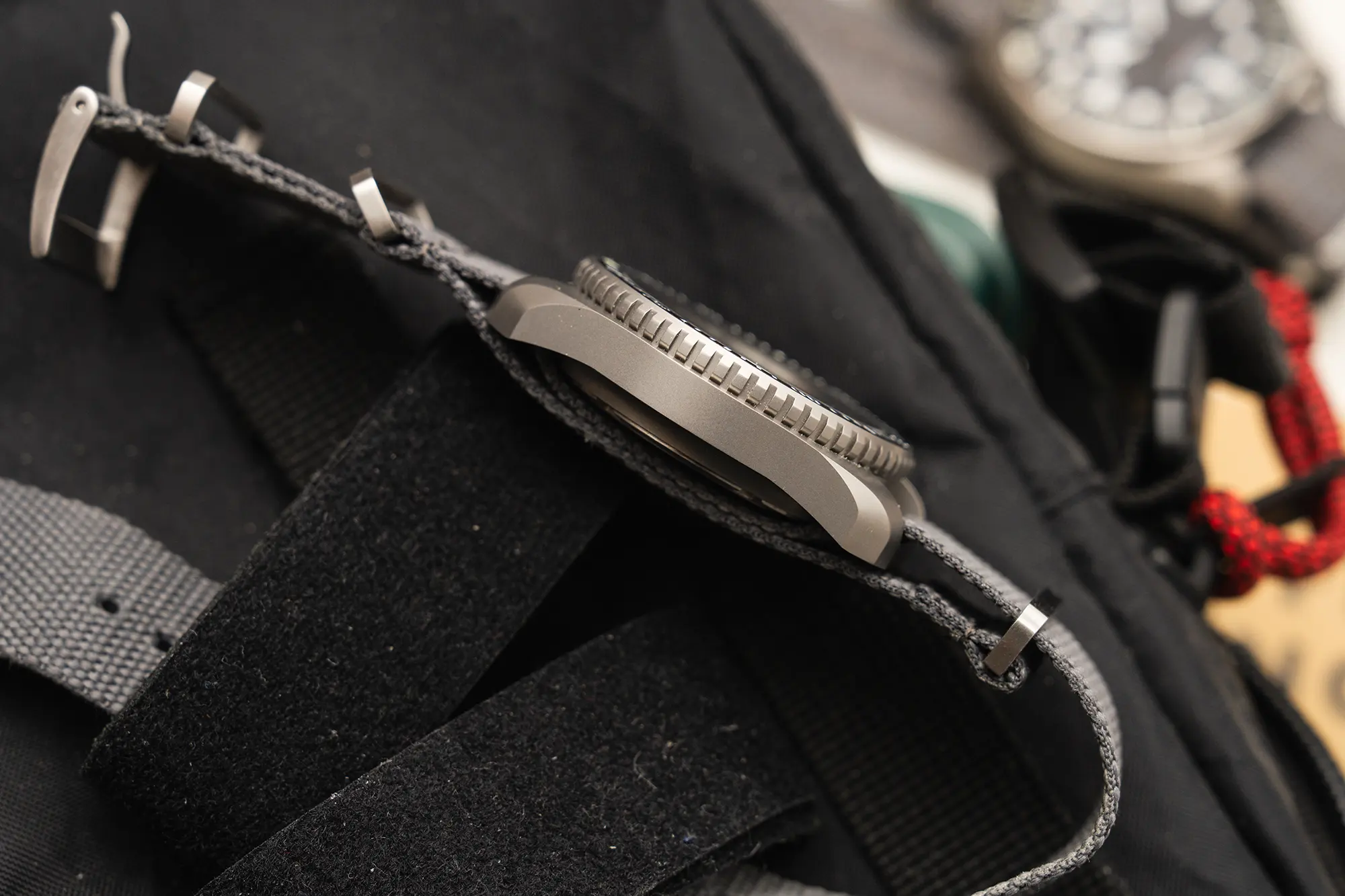
Setting that aside, there is one other important element that binds this watch to the FXD, and that is of course, the fixed lug design of the case. Neither use a simple spring bar fixed between a regular set of lugs, but instead embrace a more robust design that connects the lugs in a holistic manner as a part of the whole case design. The underside of the bar is curved, and the CWC takes a flatter overall approach compared to the FXD on account of the shape of the case lugs (which don’t curve downward like the Tudor).
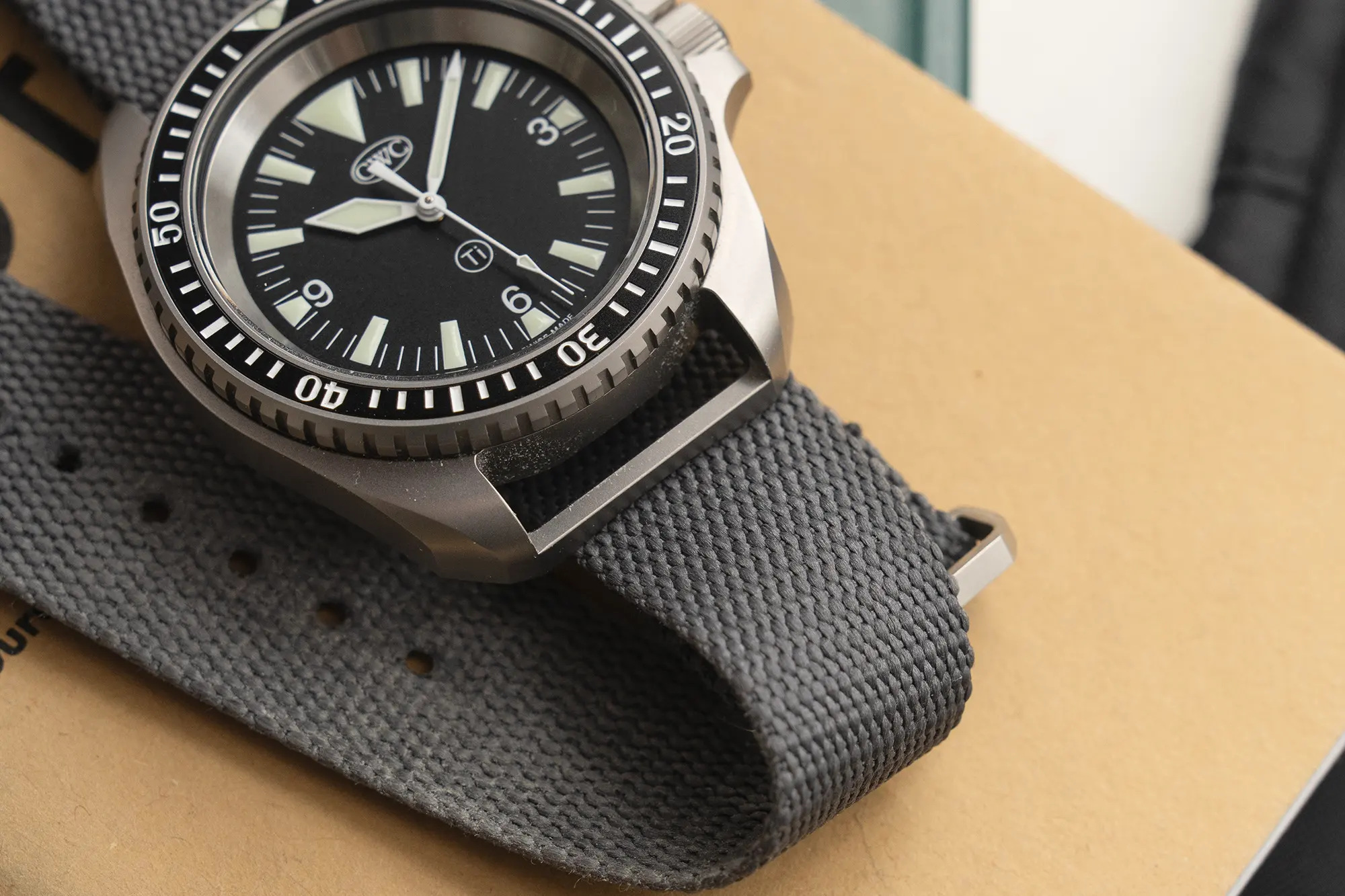
Obviously, this restricts the watch to use exclusively on passthrough straps, and the unit the CWC ships with leaves plenty to be desired. Naturally a velcro single pass would be ideal, but when it comes to fabric options, it’s dealer’s choice and you really can’t go wrong. As usual, I generally keep mine on a matte supreme NATO from Crown & Buckle.
At the end of the day, the CWC Ti300 hits many of the same notes that you’ll find in the FXD, but does so with more street cred. It’s not as slick and modern, and the ticking seconds hand might turn a few noses up, but that’s a big part of the appeal to daily wearing one. It is unassuming, highly functional, and has the same great heritage as plenty of other more prestigious watches you might typically come across at your local meetups. It’s the ultimate “I’m comfortable in my own skin” kinda diver, and above all, it’s a pure joy to wear.
The CWC Ti300 Titanium 5 Quartz Divers Watch is priced at £999, which equates to about $1,350. Each caseback is individually serial numbered, and bears the year of manufacture. No frills, just function. CWC
Leave a Reply