
Have you ever felt, mid-stride on the side of a mountain, lungs burning at 11,000 feet, that you have slightly overestimated yourself? That maybe the story isn’t worth it? Not in a dramatic, call-for-rescue sort of way but more in a quiet, private way that only happens when the trail ahead is steeper than the trail behind and turning back feels like the worst option of two bad ones. That was me, somewhere in the thinning tree line outside of Aspen, Colorado, gasping for air that had less of it than I was used to, wandering how just two years in New York City had made me simultaneously tough and completely useless in the backcountry.

The Nodus Trail Trekker A.C.T on my wrist had no opinion on the matter. It just kept ticking away past my turn around time.
Why The Watch You Bring Matters
There is a version of adventure where the gear is purely functional. You choose what works, what is rated for the intended conditions, what will not fail you when it really matters. That version is sensible, correct, and almost entirely beside the point of why most of us actually care about watches.

The better version of adventure is when the chosen gear for said adventure becomes part of the story. This is especially true of your watch. It gets salt in its crown and grit in the bracelet while mountain air breathes on its crystal. Hopefully, when you look at it six months later, you remember exactly where you have taken it and the secret misadventures it keeps. The full story doesn’t stop with the movement specifications nor the water resistance rating, but rather the miles the object tackled and the marks to prove it. In those scratches suggesting a life lived. In a GMT hand pointing silently toward home while you are very much somewhere else.
I took the Trail Trekker A.C.T. to two very different places to test that theory. One a bit more gentle. The other, certainly not. Two adventures running from sea level to mountain summit that will hopefully follow that watch regardless of its next destination.
Rockaway Beach

Roughly an hour from the heartbeat of New York City – considerably less if you count yourself the smarter of us living in Brooklyn – sits Rockaway beach. A stretch of coastline that does a more convincing impression of a proper beach than most people who have never been there would expect. The water is clean, sand well kept, and apart from the occasional commercial aircraft making its approach into JFK overhead, a remarkably peaceful place.
We arrived early, chairs under arm, a cooler packed with sandwiches and seltzers, and an umbrella deployed with the specific optimism of people intending to stay well past the point of reason. We pushed a little further down from the public transit lines toward the surfing sections, which buys more space, a quieter environment, and the modest entertainment of watching experienced and first-time surfers alike attempt to negotiate the closely grouped waves. It is, in its own way, a perfect New York day. Unhurried, slightly salty, requiring very little of you except to be present.

The Trail Trekker was swapped from its bracelet over to the Nodus Fusion FKM rubber strap, rubber being a personal preference when I encounter small particulates. Salt water, sunscreen, and the general indignity of a beach day are not conditions you inflict on a bracelet, especially when considering you should wash between the links after. The rubber instead handled all of it without complaint, dried immediately, and never once made itself known in a way that demanded attention or adjustment.
At 39.5mm in diameter and 11.8mm thick, the Trail Trekker disappears on the wrist in the way you want well-proportioned tool watches to do when the architecture is right. That is except when you glance down for a quick time check for your tanning rotation. In bright beach light, the white dial reads clearly, though the GMT hand in its lighter blue tone requires an extra half second to locate. A moment I am more than willing to burn on a lazy beach day. The squared-off arrow tip does its job as the disambiguation point, catching the eye more quickly once you know roughly where to look.
We stayed through the evening, enjoying the long, purposeless beach day that New York rarely permits and Rockaway specializes in. Packed up eventually, moved on to our go-to beachside bar for dinner, and came home tanned save for a few racing stripes. The watch came home no worse for any of it.
Cathedral Lake, Aspen
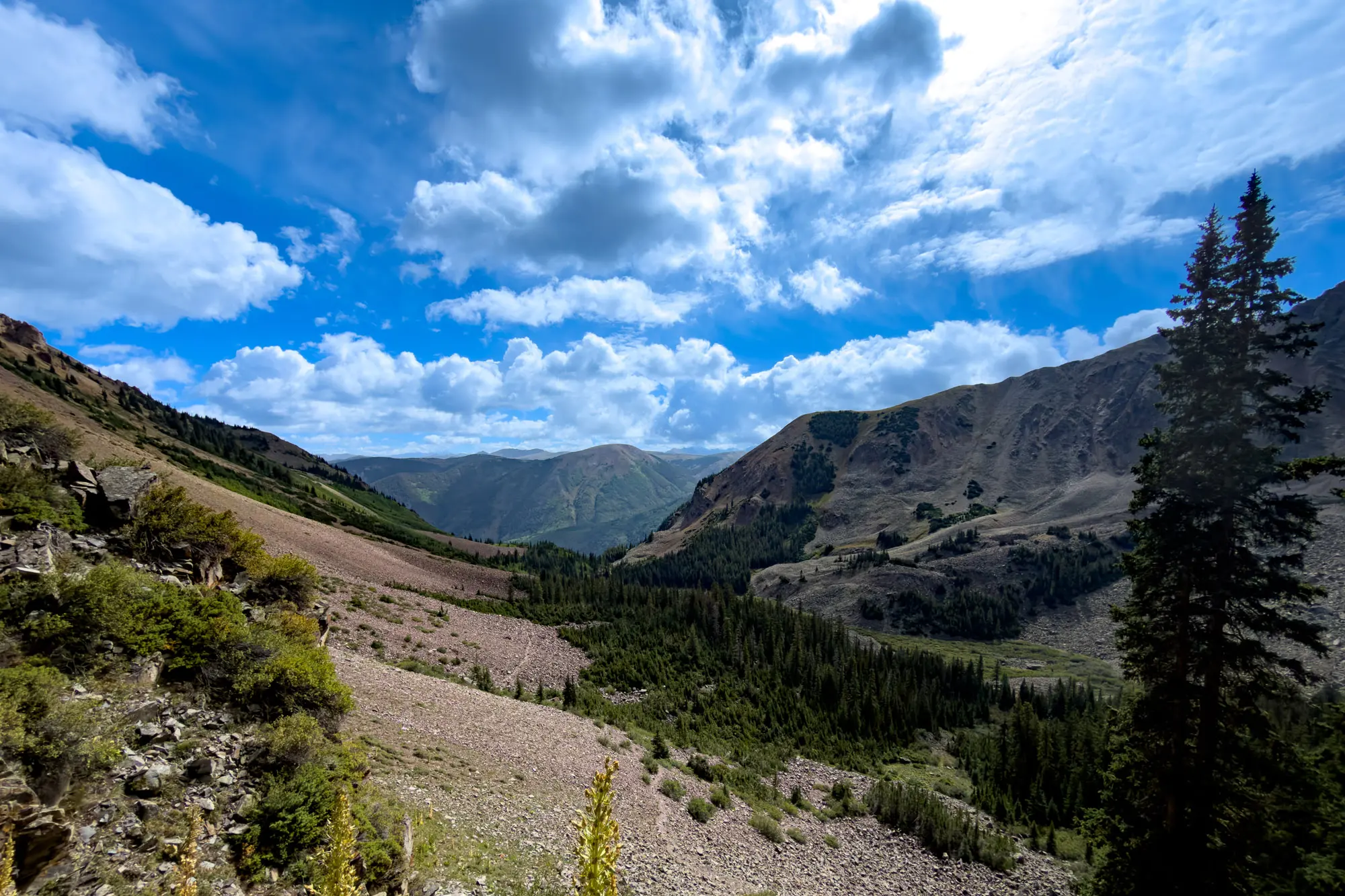
This one was the polar opposite.
I was up before sunrise, moving through the dark dewy Aspen morning toward Cathedral Lake trailhead with manufactured confidence associated with glancing at a trail map before fully processing what the measurements told you. The Mustang climbed through the blue light morning, handling the mountain roads out of downtown without complaint and a slightly echoing rumble. The dirt road to the trail parking lot, with its deep ruts and large rocks that cleverly had never heard of low-clearance sports cars, was another matter entirely. Half way through, I put the car in reverse, backing down with what little visibility I had until eventually parking across the road and walking the extra mile to the trailhead on foot.
The whole hike itself is eight miles round trip, an out-and-back lane, climbing roughly 4,000 feet in elevation from 8,000 feet to just over 11,800 at the lake. I am, apparently, not the sort of person to come so close to a bigger round number to leave it there, opting instead for a quick scramble up to 12,000 feet for posterity’s sake. The trail winds through terrain that reminded me, with increasing urgency, how much of my fitness had been quietly surrendered during my few years of subway commutes and workdays ending too late for the gym. My Fitbit kept flagging my blood oxygen levels with the cheerful concern of a device that does not understand how embarrassing it is to be notified of my own decline.

With the roaring water in the valley below gaining speed as it descended barely audible over my own deep and somewhat desperate breaths, I still managed to take in the ways in which light hits the Aspens as the hours progressed. Silver and particular and entirely unlike anything available at sea level. The whole time, the Trail Trekker on wrist with its GMT hand pointing toward Easter time helped me keep one eye on the world back home without pulling me out of the one I was standing in.
I made it to the lake, barely. The water was cold in a way that alpine lakes are, which is to say immediately and completely without any gradual adjustment that a sensible person might prefer. A couple of fish surprised me with jumps in the distance. The view took pulling my eyes in every awe inspiring direction. And with the entire surface to myself, I disrobed for a cold plunge that took what little breath I had completely away. Yes, I had missed my turnaround time, but the refreshed feeling partnered with memories of the climb more than justified the struggles and out of whack remaining calendar.

The scramble to 12,000 feet on the way back was unnecessary by any practical measure and entirely necessary by every other one. Standing above my own highest achieved elevation, lungs making desperate pleas at volume, I looked at the watch not to check the time but because it felt like the right moment to share with it. The Trail Trekker, white dial catching the altitude light, offered nothing sentimental in return. It just read the time clearly and kept moving, acting as the only white cap available before true snow would start to fall in these parts. Which is, in the end, what you want.
Eventually at the bottom I hopped back into the mustang, pounded my reserve water and venison jerky in the trunk, and drove back toward Aspen through the mountain passes that required considerably more attention from the driver than I had remaining.
The Watch

The Nodus Trail Trekker A.C.T. is a collaboration between Nodus Design Lab and Raven Watches, inspired by the Arctic Circle Trail though Greenland. It felt like a fitting reference point for a watch that arrived at a beach and a Colorado summit in the same trip, handling both without registering either as remarkable.
At 39.5mm in diameter with a 46.6mm lug-to-lug and 11.8mm thickness, it sits in the increasingly valuable territory of watches that feel substantial without demanding added accommodation. The polished, slightly twisted lugs peak out from beneath the high-polished black DLC bezel and nearly disappear against it. A nice visual trick that makes the watch read as almost entirely bezel and dial with the case architecture gracefully retreating to let the front surface do the talking. The finishing is solid for the pricepoint, with chamfered edges that catch light at angles and suggest a level of case craft that the $925 retail price does not lead you to expect.

The bezel itself is fixed, displaying a 24-hour format that serves the GMT function without requiring a rotating element that could catch on gear, sleeves, or accumulate debris. It is the right call for a watch with genuine backcountry ambitions. Its DLC coating holds up to the kind of casual contact that adventure creates without showing it.
Inside, the Miyota 9075 GMT automatic caliber provides true GMT functionality that separates the Trail Trekker from more common dual-time implementations. Setting local Colorado time on its main hour hand while keeping Eastern on the GMT was a brief operation. Keeping track of both for the duration of the trip required no mental effort whatsoever, which is precisely the point. The movement ran well within its specifications throughout, keeping reliable time across elevation changes and temperature swings that test lesser calibers while putting up with the bumps I unknowingly gave it.

For the Colorado portion, the bracelet was put to use, fitted with the Nodus Extension Module clasp micro-adjust. A useful feature for wrists that fluctuate with altitude, heat, and the particular physical reality of a long hike followed by a cold lake. The quick release spring bars made it easy to transition between rubber and bracelet, which matters more on a trip than it does at a desk.
The outdoor industry has a phrase it reaches for whenever a piece of gear achieves versatility: beach to boardroom, boardroom to backcountry. It is, at this point, a phrase that has been deployed so many times in so many product descriptions that it has almost lost its meaning. The Trail Trekker however, earns it anyway. Not because clever marketing says so, but because it spent a day in the surf and a morning above the tree line and came back from both with nothing to report, ready to be worn into the office the following day.
Final Thoughts

There is a reason certain watches get chosen for adventure and certain watches stay in the drawer. It is not always about water resistance ratings or movement robustness or case material, though all of those things matter. It is about whether the watch feels right in the context. Whether strapping it on at the trailhead before sunrise adds something to the morning, or whether it simply adds something to your wrist.
The Trail Trekker added something to the morning with certainty. It added something to the beach afternoon, and to the alpine lake, and to the drive back through the mountain pass at speeds I should probably not commit to print. It will have scratches eventually, the lugs going first, but those scratches will mean something specific rather than just suggesting wear.

That is the thing about choosing the right watch for an adventure. You do not just bring it along, it becomes part of the trip. You bring it back wearing earned patina associated with adventure.
Nodus Trail Trekker A.C.T. — $925. Available at Nodus Watches.